 Add to Chrome
 Add to Firefox
 Add to Edge
Covariance-Aware Goodness for Scalable Forward-Forward Learning
May 05, 2026
The Forward-Forward algorithm eliminates global gradient flow and full network activations storage. However, in convolutional settings, existing BP-free FF methods significantly under-perform backpropagation on complex benchmarks such as ImageNet-100 and Tiny-ImageNet. We identify this gap as a structural bottleneck in goodness extraction: standard sum-of-squares formulation collapses feature volumes into channel-wise activation energies which omits critical second-order dependencies. To address this, we propose a framework centered on three key components. First, Bi-axis Covariance Goodness(BiCovG) explicitly augments the standard goodness function with structured second-order information along two axes: cross-channel projections that model inter-feature covariance, and nested multi-scale aggregation that encodes spatial correlation statistics. This provides a tractable approximation to covariance-aware goodness without the prohibitive O(C^2) complexity of explicit matrix estimation. Second, a lightweight Logistic Fusion module aggregates layer-wise predictions, amplifying the contribution of deeper representations. Third, the Feature Alignment Layer(FAL) introduces a zero-initialized correction at block boundaries to mitigate representation misalignment in deep locally trained networks. By introducing these three components, we effectively double the depth of viable Forward-Forward learning, extending robust layer utilization from shallow baselines to 16 layer architectures like VGG-16. The resulting BP-free model achieves 73.01% on ImageNet-100 and 50.30% on Tiny-ImageNet. As a practical extension, Hybrid Goodness Blocks control the scope of gradient propagation via configurable block sizes, further narrowing the ImageNet-100 gap to 3.6% and matching BP on Tiny-ImageNet, while still reducing peak memory by approximately 50% relative to BP.

Perturbing the Phase: Analyzing Adversarial Robustness of Complex-Valued Neural Networks
Feb 06, 2026Complex-valued neural networks (CVNNs) are rising in popularity for all kinds of applications. To safely use CVNNs in practice, analyzing their robustness against outliers is crucial. One well known technique to understand the behavior of deep neural networks is to investigate their behavior under adversarial attacks, which can be seen as worst case minimal perturbations. We design Phase Attacks, a kind of attack specifically targeting the phase information of complex-valued inputs. Additionally, we derive complex-valued versions of commonly used adversarial attacks. We show that in some scenarios CVNNs are more robust than RVNNs and that both are very susceptible to phase changes with the Phase Attacks decreasing the model performance more, than equally strong regular attacks, which can attack both phase and magnitude.
Exploring Sparsity and Smoothness of Arbitrary $\ell_p$ Norms in Adversarial Attacks
Feb 06, 2026Adversarial attacks against deep neural networks are commonly constructed under $\ell_p$ norm constraints, most often using $p=1$, $p=2$ or $p=\infty$, and potentially regularized for specific demands such as sparsity or smoothness. These choices are typically made without a systematic investigation of how the norm parameter \( p \) influences the structural and perceptual properties of adversarial perturbations. In this work, we study how the choice of \( p \) affects sparsity and smoothness of adversarial attacks generated under \( \ell_p \) norm constraints for values of $p \in [1,2]$. To enable a quantitative analysis, we adopt two established sparsity measures from the literature and introduce three smoothness measures. In particular, we propose a general framework for deriving smoothness measures based on smoothing operations and additionally introduce a smoothness measure based on first-order Taylor approximations. Using these measures, we conduct a comprehensive empirical evaluation across multiple real-world image datasets and a diverse set of model architectures, including both convolutional and transformer-based networks. We show that the choice of $\ell_1$ or $\ell_2$ is suboptimal in most cases and the optimal $p$ value is dependent on the specific task. In our experiments, using $\ell_p$ norms with $p\in [1.3, 1.5]$ yields the best trade-off between sparse and smooth attacks. These findings highlight the importance of principled norm selection when designing and evaluating adversarial attacks.
Transformer-based Parameter Fitting of Models derived from Bloch-McConnell Equations for CEST MRI Analysis
Feb 06, 2026Chemical exchange saturation transfer (CEST) MRI is a non-invasive imaging modality for detecting metabolites. It offers higher resolution and sensitivity compared to conventional magnetic resonance spectroscopy (MRS). However, quantification of CEST data is challenging because the measured signal results from a complex interplay of many physiological variables. Here, we introduce a transformer-based neural network to fit parameters such as metabolite concentrations, exchange and relaxation rates of a physical model derived from Bloch-McConnell equations to in-vitro CEST spectra. We show that our self-supervised trained neural network clearly outperforms the solution of classical gradient-based solver.
Clifford Kolmogorov-Arnold Networks
Feb 05, 2026We introduce Clifford Kolmogorov-Arnold Network (ClKAN), a flexible and efficient architecture for function approximation in arbitrary Clifford algebra spaces. We propose the use of Randomized Quasi Monte Carlo grid generation as a solution to the exponential scaling associated with higher dimensional algebras. Our ClKAN also introduces new batch normalization strategies to deal with variable domain input. ClKAN finds application in scientific discovery and engineering, and is validated in synthetic and physics inspired tasks.
SNAP: A Self-Consistent Agreement Principle with Application to Robust Computation
Feb 02, 2026We introduce SNAP (Self-coNsistent Agreement Principle), a self-supervised framework for robust computation based on mutual agreement. Based on an Agreement-Reliability Hypothesis SNAP assigns weights that quantify agreement, emphasizing trustworthy items and downweighting outliers without supervision or prior knowledge. A key result is the Exponential Suppression of Outlier Weights, ensuring that outliers contribute negligibly to computations, even in high-dimensional settings. We study properties of SNAP weighting scheme and show its practical benefits on vector averaging and subspace estimation. Particularly, we demonstrate that non-iterative SNAP outperforms the iterative Weiszfeld algorithm and two variants of multivariate median of means. SNAP thus provides a flexible, easy-to-use, broadly applicable approach to robust computation.
Joint Learning of Unsupervised Multi-view Feature and Instance Co-selection with Cross-view Imputation
Dec 17, 2025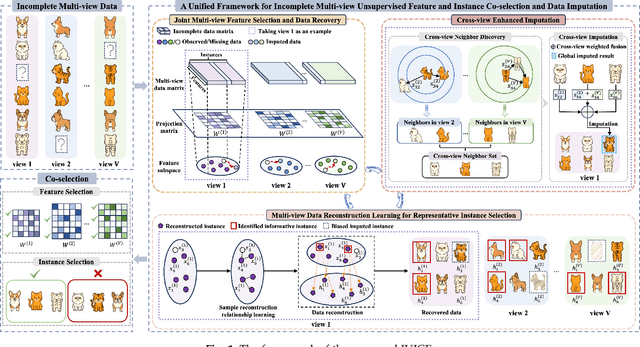
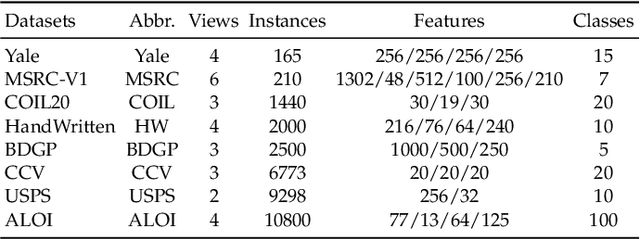
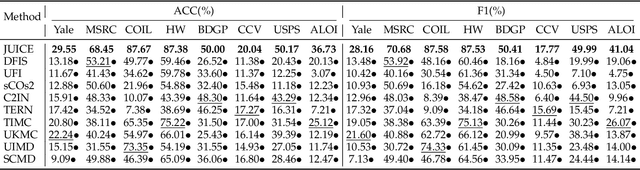
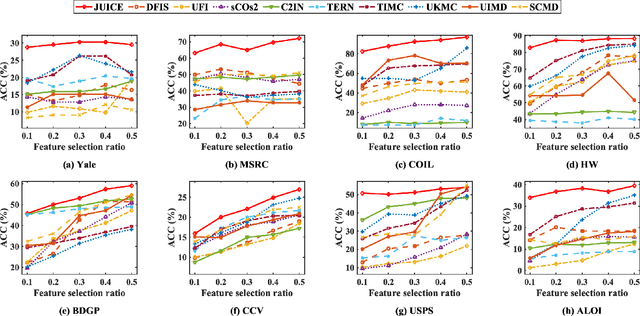
Feature and instance co-selection, which aims to reduce both feature dimensionality and sample size by identifying the most informative features and instances, has attracted considerable attention in recent years. However, when dealing with unlabeled incomplete multi-view data, where some samples are missing in certain views, existing methods typically first impute the missing data and then concatenate all views into a single dataset for subsequent co-selection. Such a strategy treats co-selection and missing data imputation as two independent processes, overlooking potential interactions between them. The inter-sample relationships gleaned from co-selection can aid imputation, which in turn enhances co-selection performance. Additionally, simply merging multi-view data fails to capture the complementary information among views, ultimately limiting co-selection effectiveness. To address these issues, we propose a novel co-selection method, termed Joint learning of Unsupervised multI-view feature and instance Co-selection with cross-viEw imputation (JUICE). JUICE first reconstructs incomplete multi-view data using available observations, bringing missing data recovery and feature and instance co-selection together in a unified framework. Then, JUICE leverages cross-view neighborhood information to learn inter-sample relationships and further refine the imputation of missing values during reconstruction. This enables the selection of more representative features and instances. Extensive experiments demonstrate that JUICE outperforms state-of-the-art methods.
Cross-view Joint Learning for Mixed-Missing Multi-view Unsupervised Feature Selection
Nov 15, 2025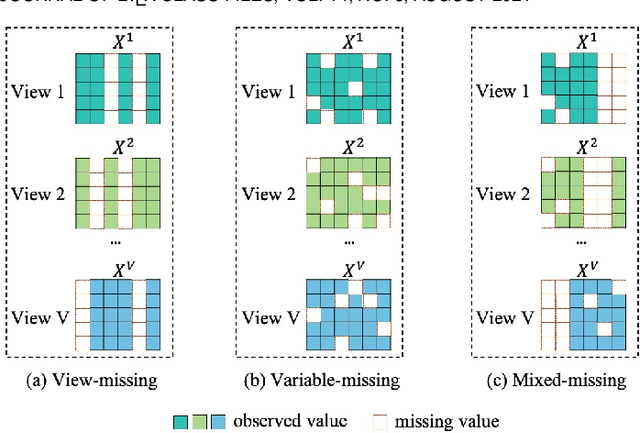
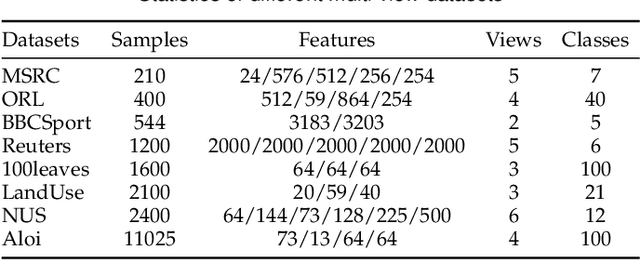
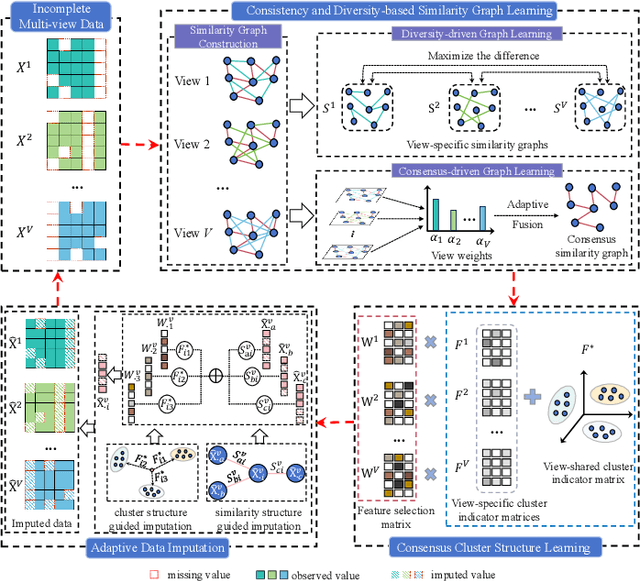
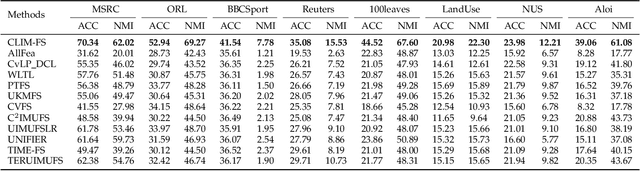
Incomplete multi-view unsupervised feature selection (IMUFS), which aims to identify representative features from unlabeled multi-view data containing missing values, has received growing attention in recent years. Despite their promising performance, existing methods face three key challenges: 1) by focusing solely on the view-missing problem, they are not well-suited to the more prevalent mixed-missing scenario in practice, where some samples lack entire views or only partial features within views; 2) insufficient utilization of consistency and diversity across views limits the effectiveness of feature selection; and 3) the lack of theoretical analysis makes it unclear how feature selection and data imputation interact during the joint learning process. Being aware of these, we propose CLIM-FS, a novel IMUFS method designed to address the mixed-missing problem. Specifically, we integrate the imputation of both missing views and variables into a feature selection model based on nonnegative orthogonal matrix factorization, enabling the joint learning of feature selection and adaptive data imputation. Furthermore, we fully leverage consensus cluster structure and cross-view local geometrical structure to enhance the synergistic learning process. We also provide a theoretical analysis to clarify the underlying collaborative mechanism of CLIM-FS. Experimental results on eight real-world multi-view datasets demonstrate that CLIM-FS outperforms state-of-the-art methods.
Thermal Detection of People with Mobility Restrictions for Barrier Reduction at Traffic Lights Controlled Intersections
May 14, 2025Rapid advances in deep learning for computer vision have driven the adoption of RGB camera-based adaptive traffic light systems to improve traffic safety and pedestrian comfort. However, these systems often overlook the needs of people with mobility restrictions. Moreover, the use of RGB cameras presents significant challenges, including limited detection performance under adverse weather or low-visibility conditions, as well as heightened privacy concerns. To address these issues, we propose a fully automated, thermal detector-based traffic light system that dynamically adjusts signal durations for individuals with walking impairments or mobility burden and triggers the auditory signal for visually impaired individuals, thereby advancing towards barrier-free intersection for all users. To this end, we build the thermal dataset for people with mobility restrictions (TD4PWMR), designed to capture diverse pedestrian scenarios, particularly focusing on individuals with mobility aids or mobility burden under varying environmental conditions, such as different lighting, weather, and crowded urban settings. While thermal imaging offers advantages in terms of privacy and robustness to adverse conditions, it also introduces inherent hurdles for object detection due to its lack of color and fine texture details and generally lower resolution of thermal images. To overcome these limitations, we develop YOLO-Thermal, a novel variant of the YOLO architecture that integrates advanced feature extraction and attention mechanisms for enhanced detection accuracy and robustness in thermal imaging. Experiments demonstrate that the proposed thermal detector outperforms existing detectors, while the proposed traffic light system effectively enhances barrier-free intersection. The source codes and dataset are available at https://github.com/leon2014dresden/YOLO-THERMAL.
Robustness of Generalized Median Computation for Consensus Learning in Arbitrary Spaces
Mar 07, 2025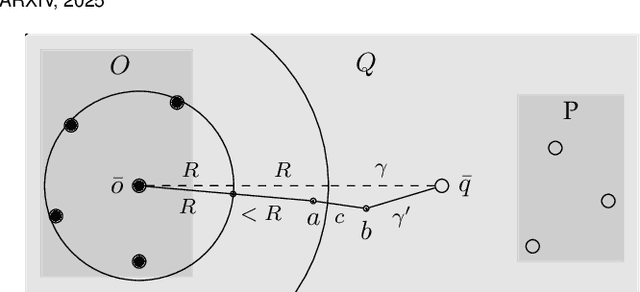
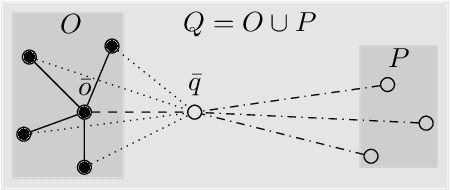
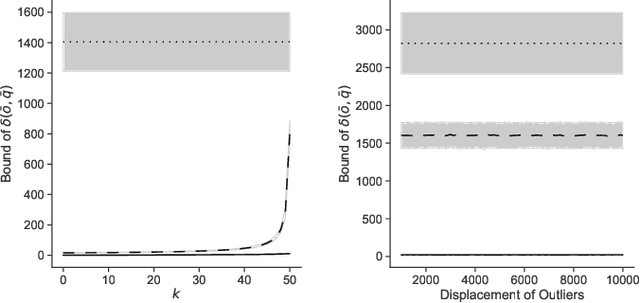
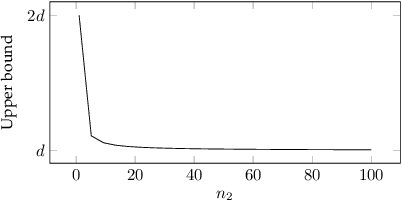
Robustness in terms of outliers is an important topic and has been formally studied for a variety of problems in machine learning and computer vision. Generalized median computation is a special instance of consensus learning and a common approach to finding prototypes. Related research can be found in numerous problem domains with a broad range of applications. So far, however, robustness of generalized median has only been studied in a few specific spaces. To our knowledge, there is no robustness characterization in a general setting, i.e. for arbitrary spaces. We address this open issue in our work. The breakdown point >=0.5 is proved for generalized median with metric distance functions in general. We also study the detailed behavior in case of outliers from different perspectives. In addition, we present robustness results for weighted generalized median computation and non-metric distance functions. Given the importance of robustness, our work contributes to closing a gap in the literature. The presented results have general impact and applicability, e.g. providing deeper understanding of generalized median computation and practical guidance to avoid non-robust computation.