 Add to Chrome
 Add to Firefox
 Add to Edge
Concordia: JIT-Compiled Persistent-Kernel Checkpointing for Fault-Tolerant LLM Inference
Jun 22, 2026
Long-running LLM agents keep valuable state resident on GPUs: KV caches, request schedulers, communication state, and sometimes online adapters. Losing this state after a GPU or communicator failure can discard minutes to hours of work, yet existing recovery mechanisms either restart the whole serving stack or require application-specific checkpoint logic inside every attention and runtime component. This paper argues that fault tolerance for such workloads needs a GPU-resident execution context: checkpoint hooks must run at device synchronization points, observe binary kernels that frameworks and libraries actually execute, and recover without putting the host CPU on the critical path. We present Concordia, a runtime that uses a device-resident persistent kernel as the substrate for fault-tolerant LLM inference. Concordia interposes on GPU module loading and supports PTX- and SASS-level instrumentation, allowing checkpoint and pause hooks to be inserted below framework code and library boundaries. For each registered LLM state region, Concordia JIT-compiles a specialized delta-checkpoint handler -- for example, a KV-block scanner, adapter-page scanner, or recovery applier -- and hot-swaps it into the persistent kernel's operator table. The persistent kernel consumes a lock-free ring buffer of compute, checkpoint, append-log, and recovery tasks, so the same always-on executor triggers dirty-page detection, stages deltas, and appends committed records to a CPU-visible log in CXL memory or host DRAM.

Evaluating The Performance of Using Large Language Models to Automate Summarization of CT Simulation Orders in Radiation Oncology
Jan 27, 2025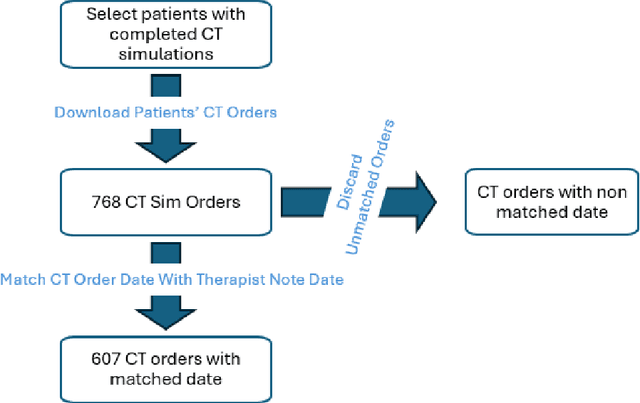
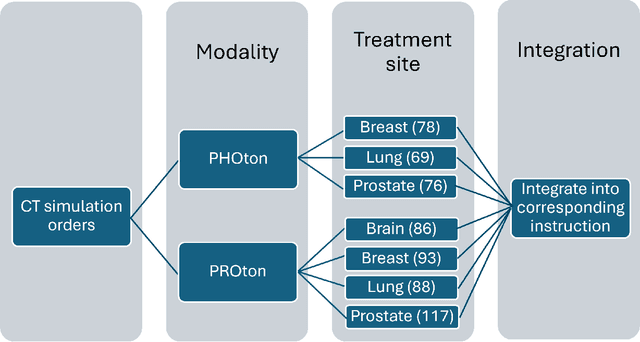
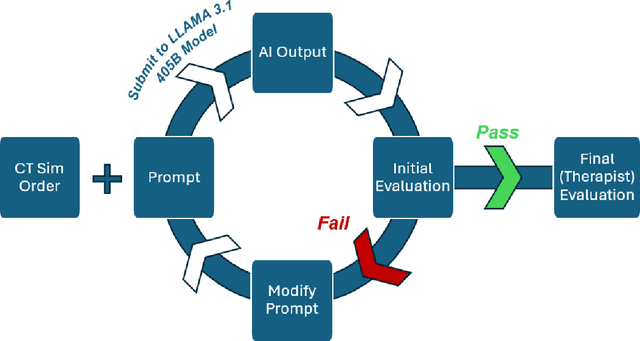
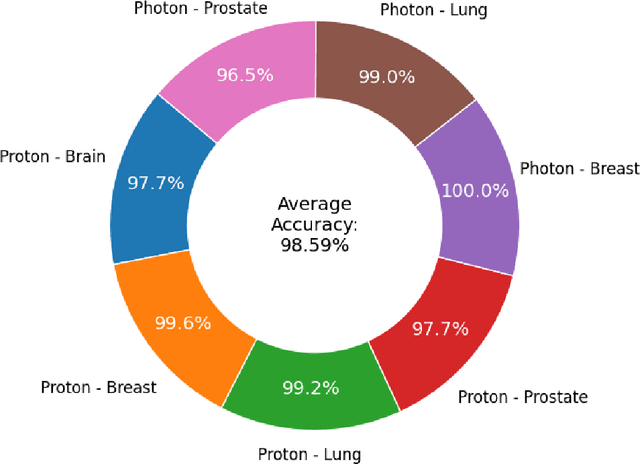
Purpose: This study aims to use a large language model (LLM) to automate the generation of summaries from the CT simulation orders and evaluate its performance. Materials and Methods: A total of 607 CT simulation orders for patients were collected from the Aria database at our institution. A locally hosted Llama 3.1 405B model, accessed via the Application Programming Interface (API) service, was used to extract keywords from the CT simulation orders and generate summaries. The downloaded CT simulation orders were categorized into seven groups based on treatment modalities and disease sites. For each group, a customized instruction prompt was developed collaboratively with therapists to guide the Llama 3.1 405B model in generating summaries. The ground truth for the corresponding summaries was manually derived by carefully reviewing each CT simulation order and subsequently verified by therapists. The accuracy of the LLM-generated summaries was evaluated by therapists using the verified ground truth as a reference. Results: About 98% of the LLM-generated summaries aligned with the manually generated ground truth in terms of accuracy. Our evaluations showed an improved consistency in format and enhanced readability of the LLM-generated summaries compared to the corresponding therapists-generated summaries. This automated approach demonstrated a consistent performance across all groups, regardless of modality or disease site. Conclusions: This study demonstrated the high precision and consistency of the Llama 3.1 405B model in extracting keywords and summarizing CT simulation orders, suggesting that LLMs have great potential to help with this task, reduce the workload of therapists and improve workflow efficiency.