 Add to Chrome
 Add to Firefox
 Add to Edge
DeMix: Debugging Training Data with Mixed Data Error Types by Investigating Influence Vectors
Jun 10, 2026
High-quality training data is essential for the success of machine learning models. However, real-world datasets often contain mixed types of errors arising from systematic flaws in data preparation pipelines, including label errors, feature errors, and spurious correlations. Effective debugging of training data requires both detecting erroneous samples and identifying their specific error types to enable targeted repair, yet existing data cleaning and attribution methods fail to adequately address this dual requirement. In this paper, we propose DeMix, a novel framework that simultaneously diagnoses erroneous samples and their error types. Our key insight is that different error types produce distinct patterns on model behavior. DeMix captures such error-specific patterns by influence vectors that characterize how each training sample affects model predictions across all validation samples. We formulate training data debugging as a multi-label classification problem where a classifier is developed to predict error types directly from influence vectors. We further introduce an intervention-based learning strategy that guides the classifier to capture invariant rationales specific to each error type, ensuring the learned classifier generalizes effectively. Empirical evaluations on 11 tasks across tabular data prediction, recommendation systems, and LLM alignment demonstrate that DeMix significantly outperforms state-of-the-art approaches, achieving a 22.61% improvement in data debugging F1-score and a 9.32% gain in task model performance after data repair. Code is available at: https://github.com/SJTU-DMTai/DeMix.

Anti-Degeneracy Scheme for Lidar SLAM based on Particle Filter in Geometry Feature-Less Environments
Feb 17, 2025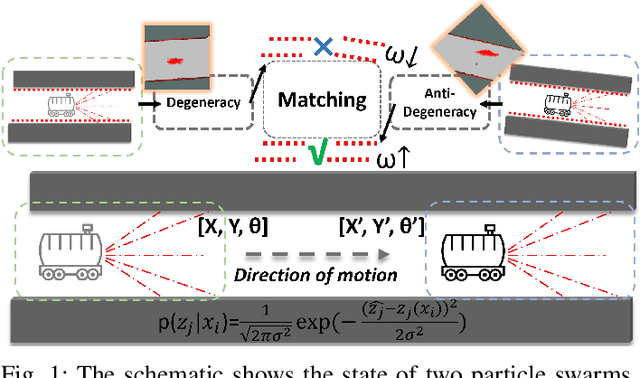
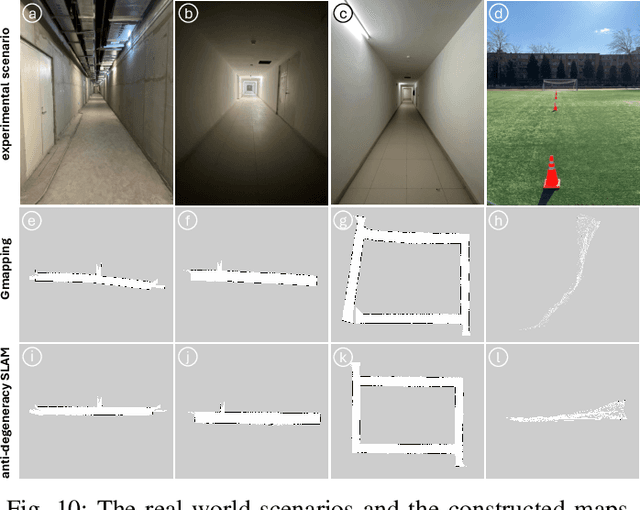
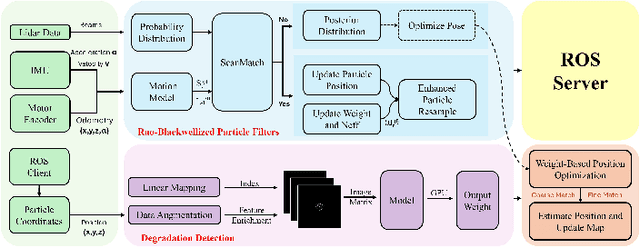
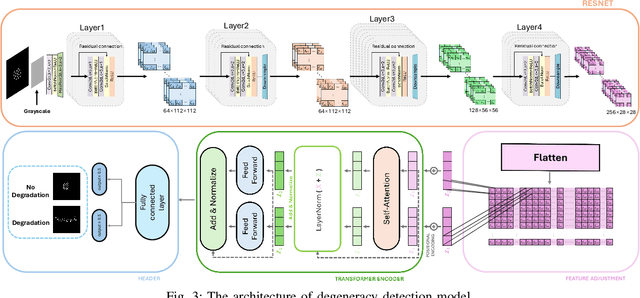
Simultaneous localization and mapping (SLAM) based on particle filtering has been extensively employed in indoor scenarios due to its high efficiency. However, in geometry feature-less scenes, the accuracy is severely reduced due to lack of constraints. In this article, we propose an anti-degeneracy system based on deep learning. Firstly, we design a scale-invariant linear mapping to convert coordinates in continuous space into discrete indexes, in which a data augmentation method based on Gaussian model is proposed to ensure the model performance by effectively mitigating the impact of changes in the number of particles on the feature distribution. Secondly, we develop a degeneracy detection model using residual neural networks (ResNet) and transformer which is able to identify degeneracy by scrutinizing the distribution of the particle population. Thirdly, an adaptive anti-degeneracy strategy is designed, which first performs fusion and perturbation on the resample process to provide rich and accurate initial values for the pose optimization, and use a hierarchical pose optimization combining coarse and fine matching, which is able to adaptively adjust the optimization frequency and the sensor trustworthiness according to the degree of degeneracy, in order to enhance the ability of searching the global optimal pose. Finally, we demonstrate the optimality of the model, as well as the improvement of the image matrix method and GPU on the computation time through ablation experiments, and verify the performance of the anti-degeneracy system in different scenarios through simulation experiments and real experiments. This work has been submitted to IEEE for publication. Copyright may be transferred without notice, after which this version may no longer be available.