 Add to Chrome
 Add to Firefox
 Add to Edge
Safe-FedLLM: Delving into the Safety of Federated Large Language Models
Jan 12, 2026
Federated learning (FL) addresses data privacy and silo issues in large language models (LLMs). Most prior work focuses on improving the training efficiency of federated LLMs. However, security in open environments is overlooked, particularly defenses against malicious clients. To investigate the safety of LLMs during FL, we conduct preliminary experiments to analyze potential attack surfaces and defensible characteristics from the perspective of Low-Rank Adaptation (LoRA) weights. We find two key properties of FL: 1) LLMs are vulnerable to attacks from malicious clients in FL, and 2) LoRA weights exhibit distinct behavioral patterns that can be filtered through simple classifiers. Based on these properties, we propose Safe-FedLLM, a probe-based defense framework for federated LLMs, constructing defenses across three dimensions: Step-Level, Client-Level, and Shadow-Level. The core concept of Safe-FedLLM is to perform probe-based discrimination on the LoRA weights locally trained by each client during FL, treating them as high-dimensional behavioral features and using lightweight classification models to determine whether they possess malicious attributes. Extensive experiments demonstrate that Safe-FedLLM effectively enhances the defense capability of federated LLMs without compromising performance on benign data. Notably, our method effectively suppresses malicious data impact without significant impact on training speed, and remains effective even with many malicious clients. Our code is available at: https://github.com/dmqx/Safe-FedLLM.

Traffic Flow Combination Forecasting Method Based on Improved LSTM and ARIMA
Jun 25, 2019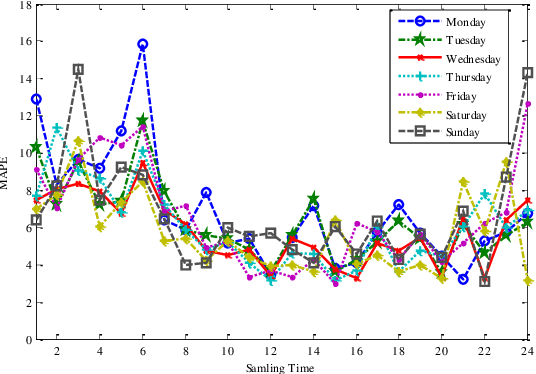
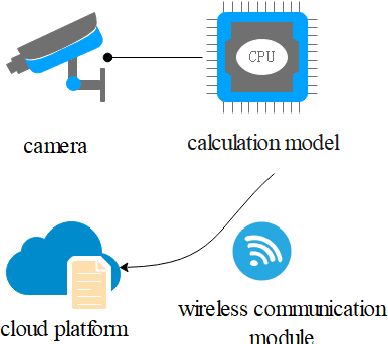
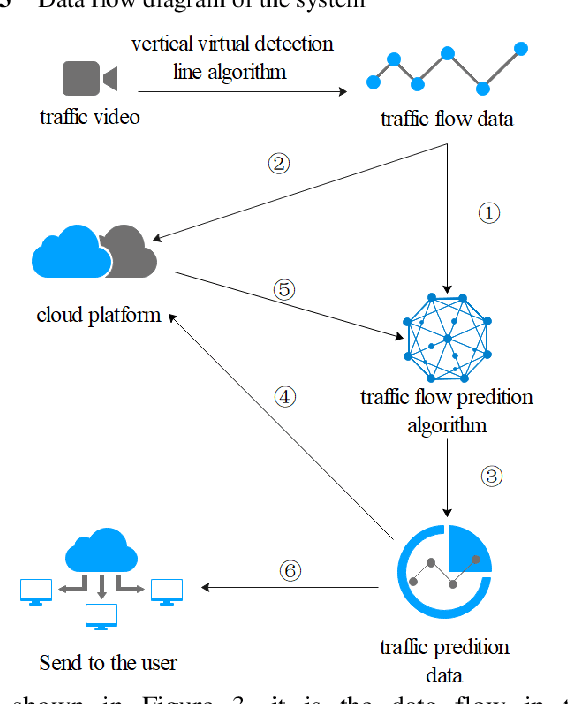
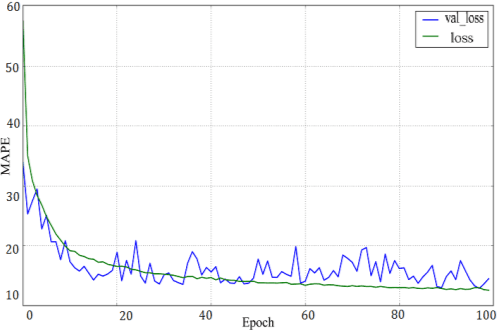
Traffic flow forecasting is hot spot research of intelligent traffic system construction. The existing traffic flow prediction methods have problems such as poor stability, high data requirements, or poor adaptability. In this paper, we define the traffic data time singularity ratio in the dropout module and propose a combination prediction method based on the improved long short-term memory neural network and time series autoregressive integrated moving average model (SDLSTM-ARIMA), which is derived from the Recurrent Neural Networks (RNN) model. It compares the traffic data time singularity with the probability value in the dropout module and combines them at unequal time intervals to achieve an accurate prediction of traffic flow data. Then, we design an adaptive traffic flow embedded system that can adapt to Java, Python and other languages and other interfaces. The experimental results demonstrate that the method based on the SDLSTM - ARIMA model has higher accuracy than the similar method using only autoregressive integrated moving average or autoregressive. Our embedded traffic prediction system integrating computer vision, machine learning and cloud has the advantages such as high accuracy, high reliability and low cost. Therefore, it has a wide application prospect.