 Add to Chrome
 Add to Firefox
 Add to Edge
Human-AI Collaboration Reconfigures Group Regulation from Socially Shared to Hybrid Co-Regulation
Apr 09, 2026
Generative AI (GenAI) is increasingly used in collaborative learning, yet its effects on how groups regulate collaboration remain unclear. Effective collaboration depends not only on what groups discuss, but on how they jointly manage goals, participation, strategy use, monitoring, and repair through co-regulation and socially shared regulation. We compared collaborative regulation between Human-AI and Human-Human groups in a parallel-group randomised experiment with 71 university students completing the same collaborative tasks with GenAI either available or unavailable. Focusing on human discourse, we used statistical analyses to examine differences in the distribution of collaborative regulation across regulatory modes, regulatory processes, and participatory focuses. Results showed that GenAI availability shifted regulation away from predominantly socially shared forms towards more hybrid co-regulatory forms, with selective increases in directive, obstacle-oriented, and affective regulatory processes. Participatory-focus distributions, however, were broadly similar across conditions. These findings suggest that GenAI reshapes the distribution of regulatory responsibility in collaboration and offer implications for the human-centred design of AI-supported collaborative learning.

Multiscale lubrication simulation based on fourier feature networks with trainable frequency
May 21, 2024
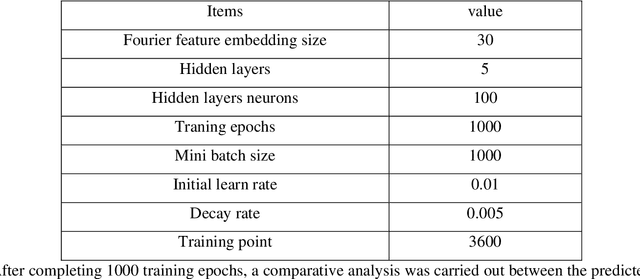


Rough surface lubrication simulation is crucial for designing and optimizing tribological performance. Despite the growing application of Physical Information Neural Networks (PINNs) in hydrodynamic lubrication analysis, their use has been primarily limited to smooth surfaces. This is due to traditional PINN methods suffer from spectral bias, favoring to learn low-frequency features and thus failing to analyze rough surfaces with high-frequency signals. To date, no PINN methods have been reported for rough surface lubrication. To overcome these limitations, this work introduces a novel multi-scale lubrication neural network architecture that utilizes a trainable Fourier feature network. By incorporating learnable feature embedding frequencies, this architecture automatically adapts to various frequency components, thereby enhancing the analysis of rough surface characteristics. This method has been tested across multiple surface morphologies, and the results have been compared with those obtained using the finite element method (FEM). The comparative analysis demonstrates that this approach achieves a high consistency with FEM results. Furthermore, this novel architecture surpasses traditional Fourier feature networks with fixed feature embedding frequencies in both accuracy and computational efficiency. Consequently, the multi-scale lubrication neural network model offers a more efficient tool for rough surface lubrication analysis.