 Add to Chrome
 Add to Firefox
 Add to Edge
SeeMe: Mitigating Hallucinations in Large Vision-Language Models through Effective Visual Token Engineering
Jul 05, 2026
Large Vision-Language Models (LVLMs) have achieved remarkable progress in visual understanding tasks such as image captioning and visual question answering. However, they remain susceptible to hallucinations, generating content that is inconsistent with the actual visual input. Existing methods primarily intervene at the decoding stage, while overlooking a critical source of hallucinations: irrelevant or noisy visual tokens that mislead the decoding process. To address this issue, we propose SeeMe, a training-free framework that introduces the concept of feature engineering from traditional machine learning into LVLMs. SeeMe restructures visual tokens through a three-stage token engineering process to suppress hallucination sources while preserving informative visual evidence. Experiments on MME, POPE, and AMBER benchmarks across four LVLMs demonstrate that SeeMe consistently reduces hallucinations and improves output consistency, providing a novel perspective for mitigating hallucinations in LVLMs.

WildRoadBench: A Wild Aerial Road-Damage Grounding Benchmark for Vision-Language Models and Autonomous Agents
May 19, 2026We introduce WildRoadBench, a wild aerial road-damage grounding benchmark that couples direct visual grounding by vision-language models with autonomous research-and-engineering by LLM-driven agents on a single professionally annotated UAV corpus. The same image set and the same per-class AP_50 metric are evaluated under two protocols. The VLM Track measures whether a fixed VLM can localise domain-specific damage from one image and one short prompt under a unified prompting, decoding and parsing pipeline. The Agent Track measures whether an autonomous agent, given only a written task brief, a small exploratory slice and a fixed interaction budget, can search the public web, adapt pretrained components, write training and inference code, and submit predictions through a scalar-feedback oracle on a hidden holdout. We benchmark a broad pool of closed-source frontier models and open-source VLMs together with several frontier LLM-driven agents. Both routes remain far from reliable performance in this wild setting: closed-source frontier models lead the VLM leaderboard but still leave more than half of the metric on the table; open-source grounders plateau well below them, and newer generations or reasoning-style variants do not consistently improve grounding; small targets collapse for every open-source model; agents lag the strongest VLM despite richer affordances, and several fail to land a valid submission within the budget. We release the code and data at https://anonymous.4open.science/r/wildroadbench-0607 to support reproducible follow-up research.
Models as Lego Builders: Assembling Malice from Benign Blocks via Semantic Blueprints
Mar 08, 2026Despite the rapid progress of Large Vision-Language Models (LVLMs), the integration of visual modalities introduces new safety vulnerabilities that adversaries can exploit to elicit biased or malicious outputs. In this paper, we demonstrate an underexplored vulnerability via semantic slot filling, where LVLMs complete missing slot values with unsafe content even when the slot types are deliberately crafted to appear benign. Building on this finding, we propose StructAttack, a simple yet effective single-query jailbreak framework under black-box settings. StructAttack decomposes a harmful query into a central topic and a set of benign-looking slot types, then embeds them as structured visual prompts (e.g., mind maps, tables, or sunburst diagrams) with small random perturbations. Paired with a completion-guided instruction, LVLMs automatically recompose the concealed semantics and generate unsafe outputs without triggering safety mechanisms. Although each slot appears benign in isolation (local benignness), StructAttack exploits LVLMs' reasoning to assemble these slots into coherent harmful semantics. Extensive experiments on multiple models and benchmarks show the efficacy of our proposed StructAttack.
STAR: Stage-Wise Attention-Guided Token Reduction for Efficient Large Vision-Language Models Inference
May 18, 2025Although large vision-language models (LVLMs) leverage rich visual token representations to achieve strong performance on multimodal tasks, these tokens also introduce significant computational overhead during inference. Existing training-free token pruning methods typically adopt a single-stage strategy, focusing either on visual self-attention or visual-textual cross-attention. However, such localized perspectives often overlook the broader information flow across the model, leading to substantial performance degradation, especially under high pruning ratios. In this work, we propose STAR (Stage-wise Attention-guided token Reduction), a training-free, plug-and-play framework that approaches token pruning from a global perspective. Instead of pruning at a single point, STAR performs attention-guided reduction in two complementary stages: an early-stage pruning based on visual self-attention to remove redundant low-level features, and a later-stage pruning guided by cross-modal attention to discard task-irrelevant tokens. This holistic approach allows STAR to significantly reduce computational cost while better preserving task-critical information. Extensive experiments across multiple LVLM architectures and benchmarks show that STAR achieves strong acceleration while maintaining comparable, and in some cases even improved performance.
Mitigating Hallucinations via Inter-Layer Consistency Aggregation in Large Vision-Language Models
May 18, 2025Despite the impressive capabilities of Large Vision-Language Models (LVLMs), they remain susceptible to hallucinations-generating content that is inconsistent with the input image. Existing training-free hallucination mitigation methods often suffer from unstable performance and high sensitivity to hyperparameter settings, limiting their practicality and broader adoption. In this paper, we propose a novel decoding mechanism, Decoding with Inter-layer Consistency via Layer Aggregation (DCLA), which requires no retraining, fine-tuning, or access to external knowledge bases. Specifically, our approach constructs a dynamic semantic reference by aggregating representations from previous layers, and corrects semantically deviated layers to enforce inter-layer consistency. The method allows DCLA to robustly mitigate hallucinations across multiple LVLMs. Experiments on hallucination benchmarks such as MME and POPE demonstrate that DCLA effectively reduces hallucinations while enhancing the reliability and performance of LVLMs.
Enhancing Layer Attention Efficiency through Pruning Redundant Retrievals
Mar 09, 2025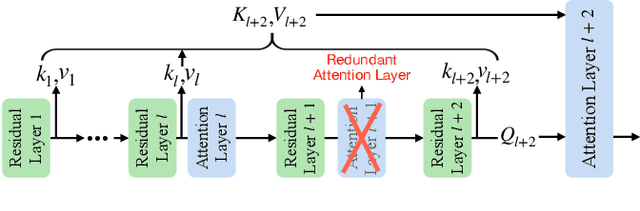
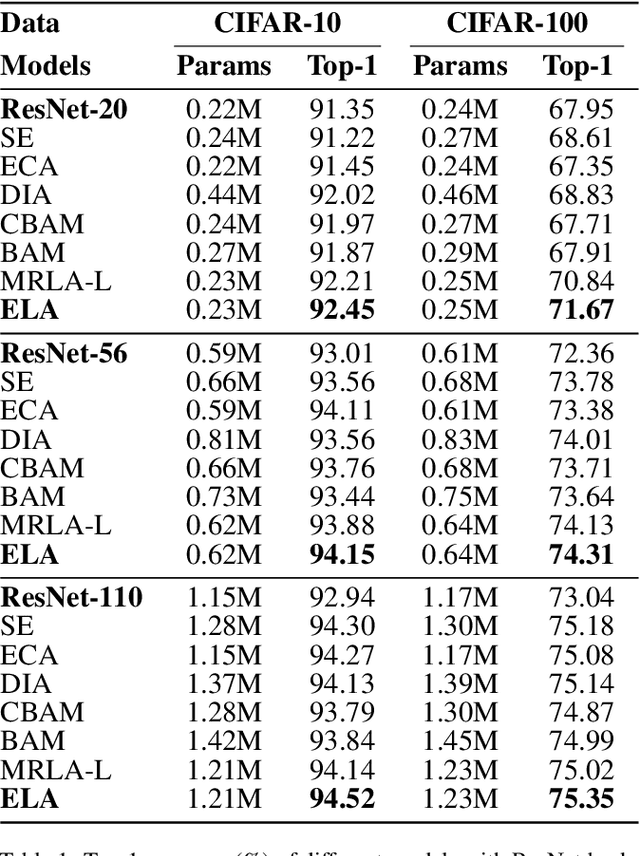
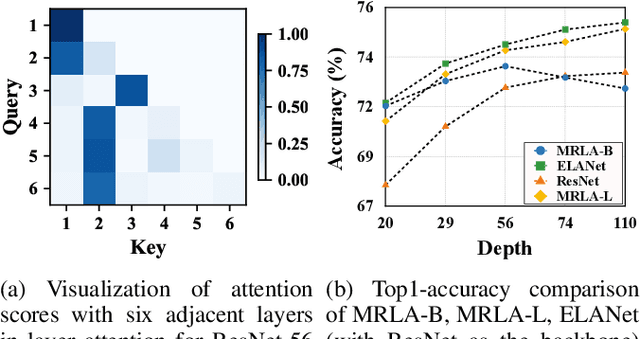
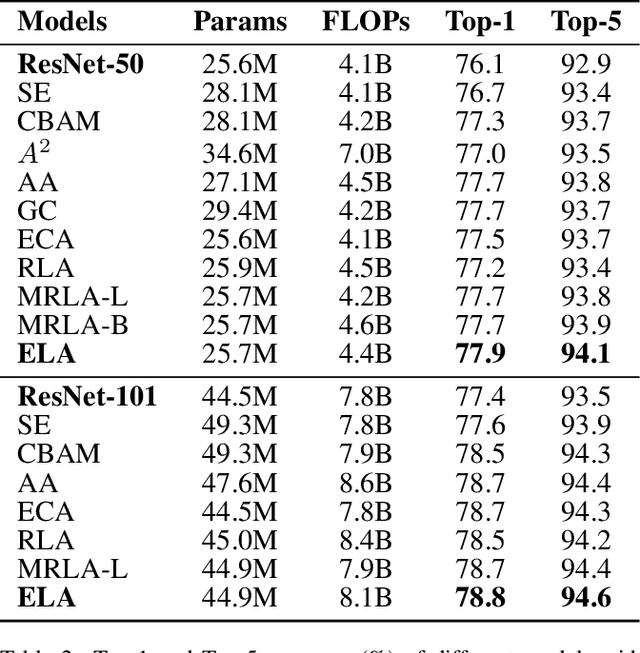
Growing evidence suggests that layer attention mechanisms, which enhance interaction among layers in deep neural networks, have significantly advanced network architectures. However, existing layer attention methods suffer from redundancy, as attention weights learned by adjacent layers often become highly similar. This redundancy causes multiple layers to extract nearly identical features, reducing the model's representational capacity and increasing training time. To address this issue, we propose a novel approach to quantify redundancy by leveraging the Kullback-Leibler (KL) divergence between adjacent layers. Additionally, we introduce an Enhanced Beta Quantile Mapping (EBQM) method that accurately identifies and skips redundant layers, thereby maintaining model stability. Our proposed Efficient Layer Attention (ELA) architecture, improves both training efficiency and overall performance, achieving a 30\% reduction in training time while enhancing performance in tasks such as image classification and object detection.