 Add to Chrome
 Add to Firefox
 Add to Edge
Understanding Why Language Models Hallucinate: Testing Reasoning Against Priors
Jul 01, 2026
Large language models often produce hallucinated answers that violate prompt-level constraints. A key diagnostic question is whether these failures reflect missing knowledge, or whether the model has the relevant information but follows the wrong inference path. We study this phenomenon as inference misalignment: a mismatch between the answer supported by the prompt and the answer favored by statistically salient latent associations. We formalize this view with a latent key-task model, in which pretraining-frequency imbalance can cause a shortcut path to dominate the constraint-sensitive path and induce positive inference loss. The framework predicts two failure modes: task-retrieval bias in entity disambiguation and key-selection bias in action choice. We introduce TrapQA, a controlled diagnostic testbed with two components. ScientistQA tests disambiguation among similar scientists with supplementary factual probes, while Real-Life Constrained QA tests everyday constraint following under salient shortcuts. Our results show that hallucination can arise from biased latent inference rather than absent knowledge alone.

Trust-Aware Joint Feature-Prediction Discrepancy for Robust Domain Adaptation
May 24, 2026Domain adaptation aims to mitigate performance degradation caused by distribution shifts between a labeled source domain and an unlabeled or sparsely labeled target domain. Most existing approaches estimate domain discrepancy either in feature space or in prediction space. However, these single-perspective strategies overlook a critical problem under domain shift: the reliability of the signals used for alignment. In practice, both learned representations and semantic predictions may become unreliable, and treating all target samples equally can lead to misleading alignment and suboptimal transfer. We introduce trust-aware domain adaptation, a principled framework that models domain discrepancy through the reliability of feature and prediction signals. Central to our approach is the Joint Feature-Prediction Discrepancy (JFPD), a unified formulation that jointly captures representation divergence and prediction divergence while weighting their contributions by sample-specific trust. Trust is quantified via two complementary mechanisms: uncertainty-aware trust, derived from prediction entropy to suppress unreliable predictions, and semantic-alignment trust, computed from prototype similarity in feature space to emphasize well-aligned representations. By prioritizing confident and semantically consistent samples while down-weighting noisy or ambiguous ones, JFPD provides a reliability-aware estimate of domain discrepancy. We further integrate JFPD into a training objective that guides adaptation toward trustworthy regions of the target domain. Experiments on standard benchmarks demonstrate that the proposed framework consistently achieves superior adaptation performance and yields discrepancy estimates that correlate with target-domain error. This work addresses, for the first time, the importance of modeling trust in the interaction between features and predictions for domain adaptation.
Subspace Kernel Learning on Tensor Sequences
Mar 20, 2026Learning from structured multi-way data, represented as higher-order tensors, requires capturing complex interactions across tensor modes while remaining computationally efficient. We introduce Uncertainty-driven Kernel Tensor Learning (UKTL), a novel kernel framework for $M$-mode tensors that compares mode-wise subspaces derived from tensor unfoldings, enabling expressive and robust similarity measure. To handle large-scale tensor data, we propose a scalable Nyström kernel linearization with dynamically learned pivot tensors obtained via soft $k$-means clustering. A key innovation of UKTL is its uncertainty-aware subspace weighting, which adaptively down-weights unreliable mode components based on estimated confidence, improving robustness and interpretability in comparisons between input and pivot tensors. Our framework is fully end-to-end trainable and naturally incorporates both multi-way and multi-mode interactions through structured kernel compositions. Extensive evaluations on action recognition benchmarks (NTU-60, NTU-120, Kinetics-Skeleton) show that UKTL achieves state-of-the-art performance, superior generalization, and meaningful mode-wise insights. This work establishes a principled, scalable, and interpretable kernel learning paradigm for structured multi-way and multi-modal tensor sequences.
Beyond Medical Diagnostics: How Medical Multimodal Large Language Models Think in Space
Mar 14, 2026Visual spatial intelligence is critical for medical image interpretation, yet remains largely unexplored in Multimodal Large Language Models (MLLMs) for 3D imaging. This gap persists due to a systemic lack of datasets featuring structured 3D spatial annotations beyond basic labels. In this study, we introduce an agentic pipeline that autonomously synthesizes spatial visual question-answering (VQA) data by orchestrating computational tools such as volume and distance calculators with multi-agent collaboration and expert radiologist validation. We present SpatialMed, the first comprehensive benchmark for evaluating 3D spatial intelligence in medical MLLMs, comprising nearly 10K question-answer pairs across multiple organs and tumor types. Our evaluations on 14 state-of-the-art MLLMs and extensive analyses reveal that current models lack robust spatial reasoning capabilities for medical imaging.
Learning Time in Static Classifiers
Nov 15, 2025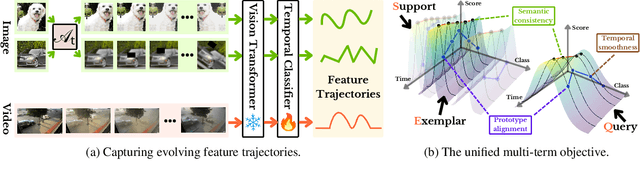
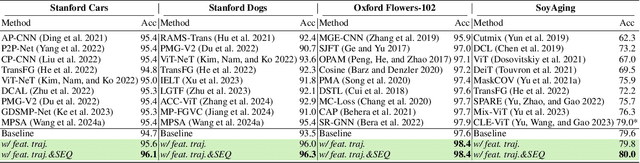
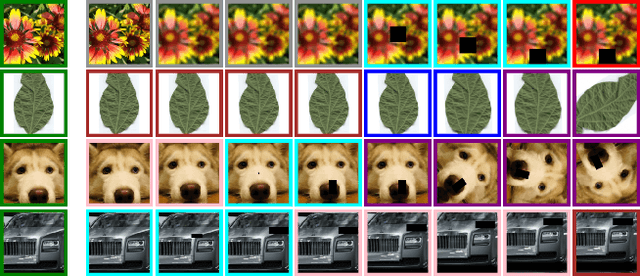

Real-world visual data rarely presents as isolated, static instances. Instead, it often evolves gradually over time through variations in pose, lighting, object state, or scene context. However, conventional classifiers are typically trained under the assumption of temporal independence, limiting their ability to capture such dynamics. We propose a simple yet effective framework that equips standard feedforward classifiers with temporal reasoning, all without modifying model architectures or introducing recurrent modules. At the heart of our approach is a novel Support-Exemplar-Query (SEQ) learning paradigm, which structures training data into temporally coherent trajectories. These trajectories enable the model to learn class-specific temporal prototypes and align prediction sequences via a differentiable soft-DTW loss. A multi-term objective further promotes semantic consistency and temporal smoothness. By interpreting input sequences as evolving feature trajectories, our method introduces a strong temporal inductive bias through loss design alone. This proves highly effective in both static and temporal tasks: it enhances performance on fine-grained and ultra-fine-grained image classification, and delivers precise, temporally consistent predictions in video anomaly detection. Despite its simplicity, our approach bridges static and temporal learning in a modular and data-efficient manner, requiring only a simple classifier on top of pre-extracted features.
Quo Vadis, Anomaly Detection? LLMs and VLMs in the Spotlight
Dec 24, 2024Video anomaly detection (VAD) has witnessed significant advancements through the integration of large language models (LLMs) and vision-language models (VLMs), addressing critical challenges such as interpretability, temporal reasoning, and generalization in dynamic, open-world scenarios. This paper presents an in-depth review of cutting-edge LLM-/VLM-based methods in 2024, focusing on four key aspects: (i) enhancing interpretability through semantic insights and textual explanations, making visual anomalies more understandable; (ii) capturing intricate temporal relationships to detect and localize dynamic anomalies across video frames; (iii) enabling few-shot and zero-shot detection to minimize reliance on large, annotated datasets; and (iv) addressing open-world and class-agnostic anomalies by using semantic understanding and motion features for spatiotemporal coherence. We highlight their potential to redefine the landscape of VAD. Additionally, we explore the synergy between visual and textual modalities offered by LLMs and VLMs, highlighting their combined strengths and proposing future directions to fully exploit the potential in enhancing video anomaly detection.
Do Language Models Understand Time?
Dec 18, 2024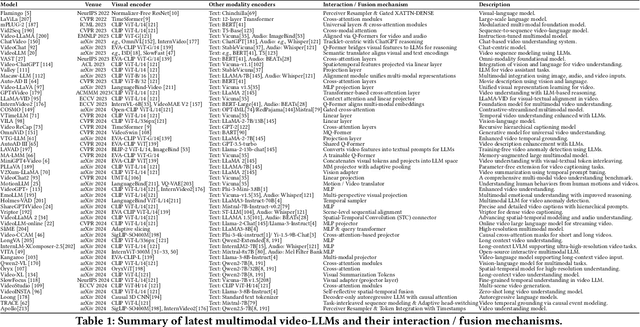
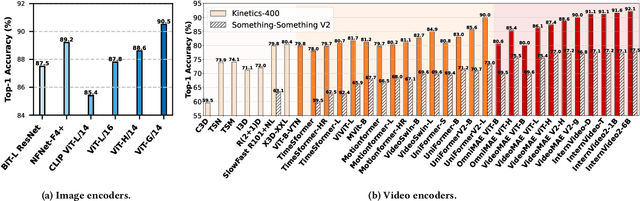
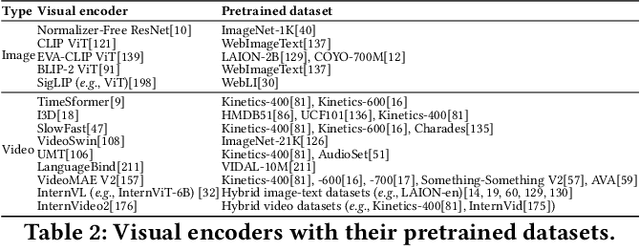
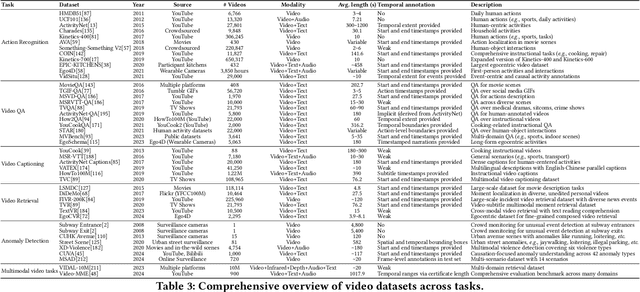
Large language models (LLMs) have revolutionized video-based computer vision applications, including action recognition, anomaly detection, and video summarization. Videos inherently pose unique challenges, combining spatial complexity with temporal dynamics that are absent in static images or textual data. Current approaches to video understanding with LLMs often rely on pretrained video encoders to extract spatiotemporal features and text encoders to capture semantic meaning. These representations are integrated within LLM frameworks, enabling multimodal reasoning across diverse video tasks. However, the critical question persists: Can LLMs truly understand the concept of time, and how effectively can they reason about temporal relationships in videos? This work critically examines the role of LLMs in video processing, with a specific focus on their temporal reasoning capabilities. We identify key limitations in the interaction between LLMs and pretrained encoders, revealing gaps in their ability to model long-term dependencies and abstract temporal concepts such as causality and event progression. Furthermore, we analyze challenges posed by existing video datasets, including biases, lack of temporal annotations, and domain-specific limitations that constrain the temporal understanding of LLMs. To address these gaps, we explore promising future directions, including the co-evolution of LLMs and encoders, the development of enriched datasets with explicit temporal labels, and innovative architectures for integrating spatial, temporal, and semantic reasoning. By addressing these challenges, we aim to advance the temporal comprehension of LLMs, unlocking their full potential in video analysis and beyond.