 Add to Chrome
 Add to Firefox
 Add to Edge
Offload or Overload: A Platform Measurement Study of Mobile Robotic Manipulation Workloads
Mar 18, 2026
Mobile robotic manipulation--the ability of robots to navigate spaces and interact with objects--is a core capability of physical AI. Foundation models have led to breakthroughs in their performance, but at a significant computational cost. We present the first measurement study of mobile robotic manipulation workloads across onboard, edge, and cloud GPU platforms. We find that the full workload stack is infeasible to run on smaller onboard GPUs, while larger onboard GPUs drain robot batteries several hours faster. Offloading alleviates these constraints but introduces its own challenges, as additional network latency degrades task accuracy, and the bandwidth requirement makes naive cloud offloading impractical. Finally, we quantify opportunities and pitfalls of sharing compute across robot fleets. We believe our measurement study will be crucial to designing inference systems for mobile robots.

Distributed AI Platform for the 6G RAN
Oct 01, 2024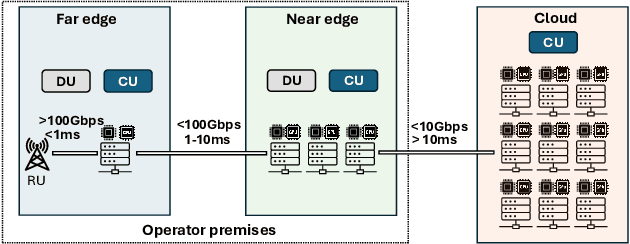
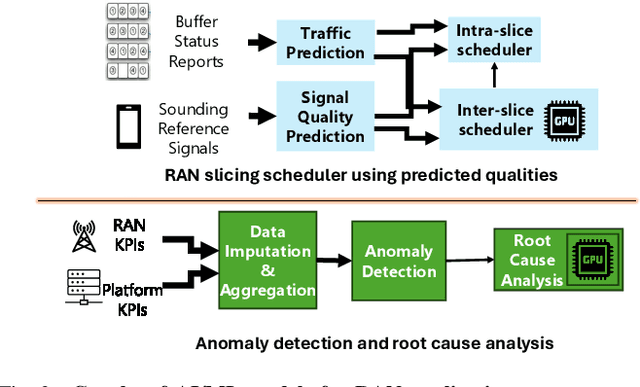
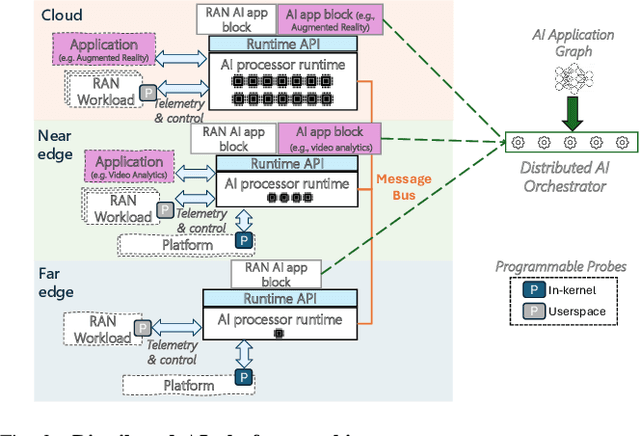
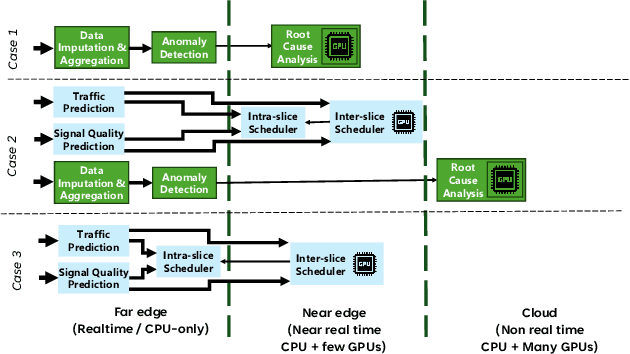
Cellular Radio Access Networks (RANs) are rapidly evolving towards 6G, driven by the need to reduce costs and introduce new revenue streams for operators and enterprises. In this context, AI emerges as a key enabler in solving complex RAN problems spanning both the management and application domains. Unfortunately, and despite the undeniable promise of AI, several practical challenges still remain, hindering the widespread adoption of AI applications in the RAN space. This article attempts to shed light to these challenges and argues that existing approaches in addressing them are inadequate for realizing the vision of a truly AI-native 6G network. Motivated by this lack of solutions, it proposes a generic distributed AI platform architecture, tailored to the needs of an AI-native RAN and discusses its alignment with ongoing standardization efforts.
AutoSpec: Automated Generation of Neural Network Specifications
Sep 17, 2024
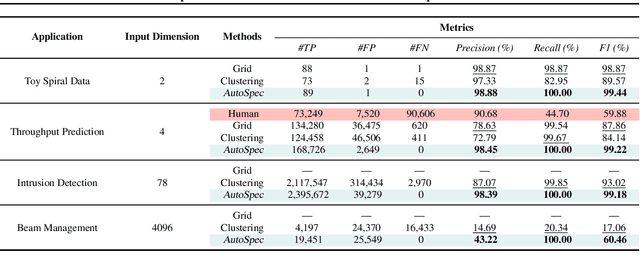

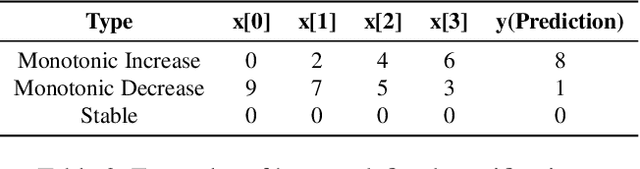
The increasing adoption of neural networks in learning-augmented systems highlights the importance of model safety and robustness, particularly in safety-critical domains. Despite progress in the formal verification of neural networks, current practices require users to manually define model specifications -- properties that dictate expected model behavior in various scenarios. This manual process, however, is prone to human error, limited in scope, and time-consuming. In this paper, we introduce AutoSpec, the first framework to automatically generate comprehensive and accurate specifications for neural networks in learning-augmented systems. We also propose the first set of metrics for assessing the accuracy and coverage of model specifications, establishing a benchmark for future comparisons. Our evaluation across four distinct applications shows that AutoSpec outperforms human-defined specifications as well as two baseline approaches introduced in this study.