 Add to Chrome
 Add to Firefox
 Add to Edge
Leveraging Large Language Models for Career Mobility Analysis: A Study of Gender, Race, and Job Change Using U.S. Online Resume Profiles
Nov 15, 2025
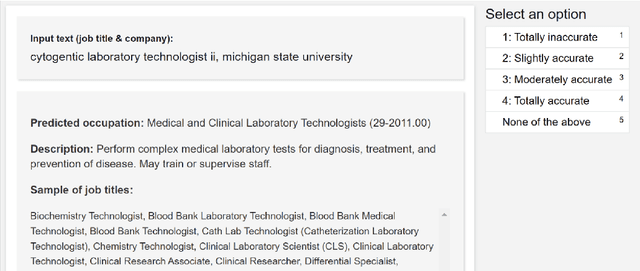
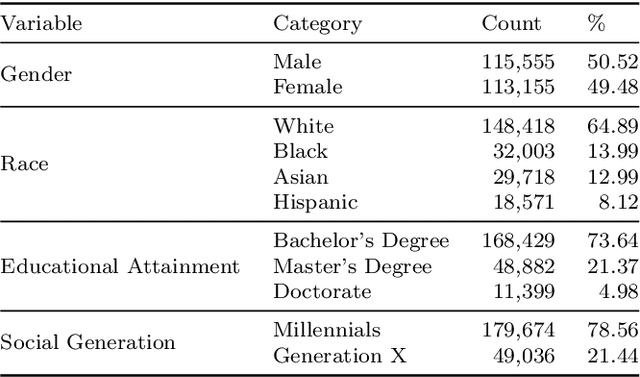
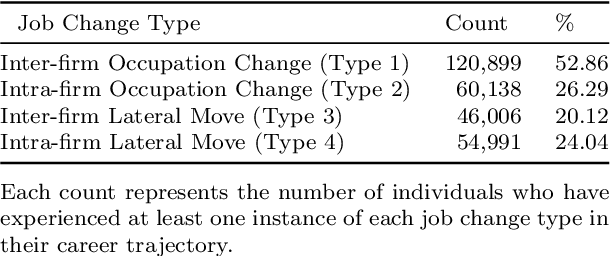
We present a large-scale analysis of career mobility of college-educated U.S. workers using online resume profiles to investigate how gender, race, and job change options are associated with upward mobility. This study addresses key research questions of how the job changes affect their upward career mobility, and how the outcomes of upward career mobility differ by gender and race. We address data challenges -- such as missing demographic attributes, missing wage data, and noisy occupation labels -- through various data processing and Artificial Intelligence (AI) methods. In particular, we develop a large language models (LLMs) based occupation classification method known as FewSOC that achieves accuracy significantly higher than the original occupation labels in the resume dataset. Analysis of 228,710 career trajectories reveals that intra-firm occupation change has been found to facilitate upward mobility most strongly, followed by inter-firm occupation change and inter-firm lateral move. Women and Black college graduates experience significantly lower returns from job changes than men and White peers. Multilevel sensitivity analyses confirm that these disparities are robust to cluster-level heterogeneity and reveal additional intersectional patterns.

JobComposer: Career Path Optimization via Multicriteria Utility Learning
Sep 04, 2018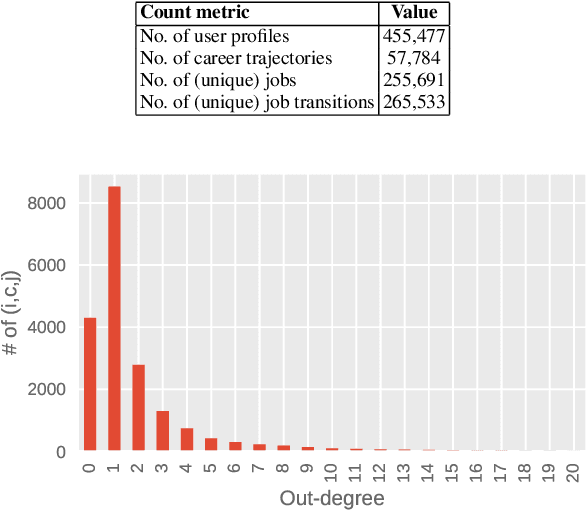
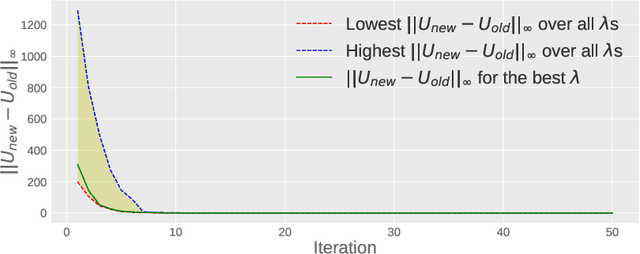
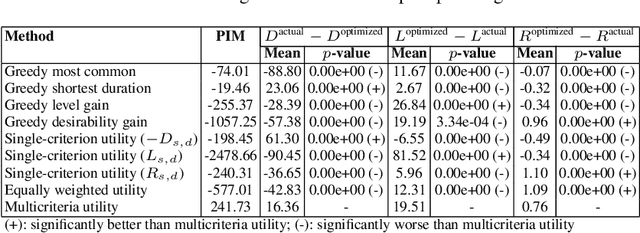
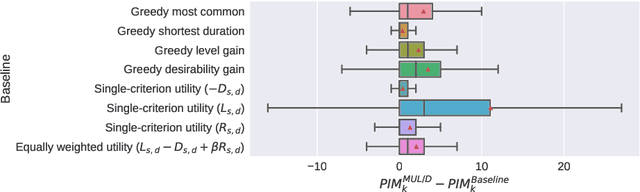
With online professional network platforms (OPNs, e.g., LinkedIn, Xing, etc.) becoming popular on the web, people are now turning to these platforms to create and share their professional profiles, to connect with others who share similar professional aspirations and to explore new career opportunities. These platforms however do not offer a long-term roadmap to guide career progression and improve workforce employability. The career trajectories of OPN users can serve as a reference but they are not always optimal. A career plan can also be devised through consultation with career coaches, whose knowledge may however be limited to a few industries. To address the above limitations, we present a novel data-driven approach dubbed JobComposer to automate career path planning and optimization. Its key premise is that the observed career trajectories in OPNs may not necessarily be optimal, and can be improved by learning to maximize the sum of payoffs attainable by following a career path. At its heart, JobComposer features a decomposition-based multicriteria utility learning procedure to achieve the best tradeoff among different payoff criteria in career path planning. Extensive studies using a city state-based OPN dataset demonstrate that JobComposer returns career paths better than other baseline methods and the actual career paths.