 Add to Chrome
 Add to Firefox
 Add to Edge
Understanding the Challenges in Iterative Generative Optimization with LLMs
Mar 25, 2026
Generative optimization uses large language models (LLMs) to iteratively improve artifacts (such as code, workflows or prompts) using execution feedback. It is a promising approach to building self-improving agents, yet in practice remains brittle: despite active research, only 9% of surveyed agents used any automated optimization. We argue that this brittleness arises because, to set up a learning loop, an engineer must make ``hidden'' design choices: What can the optimizer edit and what is the "right" learning evidence to provide at each update? We investigate three factors that affect most applications: the starting artifact, the credit horizon for execution traces, and batching trials and errors into learning evidence. Through case studies in MLAgentBench, Atari, and BigBench Extra Hard, we find that these design decisions can determine whether generative optimization succeeds, yet they are rarely made explicit in prior work. Different starting artifacts determine which solutions are reachable in MLAgentBench, truncated traces can still improve Atari agents, and larger minibatches do not monotonically improve generalization on BBEH. We conclude that the lack of a simple, universal way to set up learning loops across domains is a major hurdle for productionization and adoption. We provide practical guidance for making these choices.

Complex QA and language models hybrid architectures, Survey
Feb 17, 2023

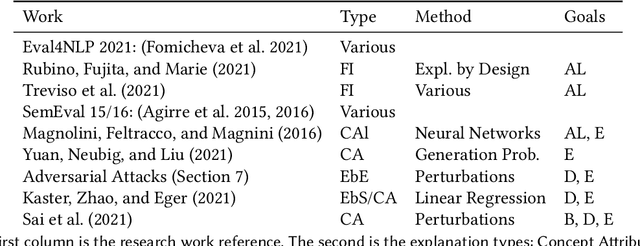
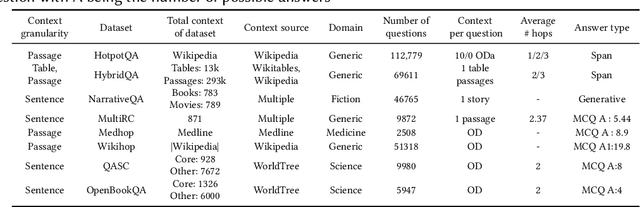
This paper provides a survey of the state of the art of hybrid language models architectures and strategies for "complex" question-answering (QA, CQA, CPS). Very large language models are good at leveraging public data on standard problems but once you want to tackle more specific complex questions or problems you may need specific architecture, knowledge, skills, tasks, methods, sensitive data, performance, human approval and versatile feedback... This survey extends findings from the robust community edited research papers BIG, BLOOM and HELM which open source, benchmark and analyze limits and challenges of large language models in terms of tasks complexity and strict evaluation on accuracy (e.g. fairness, robustness, toxicity, ...). It identifies the key elements used with Large Language Models (LLM) to solve complex questions or problems. Recent projects like ChatGPT and GALACTICA have allowed non-specialists to grasp the great potential as well as the equally strong limitations of language models in complex QA. Hybridizing these models with different components could allow to overcome these different limits and go much further. We discuss some challenges associated with complex QA, including domain adaptation, decomposition and efficient multi-step QA, long form QA, non-factoid QA, safety and multi-sensitivity data protection, multimodal search, hallucinations, QA explainability and truthfulness, time dimension. Therefore we review current solutions and promising strategies, using elements such as hybrid LLM architectures, human-in-the-loop reinforcement learning, prompting adaptation, neuro-symbolic and structured knowledge grounding, program synthesis, and others. We analyze existing solutions and provide an overview of the current research and trends in the area of complex QA.