 Add to Chrome
 Add to Firefox
 Add to Edge
LatRef-Diff: Latent and Reference-Guided Diffusion for Facial Attribute Editing and Style Manipulation
Apr 23, 2026
Facial attribute editing and style manipulation are crucial for applications like virtual avatars and photo editing. However, achieving precise control over facial attributes without altering unrelated features is challenging due to the complexity of facial structures and the strong correlations between attributes. While conditional GANs have shown progress, they are limited by accuracy issues and training instability. Diffusion models, though promising, face challenges in style manipulation due to the limited expressiveness of semantic directions. In this paper, we propose LatRef-Diff, a novel diffusion-based framework that addresses these limitations. We replace the traditional semantic directions in diffusion models with style codes and propose two methods for generating them: latent and reference guidance. Based on these style codes, we design a style modulation module that integrates them into the target image, enabling both random and customized style manipulation. This module incorporates learnable vectors, cross-attention mechanisms, and a hierarchical design to improve accuracy and image quality. Additionally, to enhance training stability while eliminating the need for paired images (e.g., before and after editing), we propose a forward-backward consistency training strategy. This strategy first removes the target attribute approximately using image-specific semantic directions and then restores it via style modulation, guided by perceptual and classification losses. Extensive experiments on CelebA-HQ demonstrate that LatRef-Diff achieves state-of-the-art performance in both qualitative and quantitative evaluations. Ablation studies validate the effectiveness of our model's design choices.

AttDiff-GAN: A Hybrid Diffusion-GAN Framework for Facial Attribute Editing
Apr 23, 2026Facial attribute editing aims to modify target attributes while preserving attribute-irrelevant content and overall image fidelity. Existing GAN-based methods provide favorable controllability, but often suffer from weak alignment between style codes and attribute semantics. Diffusion-based methods can synthesize highly realistic images; however, their editing precision is limited by the entanglement of semantic directions among different attributes. In this paper, we propose AttDiff-GAN, a hybrid framework that combines GAN-based attribute manipulation with diffusion-based image generation. A key challenge in such integration lies in the inconsistency between one-step adversarial learning and multi-step diffusion denoising, which makes effective optimization difficult. To address this issue, we decouple attribute editing from image synthesis by introducing a feature-level adversarial learning scheme to learn explicit attribute manipulation, and then using the manipulated features to guide the diffusion process for image generation, while also removing the reliance on semantic direction-based editing. Moreover, we enhance style-attribute alignment by introducing PriorMapper, which incorporates facial priors into style generation, and RefineExtractor, which captures global semantic relationships through a Transformer for more precise style extraction. Experimental results on CelebA-HQ show that the proposed method achieves more accurate facial attribute editing and better preservation of non-target attributes than state-of-the-art methods in both qualitative and quantitative evaluations.
AI-Generated Image Detection using a Cross-Attention Enhanced Dual-Stream Network
Jun 12, 2023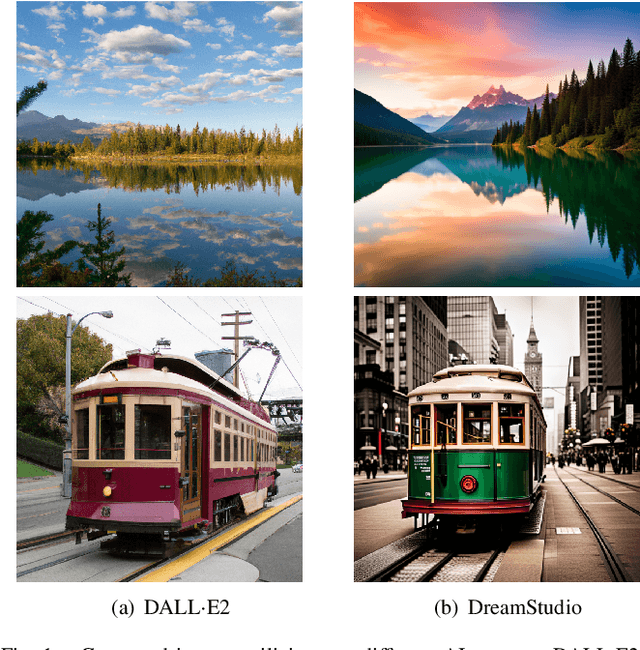
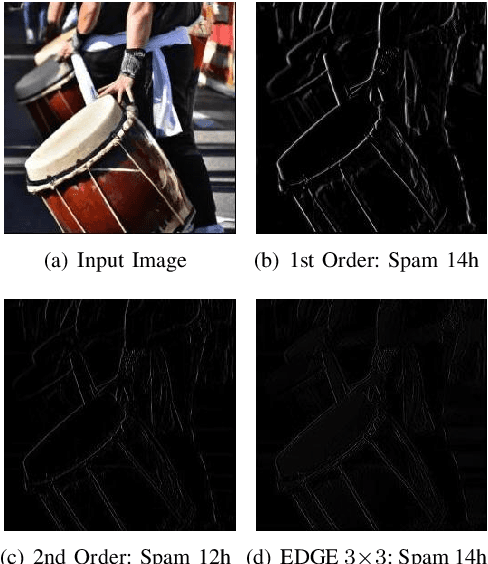
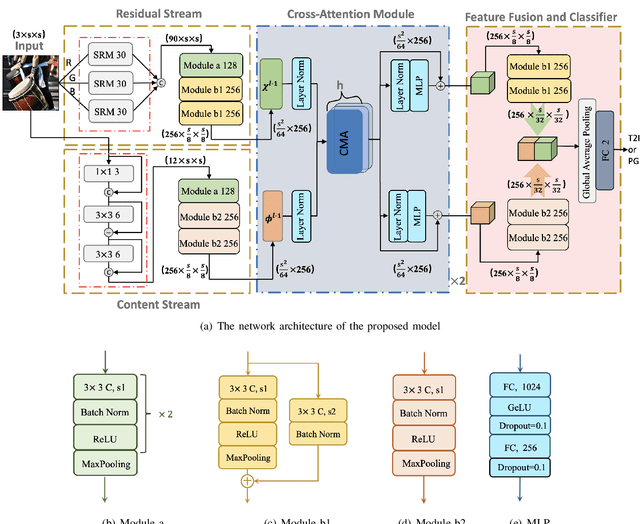
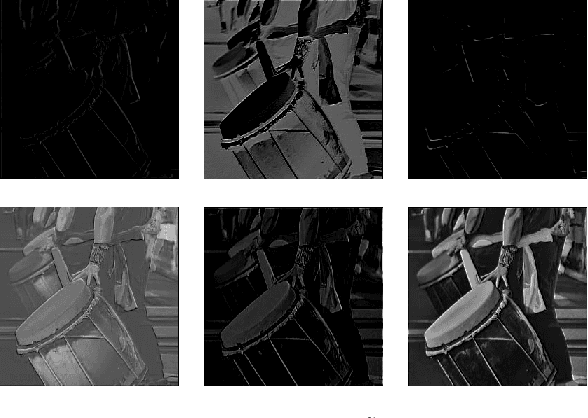
With the rapid evolution of AI Generated Content (AIGC), forged images produced through this technology are inherently more deceptive and require less human intervention compared to traditional Computer-generated Graphics (CG). However, owing to the disparities between CG and AIGC, conventional CG detection methods tend to be inadequate in identifying AIGC-produced images. To address this issue, our research concentrates on the text-to-image generation process in AIGC. Initially, we first assemble two text-to-image databases utilizing two distinct AI systems, DALLE2 and DreamStudio. Aiming to holistically capture the inherent anomalies produced by AIGC, we develope a robust dual-stream network comprised of a residual stream and a content stream. The former employs the Spatial Rich Model (SRM) to meticulously extract various texture information from images, while the latter seeks to capture additional forged traces in low frequency, thereby extracting complementary information that the residual stream may overlook. To enhance the information exchange between these two streams, we incorporate a cross multi-head attention mechanism. Numerous comparative experiments are performed on both databases, and the results show that our detection method consistently outperforms traditional CG detection techniques across a range of image resolutions. Moreover, our method exhibits superior performance through a series of robustness tests and cross-database experiments. When applied to widely recognized traditional CG benchmarks such as SPL2018 and DsTok, our approach significantly exceeds the capabilities of other existing methods in the field of CG detection.