 Add to Chrome
 Add to Firefox
 Add to Edge
GeCo-SRT: Geometry-aware Continual Adaptation for Robotic Cross-Task Sim-to-Real Transfer
Feb 25, 2026
Bridging the sim-to-real gap is important for applying low-cost simulation data to real-world robotic systems. However, previous methods are severely limited by treating each transfer as an isolated endeavor, demanding repeated, costly tuning and wasting prior transfer experience. To move beyond isolated sim-to-real, we build a continual cross-task sim-to-real transfer paradigm centered on knowledge accumulation across iterative transfers, thereby enabling effective and efficient adaptation to novel tasks. Thus, we propose GeCo-SRT, a geometry-aware continual adaptation method. It utilizes domain-invariant and task-invariant knowledge from local geometric features as a transferable foundation to accelerate adaptation during subsequent sim-to-real transfers. This method starts with a geometry-aware mixture-of-experts module, which dynamically activates experts to specialize in distinct geometric knowledge to bridge observation sim-to-real gap. Further, the geometry-expert-guided prioritized experience replay module preferentially samples from underutilized experts, refreshing specialized knowledge to combat forgetting and maintain robust cross-task performance. Leveraging knowledge accumulated during iterative transfer, GeCo-SRT method not only achieves 52% average performance improvement over the baseline, but also demonstrates significant data efficiency for new task adaptation with only 1/6 data. We hope this work inspires approaches for efficient, low-cost cross-task sim-to-real transfer.

Modeling and simulation of a mechanism for suppressing the flipping problem of a jumping robot
May 20, 2024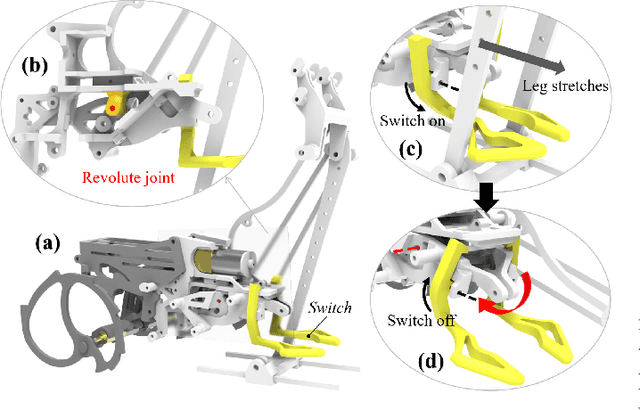
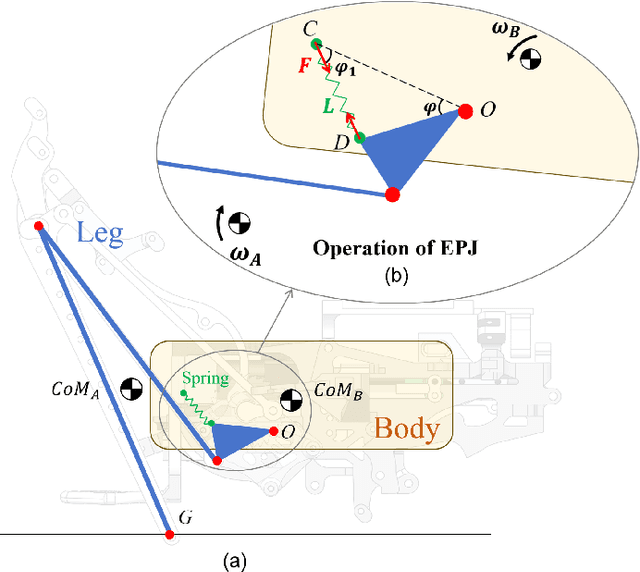
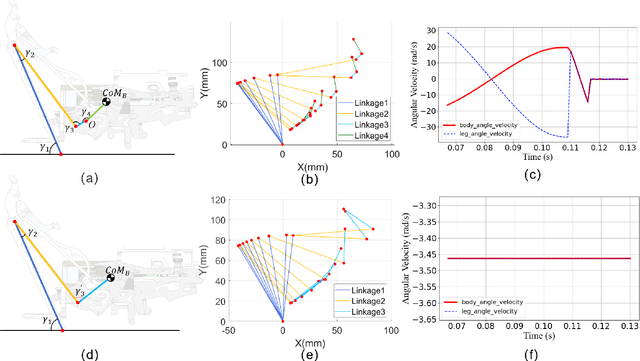
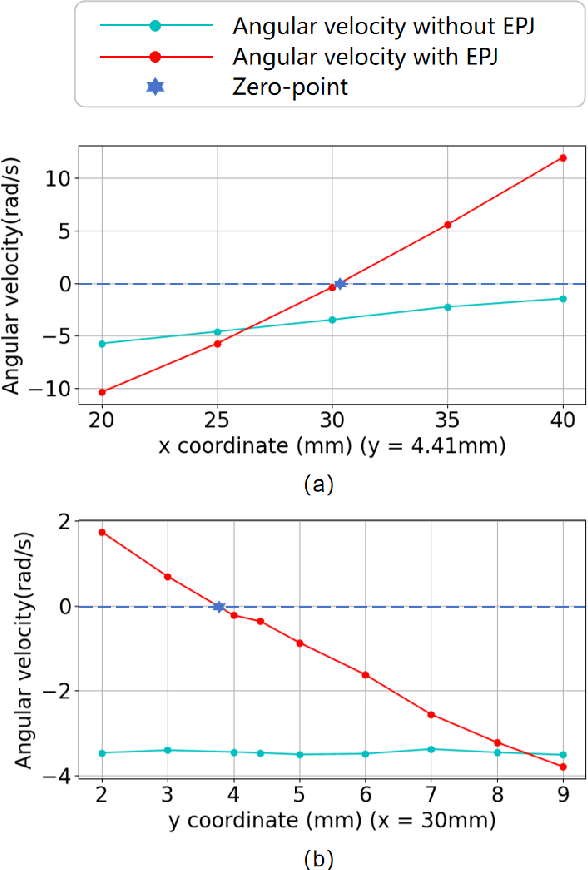
In order to solve the problem of stable jumping of micro robot, we design a special mechanism: elastic passive joint (EPJ). EPJ can assist in achieving smooth jumping through the opening-closing process when the robot jumps. First, we introduce the composition and operation principle of EPJ, and perform a dynamic modeling of the robot's jumping process. Then, in order to verify the effectiveness of EPJ in controlling the robot's smooth jump, we design a simulation experiment based on MATLAB. Through comparative experiments, it was proved that EPJ can greatly adjust the angular velocity of the robot and increase the jump distance of the robot. Finally, we analyze each parameter in EPJ and performs parameter optimization. After optimization, EPJ achieves a completely flip-free jump of the robot, laying an important foundation for improving the mobility of micro-robot.