 Add to Chrome
 Add to Firefox
 Add to Edge
Causal Discovery in the Era of Agents
Jun 22, 2026
Recent attempts to combine large language models (LLMs) with causal discovery ask models to infer pairwise directions, propose graph structures, or inject language-model outputs as priors and constraints. These approaches promise faster analysis, but they also obscure whether a causal evidence is supported by data and assumptions or by textual associations, prompt artifacts and hallucinated mechanisms. We argue for a different role for agents in causal discovery. Agents should inspect data, retrieve context, explain method assumptions and clarify graph outputs, but they should not supply edges, orientations, priors, constraints or causal conclusions. We propose the principle that agents assist the workflow, while causal claims remain grounded in data, explicit assumptions, formal algorithms, diagnostics and user or domain-expert decisions. We instantiate this principle in causal-learn+, an online platform that coordinates data analysis, preprocessing, method recommendation, expert-knowledge incorporation, formal discovery and interpretation around the algorithmic ecosystem of causal-learn. A case study on Big Five personality data illustrates agent-assisted pipeline of causal discovery without turning language-model unreliability into causal evidence. The platform is available at causallearn.com.

Easy Reads: A Python program for making Scientific Papers on arXiv more Reader Friendly and Accessible
Jun 18, 2026Scientific papers are frequently dense and characterized by features such as small fonts and line spacing, double columns of text, and tightly arranged figures. While these features make papers more compact, they can hinder readability, make them less accessible, and can strain the reader. arXiv is a premier open-access repository for scientific papers across different fields and is used extensively by researchers, including those in the physics and astrophysics communities. Easy Reads is an automated, end-to-end, open-source Python program that helps address the stated challenge by making papers from arXiv more reader-friendly and accessible. Easy Reads can automatically fetch a paper from arXiv via its URL and work with the source TeX file to allow custom formatting of the paper features, primarily the font size, and the number of columns used. The main goal of Easy Reads is to facilitate ease of reading of scientific papers.
Power Flow Analysis Using Deep Neural Networks in Three-Phase Unbalanced Smart Distribution Grids
Jan 15, 2024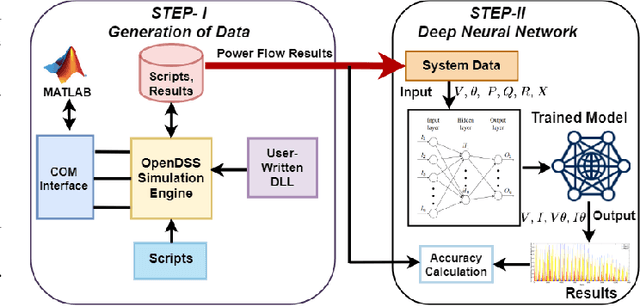
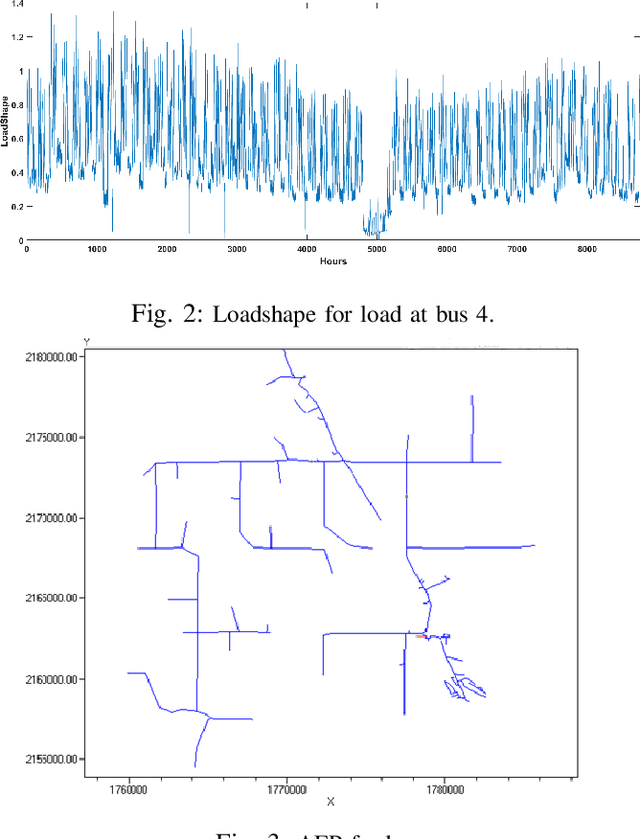

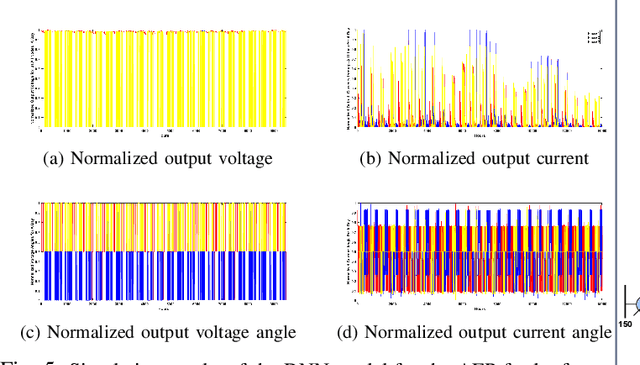
Most power systems' approaches are currently tending towards stochastic and probabilistic methods due to the high variability of renewable sources and the stochastic nature of loads. Conventional power flow (PF) approaches such as forward-backward sweep (FBS) and Newton-Raphson require a high number of iterations to solve non-linear PF equations making them computationally very intensive. PF is the most important study performed by utility, required in all stages of the power system, especially in operations and planning. This paper discusses the applications of deep learning (DL) to predict PF solutions for three-phase unbalanced power distribution grids. Three deep neural networks (DNNs); Radial Basis Function Network (RBFnet), Multi-Layer Perceptron (MLP), and Convolutional Neural Network (CNN), are proposed in this paper to predict PF solutions. The PF problem is formulated as a multi-output regression model where two or more output values are predicted based on the inputs. The training and testing data are generated through the OpenDSS-MATLAB COM interface. These methods are completely data-driven where the training relies on reducing the mismatch at each node without the need for the knowledge of the system. The novelty of the proposed methodology is that the models can accurately predict the PF solutions for the unbalanced distribution grids with mutual coupling and are robust to different R/X ratios, topology changes as well as generation and load variability introduced by the integration of distributed energy resources (DERs) and electric vehicles (EVs). To test the efficacy of the DNN models, they are applied to IEEE 4-node and 123-node test cases, and the American Electric Power (AEP) feeder model. The PF results for RBFnet, MLP, and CNN models are discussed in this paper demonstrating that all three DNN models provide highly accurate results in predicting PF solutions.
FENCE: Fairplay Ensuring Network Chain Entity for Real-Time Multiple ID Detection at Scale In Fantasy Sports
Oct 09, 2023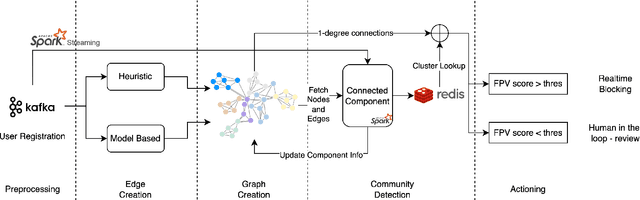
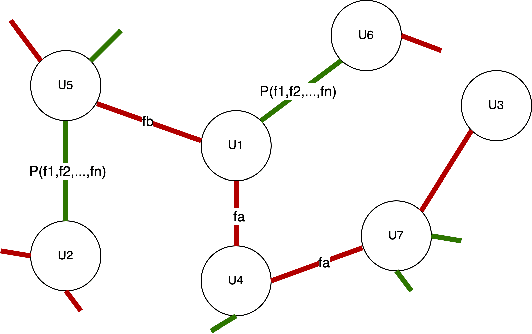
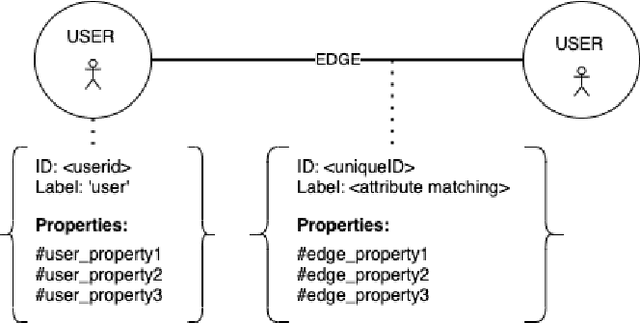
Dream11 takes pride in being a unique platform that enables over 190 million fantasy sports users to demonstrate their skills and connect deeper with their favorite sports. While managing such a scale, one issue we are faced with is duplicate/multiple account creation in the system. This is done by some users with the intent of abusing the platform, typically for bonus offers. The challenge is to detect these multiple accounts before it is too late. We propose a graph-based solution to solve this problem in which we first predict edges/associations between users. Using the edge information we highlight clusters of colluding multiple accounts. In this paper, we talk about our distributed ML system which is deployed to serve and support the inferences from our detection models. The challenge is to do this in real-time in order to take corrective actions. A core part of this setup also involves human-in-the-loop components for validation, feedback, and ground-truth labeling.