 Add to Chrome
 Add to Firefox
 Add to Edge
The Chandra-Gaia Catalog of Counterparts: Resolving ambiguous Gaia matches to X-ray sources in the Chandra Source Catalog using Machine Learning
Jun 17, 2026
We present a framework to cross-match sources from the Chandra Source Catalog (CSC v2.1) with optical sources from Gaia Data Release 3. Unlike purely spatial approaches, we use source properties such as magnitudes, colors, and distances to identify true counterparts, detect chance coincidences, and resolve ambiguities when multiple plausible candidates exist. We define a training set of high-confidence matches using NWAY, a Bayesian cross-matching framework that accounts for positional errors and source densities. We train a gradient-boosted classifier (LightGBM) on a variety of features from both catalogs. Of the ~$254$k unique X-ray sources, we find counterparts for ~$113$k sources, of which plausible multiple counterparts are found for ~$7$k. We find no counterparts for ~$20$k sources for which separation-based cross-matching does find a match, and attribute half of these to chance coincidences. We validate the pipeline on the Chandra Orion Ultradeep Project (COUP), where the machine-learning matches reproduce 95% of NWAY cross-matches without using any positional information. We release a catalog of the ~$113$k Chandra-Gaia counterparts, together with ~$7$k alternative matches and ~$20$k ambiguous NWAY associations, supporting future population studies of sources detectable by both Chandra and Gaia. We discuss limitations and provide a generalization of the framework that is applicable in other cross-matching scenarios.

Representation Learning for Time-Domain High-Energy Astrophysics: Discovery of Extragalactic Fast X-ray Transient XRT 200515
Dec 02, 2024


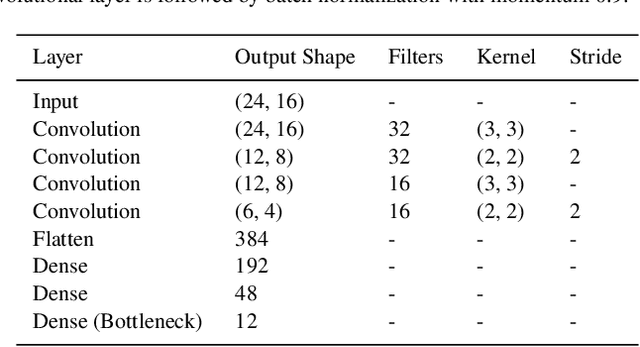
We present a novel representation learning method for downstream tasks such as anomaly detection and unsupervised transient classification in high-energy datasets. This approach enabled the discovery of a new fast X-ray transient (FXT) in the Chandra archive, XRT 200515, a needle-in-the-haystack event and the first Chandra FXT of its kind. Recent serendipitous breakthroughs in X-ray astronomy, including FXTs from binary neutron star mergers and an extragalactic planetary transit candidate, highlight the need for systematic transient searches in X-ray archives. We introduce new event file representations, E-t Maps and E-t-dt Cubes, designed to capture both temporal and spectral information, effectively addressing the challenges posed by variable-length event file time series in machine learning applications. Our pipeline extracts low-dimensional, informative features from these representations using principal component analysis or sparse autoencoders, followed by clustering in the embedding space with DBSCAN. New transients are identified within transient-dominant clusters or through nearest-neighbor searches around known transients, producing a catalog of 3,539 candidates (3,427 flares and 112 dips). XRT 200515 exhibits unique temporal and spectral variability, including an intense, hard <10 s initial burst followed by spectral softening in an ~800 s oscillating tail. We interpret XRT 200515 as either the first giant magnetar flare observed at low X-ray energies or the first extragalactic Type I X-ray burst from a faint LMXB in the LMC. Our method extends to datasets from other observatories such as XMM-Newton, Swift-XRT, eROSITA, Einstein Probe, and upcoming missions like AXIS.