 Add to Chrome
 Add to Firefox
 Add to Edge
Beyond Effective Sample Size: Effective Number of Proposals for Adaptive Importance Sampling
Aug 15, 2026
Population-based adaptive importance sampling (AIS) methods use a set of proposal densities to approximate complex target distributions. Their performance is commonly assessed through effective sample size (ESS) and related weight-based diagnostics, which measure the concentration of normalized importance weights. However, a large ESS only indicates that the normalized sample weights are not strongly concentrated; it does not describe how the proposal components are arranged in the sampling space. In population-based AIS, several proposal components may generate samples in the same region of the target, so the sample weights can appear well balanced even though the effective number of distinct proposal components is small. This letter introduces the effective number of proposals (ENP), a similarity-aware proposal-level diagnostic for population-based AIS. ENP combines the total normalized weight assigned to each proposal with a redundancy measure computed from similarities among target-weighted samples, estimating the number of non-redundant empirical proposal contributions to the approximation. We establish basic effective-number properties and show that ENP detects proposal collapse and duplication missed by standard ESS. We also illustrate its use as a targeted feedback signal for proposal rejuvenation.

Scalable estimation of VARMA models
Aug 06, 2026Vector autoregressive moving-average (VARMA) models have long been considered impractical beyond moderate dimensions: the likelihood is non-convex, the parametrization is identified only up to equivalence, and every evaluation costs a pass over the entire series. Yet their moving-average term captures with a few parameters what a pure autoregression matches only with many lags. We introduce an estimation framework that removes this computational barrier: each optimization iteration is independent of the series length $T$. The framework combines a partial-autocorrelation reparametrization that guarantees stationarity and invertibility by construction, Gaussian priors on the reparametrized coefficients with separate scales for diagonal and off-diagonal entries, and losses that depend on the data only through fixed-size sufficient statistics, evaluated by a Parseval (Fourier) identity at near-linear cost in the truncation length. This yields two point estimators: a regularized least-squares fit and a covariance-marginalized maximum-a-posteriori estimator. We prove that both recover the infinite-autoregressive representation of the true process at a near-parametric rate in fixed dimension, so the truncation introduces no asymptotic bias. The same machinery extends, at the same leading cost, to seasonal dynamics, exogenous regressors (VARMAX), and rolling-window refits. Empirically, the estimators stay close to the oracle forecast error from $d=10$ to $d=40$ (where classical conditional MLE returns non-invertible fits whose forecasts diverge) and match or beat VAR, Bayesian-VAR, component-wise ARMA, and sparse-VARMA baselines on retail-demand, meteorological, and air-quality data. This brings likelihood-based VARMA estimation, at a per-iteration cost independent of the series length, to the problem sizes where practitioners have so far relied on VAR models.
Efficient Plug-and-Play method for Dynamic Imaging Via Kalman Smoothing
Feb 13, 2026State-space models (SSM) are common in signal processing, where Kalman smoothing (KS) methods are state-of-the-art. However, traditional KS techniques lack expressivity as they do not incorporate spatial prior information. Recently, [1] proposed an ADMM algorithm that handles the state-space fidelity term with KS while regularizing the object via a sparsity-based prior with proximity operators. Plug-and-Play (PnP) methods are a popular type of iterative algorithms that replace proximal operators encoding prior knowledge with powerful denoisers such as deep neural networks. These methods are widely used in image processing, achieving state-of-the-art results. In this work, we build on the KS-ADMM method, combining it with deep learning to achieve higher expressivity. We propose a PnP algorithm based on KS-ADMM iterations, efficiently handling the SSM through KS, while enabling the use of powerful denoising networks. Simulations on a 2D+t imaging problem show that the proposed PnP-KS-ADMM algorithm improves the computational efficiency over standard PnP-ADMM for large numbers of timesteps.
A Collaborative Platform for Soil Organic Carbon Inference Based on Spatiotemporal Remote Sensing Data
Apr 17, 2025Soil organic carbon (SOC) is a key indicator of soil health, fertility, and carbon sequestration, making it essential for sustainable land management and climate change mitigation. However, large-scale SOC monitoring remains challenging due to spatial variability, temporal dynamics, and multiple influencing factors. We present WALGREEN, a platform that enhances SOC inference by overcoming limitations of current applications. Leveraging machine learning and diverse soil samples, WALGREEN generates predictive models using historical public and private data. Built on cloud-based technologies, it offers a user-friendly interface for researchers, policymakers, and land managers to access carbon data, analyze trends, and support evidence-based decision-making. Implemented in Python, Java, and JavaScript, WALGREEN integrates Google Earth Engine and Sentinel Copernicus via scripting, OpenLayers, and Thymeleaf in a Model-View-Controller framework. This paper aims to advance soil science, promote sustainable agriculture, and drive critical ecosystem responses to climate change.
Learning state and proposal dynamics in state-space models using differentiable particle filters and neural networks
Nov 23, 2024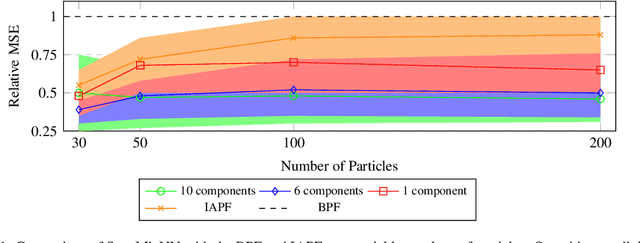
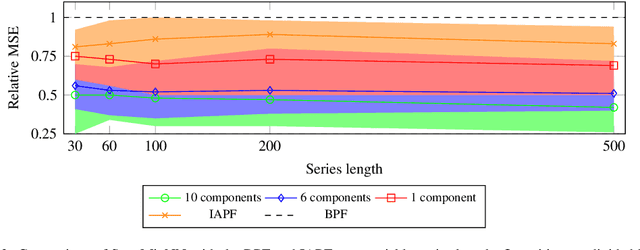
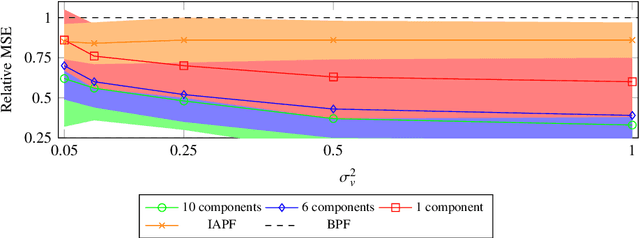
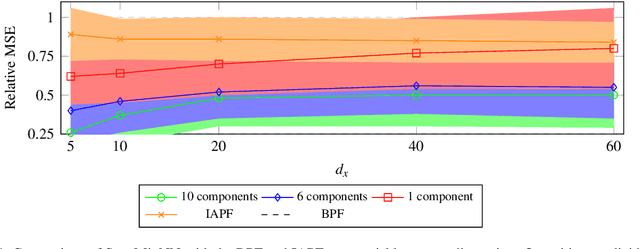
State-space models are a popular statistical framework for analysing sequential data. Within this framework, particle filters are often used to perform inference on non-linear state-space models. We introduce a new method, StateMixNN, that uses a pair of neural networks to learn the proposal distribution and transition distribution of a particle filter. Both distributions are approximated using multivariate Gaussian mixtures. The component means and covariances of these mixtures are learnt as outputs of learned functions. Our method is trained targeting the log-likelihood, thereby requiring only the observation series, and combines the interpretability of state-space models with the flexibility and approximation power of artificial neural networks. The proposed method significantly improves recovery of the hidden state in comparison with the state-of-the-art, showing greater improvement in highly non-linear scenarios.
Regime Learning for Differentiable Particle Filters
May 08, 2024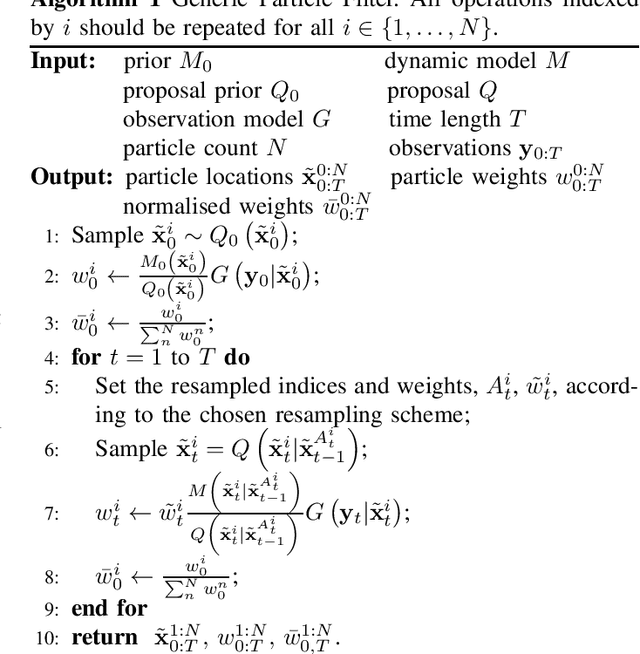
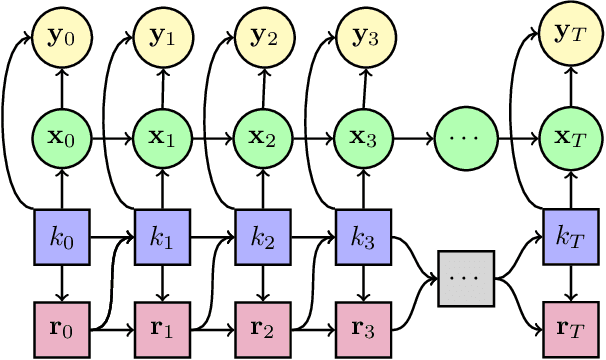
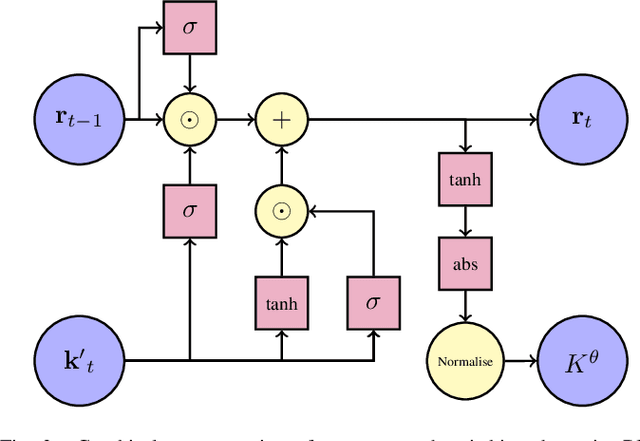
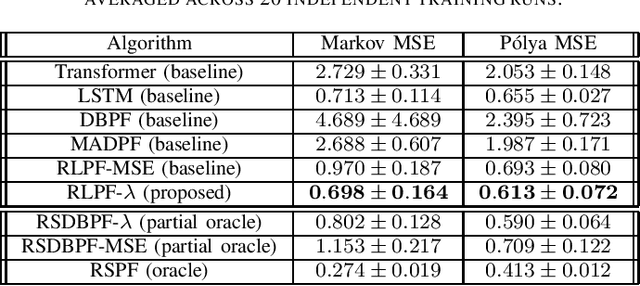
Differentiable particle filters are an emerging class of models that combine sequential Monte Carlo techniques with the flexibility of neural networks to perform state space inference. This paper concerns the case where the system may switch between a finite set of state-space models, i.e. regimes. No prior approaches effectively learn both the individual regimes and the switching process simultaneously. In this paper, we propose the neural network based regime learning differentiable particle filter (RLPF) to address this problem. We further design a training procedure for the RLPF and other related algorithms. We demonstrate competitive performance compared to the previous state-of-the-art algorithms on a pair of numerical experiments.
Deep State-Space Model for Predicting Cryptocurrency Price
Nov 21, 2023


Our work presents two fundamental contributions. On the application side, we tackle the challenging problem of predicting day-ahead crypto-currency prices. On the methodological side, a new dynamical modeling approach is proposed. Our approach keeps the probabilistic formulation of the state-space model, which provides uncertainty quantification on the estimates, and the function approximation ability of deep neural networks. We call the proposed approach the deep state-space model. The experiments are carried out on established cryptocurrencies (obtained from Yahoo Finance). The goal of the work has been to predict the price for the next day. Benchmarking has been done with both state-of-the-art and classical dynamical modeling techniques. Results show that the proposed approach yields the best overall results in terms of accuracy.
Sparse Graphical Linear Dynamical Systems
Jul 06, 2023


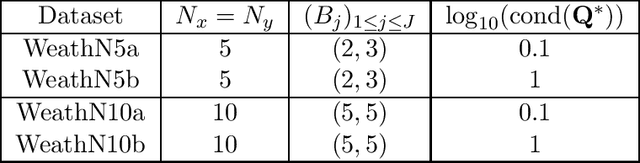
Time-series datasets are central in numerous fields of science and engineering, such as biomedicine, Earth observation, and network analysis. Extensive research exists on state-space models (SSMs), which are powerful mathematical tools that allow for probabilistic and interpretable learning on time series. Estimating the model parameters in SSMs is arguably one of the most complicated tasks, and the inclusion of prior knowledge is known to both ease the interpretation but also to complicate the inferential tasks. Very recent works have attempted to incorporate a graphical perspective on some of those model parameters, but they present notable limitations that this work addresses. More generally, existing graphical modeling tools are designed to incorporate either static information, focusing on statistical dependencies among independent random variables (e.g., graphical Lasso approach), or dynamic information, emphasizing causal relationships among time series samples (e.g., graphical Granger approaches). However, there are no joint approaches combining static and dynamic graphical modeling within the context of SSMs. This work proposes a novel approach to fill this gap by introducing a joint graphical modeling framework that bridges the static graphical Lasso model and a causal-based graphical approach for the linear-Gaussian SSM. We present DGLASSO (Dynamic Graphical Lasso), a new inference method within this framework that implements an efficient block alternating majorization-minimization algorithm. The algorithm's convergence is established by departing from modern tools from nonlinear analysis. Experimental validation on synthetic and real weather variability data showcases the effectiveness of the proposed model and inference algorithm.
Bayesian data fusion with shared priors
Dec 14, 2022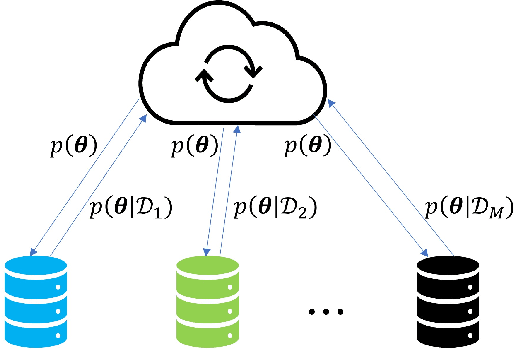
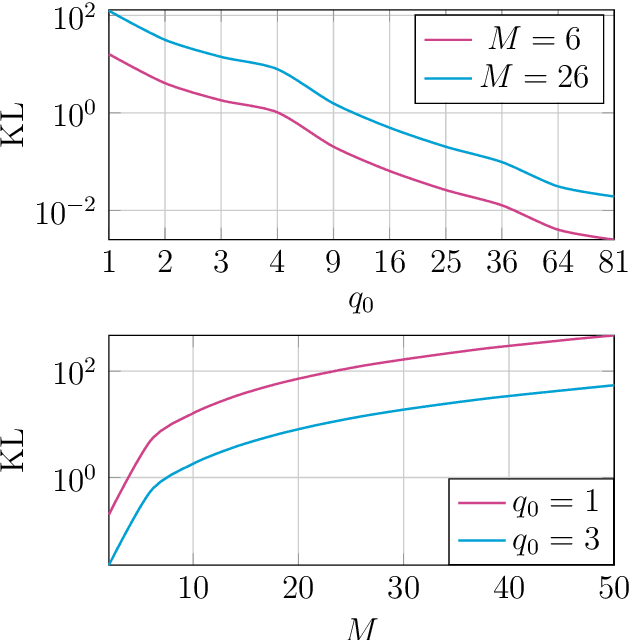
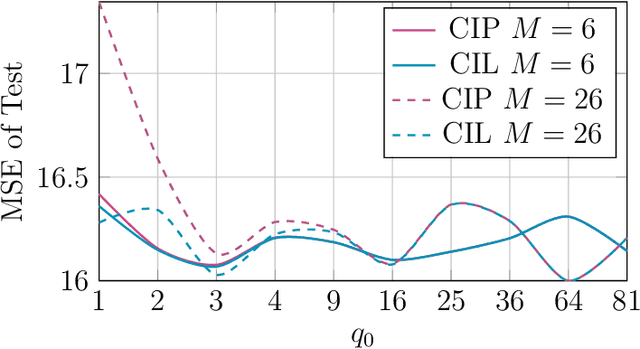
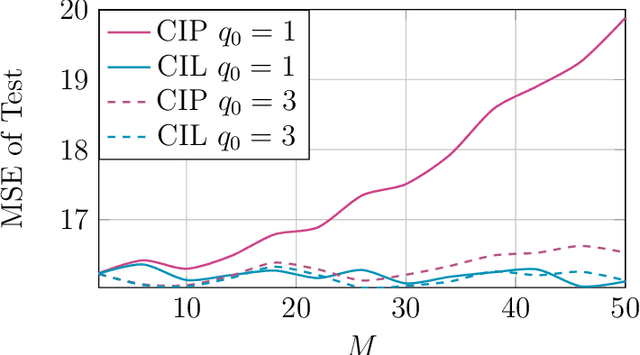
The integration of data and knowledge from several sources is known as data fusion. When data is available in a distributed fashion or when different sensors are used to infer a quantity of interest, data fusion becomes essential. In Bayesian settings, a priori information of the unknown quantities is available and, possibly, shared among the distributed estimators. When the local estimates are fused, such prior might be overused unless it is accounted for. This paper explores the effects of shared priors in Bayesian data fusion contexts, providing fusion rules and analysis to understand the performance of such fusion as a function of the number of collaborative agents and the uncertainty of the priors. Analytical results are corroborated through experiments in a variety of estimation and classification problems.
Efficient Bayes Inference in Neural Networks through Adaptive Importance Sampling
Oct 03, 2022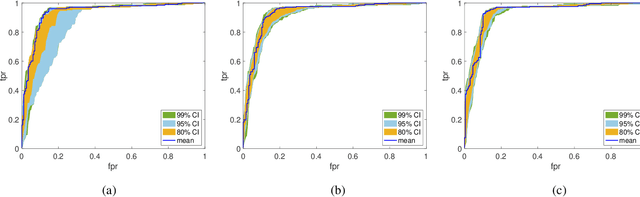

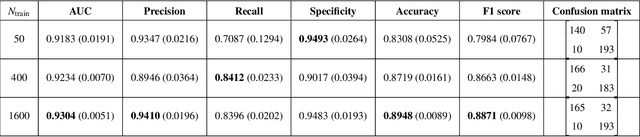
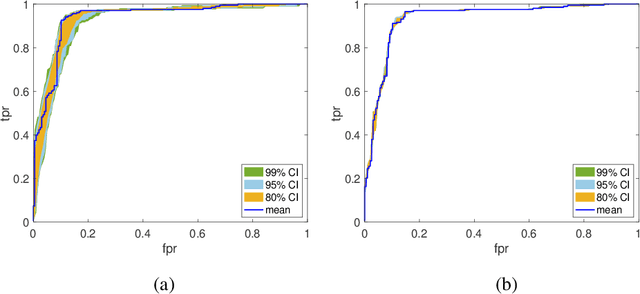
Bayesian neural networks (BNNs) have received an increased interest in the last years. In BNNs, a complete posterior distribution of the unknown weight and bias parameters of the network is produced during the training stage. This probabilistic estimation offers several advantages with respect to point-wise estimates, in particular, the ability to provide uncertainty quantification when predicting new data. This feature inherent to the Bayesian paradigm, is useful in countless machine learning applications. It is particularly appealing in areas where decision-making has a crucial impact, such as medical healthcare or autonomous driving. The main challenge of BNNs is the computational cost of the training procedure since Bayesian techniques often face a severe curse of dimensionality. Adaptive importance sampling (AIS) is one of the most prominent Monte Carlo methodologies benefiting from sounded convergence guarantees and ease for adaptation. This work aims to show that AIS constitutes a successful approach for designing BNNs. More precisely, we propose a novel algorithm PMCnet that includes an efficient adaptation mechanism, exploiting geometric information on the complex (often multimodal) posterior distribution. Numerical results illustrate the excellent performance and the improved exploration capabilities of the proposed method for both shallow and deep neural networks.