 Add to Chrome
 Add to Firefox
 Add to Edge
The Llama 4 Herd: Architecture, Training, Evaluation, and Deployment Notes
Jan 15, 2026
This document consolidates publicly reported technical details about Metas Llama 4 model family. It summarizes (i) released variants (Scout and Maverick) and the broader herd context including the previewed Behemoth teacher model, (ii) architectural characteristics beyond a high-level MoE description covering routed/shared-expert structure, early-fusion multimodality, and long-context design elements reported for Scout (iRoPE and length generalization strategies), (iii) training disclosures spanning pre-training, mid-training for long-context extension, and post-training methodology (lightweight SFT, online RL, and lightweight DPO) as described in release materials, (iv) developer-reported benchmark results for both base and instruction-tuned checkpoints, and (v) practical deployment constraints observed across major serving environments, including provider-specific context limits and quantization packaging. The manuscript also summarizes licensing obligations relevant to redistribution and derivative naming, and reviews publicly described safeguards and evaluation practices. The goal is to provide a compact technical reference for researchers and practitioners who need precise, source-backed facts about Llama 4.

PVF (Parameter Vulnerability Factor): A Quantitative Metric Measuring AI Vulnerability and Resilience Against Parameter Corruptions
May 02, 2024
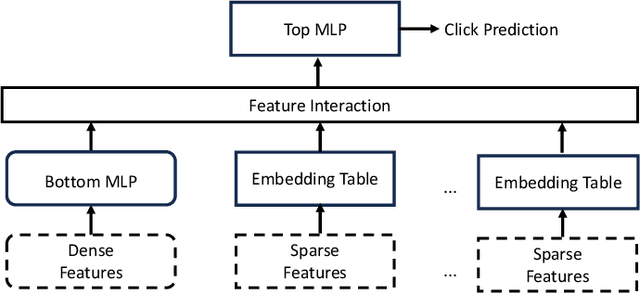
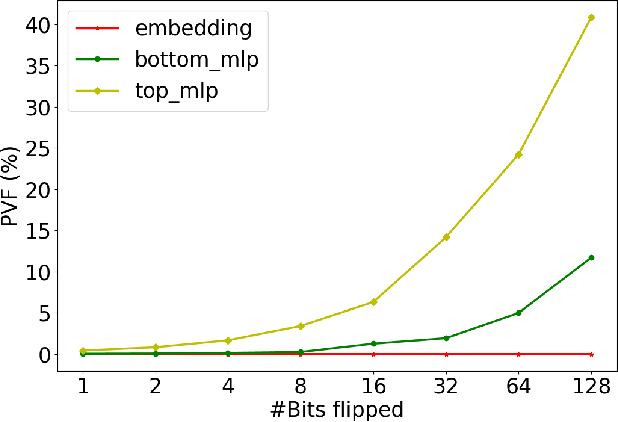
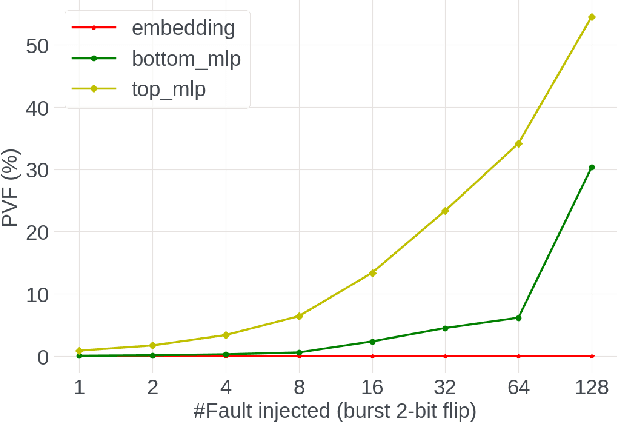
Reliability of AI systems is a fundamental concern for the successful deployment and widespread adoption of AI technologies. Unfortunately, the escalating complexity and heterogeneity of AI hardware systems make them inevitably and increasingly susceptible to hardware faults (e.g., bit flips) that can potentially corrupt model parameters. Given this challenge, this paper aims to answer a critical question: How likely is a parameter corruption to result in an incorrect model output? To systematically answer this question, we propose a novel quantitative metric, Parameter Vulnerability Factor (PVF), inspired by architectural vulnerability factor (AVF) in computer architecture community, aiming to standardize the quantification of AI model resilience/vulnerability against parameter corruptions. We define a model parameter's PVF as the probability that a corruption in that particular model parameter will result in an incorrect output. Similar to AVF, this statistical concept can be derived from statistically extensive and meaningful fault injection (FI) experiments. In this paper, we present several use cases on applying PVF to three types of tasks/models during inference -- recommendation (DLRM), vision classification (CNN), and text classification (BERT). PVF can provide pivotal insights to AI hardware designers in balancing the tradeoff between fault protection and performance/efficiency such as mapping vulnerable AI parameter components to well-protected hardware modules. PVF metric is applicable to any AI model and has a potential to help unify and standardize AI vulnerability/resilience evaluation practice.