 Add to Chrome
 Add to Firefox
 Add to Edge
Loss-Shift Transfer via Bayes Quotients
Jun 11, 2026
Transfer learning is usually studied as a consequence of distribution shift. This paper identifies an orthogonal failure mode in which the data distribution is fixed and the loss changes. This setting is called \emph{loss shift}. A loss determines which information in \(X\) is Bayes-relevant, and two losses may therefore require different representations even under the same joint law \(P(X,Y)\). The idea is formalized using Bayes quotients, which allow losses to be ordered by refinement. In the Bayes-quotient formulation, strict refinement gives an immediate qualitative obstruction. A source-minimal representation for a coarser loss is insufficient for a strictly finer target loss. For finite-output log loss, this obstruction becomes an exact quantitative identity. The excess risk is the conditional information about \(Y\) discarded by the representation. Experiments in controlled, learned, synthetic-image, and real-image settings show the predicted effect, i.e., classification-equivalent representations can have different optimal log-loss performance under a fixed data distribution.

Bayes-Sufficient Representations in Supervised Learning
Jun 02, 2026Representation learning is often described as preserving the information in an input that is relevant for prediction. This work asks what relevance means for a fixed supervised decision problem. A representation is defined to be Bayes-sufficient for a joint distribution and loss if some prediction head can use it to implement a Bayes-optimal action rule. This makes the target information loss-dependent. In the almost-surely unique Bayes-action case, the relevant object is a Bayes quotient, which identifies inputs that require the same Bayes-optimal action. A representation is sufficient when it refines this quotient, and Bayes-minimal when it is informationally equivalent to it. The framework connects naturally to property elicitation: zero-one loss requires the Bayes class, squared loss the conditional mean, Brier loss the conditional probability in binary prediction, and log loss or strictly proper scoring rules the predictive distribution. Controlled finite experiments, learned neural bottleneck experiments, and a real-data iNaturalist taxonomic refinement experiment illustrate the distinction between sufficiency, minimality, and retained non-required information. For a fixed supervised problem, the distribution and the loss determine the Bayes action, the Bayes action determines the quotient, and the quotient determines the minimal information required for Bayes-optimal prediction.
A Fiber Criterion for Representation Identifiability in Supervised Learning
May 31, 2026Supervised learning evaluates predictors through their input-output behavior. When a predictor is implemented as a composition $f=c\circ h$, supervised evidence constrains the composite map $f$ but need not determine the representation-head factorization $(h,c)$. This paper formalizes the resulting representation-level identifiability problem: for a class of admissible representation-head pairs, a representation property is identifiable from the induced predictor exactly when it is constant on the fibers of the projection $(h,c)\mapsto c\circ h$, equivalently when it descends to a well-defined property of the predictor. Predictor-preserving augmentation gives a canonical obstruction: auxiliary information can be appended to a representation while the head ignores it, leaving the predictor unchanged but altering properties such as minimality, compression, invariance, equivariance, nuisance information, or semantic accessibility. This construction separates representation identifiability from optimization and finite-sample estimation. Finite-sample diagnostics illustrate, rather than prove, the criterion: exact algebraic witnesses hold the predictor fixed while changing representation diagnostics, and matched-performance Waterbirds models show that different constraints can select different representations at similar supervised performance. The results clarify that representation-level claims require assumptions, objectives, measurements, or inductive biases beyond supervised predictive behavior alone.
Towards complete digital twins in cultural heritage with ART3mis 3D artifacts annotator
Feb 13, 2026Archaeologists, as well as specialists and practitioners in cultural heritage, require applications with additional functions, such as the annotation and attachment of metadata to specific regions of the 3D digital artifacts, to go beyond the simplistic three-dimensional (3D) visualization. Different strategies addressed this issue, most of which are excellent in their particular area of application, but their capacity is limited to their design's purpose; they lack generalization and interoperability. This paper introduces ART3mis, a general-purpose, user-friendly, feature-rich, interactive web-based textual annotation tool for 3D objects. Moreover, it enables the communication, distribution, and reuse of information as it complies with the W3C Web Annotation Data Model. It is primarily designed to help cultural heritage conservators, restorers, and curators who lack technical expertise in 3D imaging and graphics, handle, segment, and annotate 3D digital replicas of artifacts with ease.
ART3mis: Ray-Based Textual Annotation on 3D Cultural Objects
Feb 13, 2026Beyond simplistic 3D visualisations, archaeologists, as well as cultural heritage experts and practitioners, need applications with advanced functionalities. Such as the annotation and attachment of metadata onto particular regions of the 3D digital objects. Various approaches have been presented to tackle this challenge, most of which achieve excellent results in the domain of their application. However, they are often confined to that specific domain and particular problem. In this paper, we present ART3mis - a general-purpose, user-friendly, interactive textual annotation tool for 3D objects. Primarily attuned to aid cultural heritage conservators, restorers and curators with no technical skills in 3D imaging and graphics, the tool allows for the easy handling, segmenting and annotating of 3D digital replicas of artefacts. ART3mis applies a user-driven, direct-on-surface approach. It can handle detailed 3D cultural objects in real-time and store textual annotations for multiple complex regions in JSON data format.
Training Memory in Deep Neural Networks: Mechanisms, Evidence, and Measurement Gaps
Jan 29, 2026Modern deep-learning training is not memoryless. Updates depend on optimizer moments and averaging, data-order policies (random reshuffling vs with-replacement, staged augmentations and replay), the nonconvex path, and auxiliary state (teacher EMA/SWA, contrastive queues, BatchNorm statistics). This survey organizes mechanisms by source, lifetime, and visibility. It introduces seed-paired, function-space causal estimands; portable perturbation primitives (carry/reset of momentum/Adam/EMA/BN, order-window swaps, queue/teacher tweaks); and a reporting checklist with audit artifacts (order hashes, buffer/BN checksums, RNG contracts). The conclusion is a protocol for portable, causal, uncertainty-aware measurement that attributes how much training history matters across models, data, and regimes.
Gauge-invariant representation holonomy
Jan 29, 2026Deep networks learn internal representations whose geometry--how features bend, rotate, and evolve--affects both generalization and robustness. Existing similarity measures such as CKA or SVCCA capture pointwise overlap between activation sets, but miss how representations change along input paths. Two models may appear nearly identical under these metrics yet respond very differently to perturbations or adversarial stress. We introduce representation holonomy, a gauge-invariant statistic that measures this path dependence. Conceptually, holonomy quantifies the "twist" accumulated when features are parallel-transported around a small loop in input space: flat representations yield zero holonomy, while nonzero values reveal hidden curvature. Our estimator fixes gauge through global whitening, aligns neighborhoods using shared subspaces and rotation-only Procrustes, and embeds the result back to the full feature space. We prove invariance to orthogonal (and affine, post-whitening) transformations, establish a linear null for affine layers, and show that holonomy vanishes at small radii. Empirically, holonomy increases with loop radius, separates models that appear similar under CKA, and correlates with adversarial and corruption robustness. It also tracks training dynamics as features form and stabilize. Together, these results position representation holonomy as a practical and scalable diagnostic for probing the geometric structure of learned representations beyond pointwise similarity.
Process-Tensor Tomography of SGD: Measuring Non-Markovian Memory via Back-Flow of Distinguishability
Jan 23, 2026This work proposes neural training as a \emph{process tensor}: a multi-time map that takes a sequence of controllable instruments (batch choices, augmentations, optimizer micro-steps) and returns an observable of the trained model. Building on this operational lens, we introduce a simple, model-agnostic witness of training memory based on \emph{back-flow of distinguishability}. In a controlled two-step protocol, we compare outcome distributions after one intervention versus two; the increase $Δ_{\mathrm{BF}} = D_2 - D_1>0$ (with $D\in\{\mathrm{TV}, \mathrm{JS}, \mathrm{H}\}$ measured on softmax predictions over a fixed probe set) certifies non-Markovianity. We observe consistent positive back-flow with tight bootstrap confidence intervals, amplification under higher momentum, larger batch overlap, and more micro-steps, and collapse under a \emph{causal break} (resetting optimizer state), directly attributing the effect to optimizer/data-state memory. The witness is robust across TV/JS/Hellinger, inexpensive to compute, and requires no architectural changes. We position this as a \emph{measurement} contribution: a principled diagnostic and empirical evidence that practical SGD deviates from the Markov idealization. An exploratory case study illustrates how the micro-level signal can inform curriculum orderings. "Data order matters" turns into a testable operator with confidence bounds, our framework offers a common stage to compare optimizers, curricula, and schedules through their induced training memory.
Deep learning based black spot identification on Greek road networks
Jun 19, 2023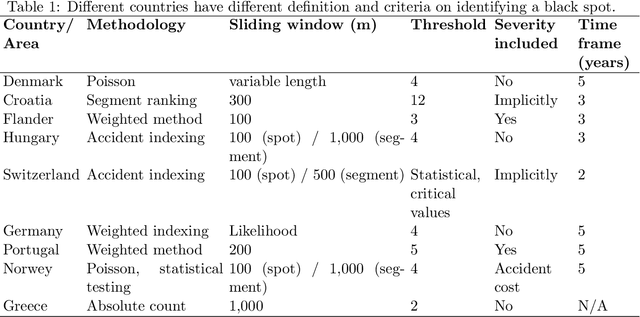
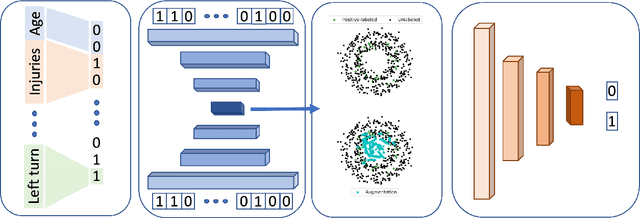
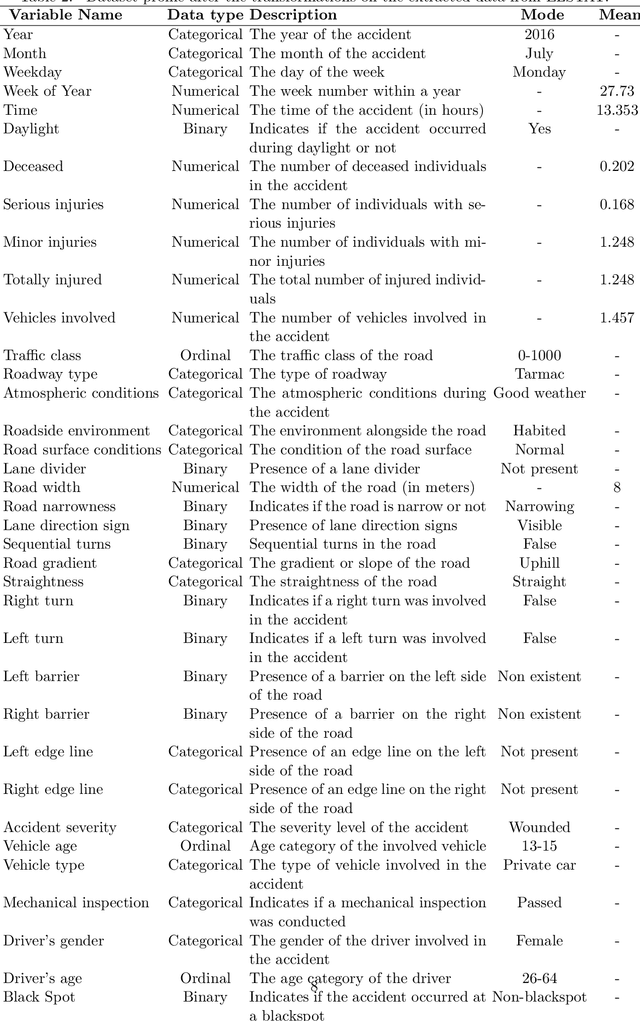
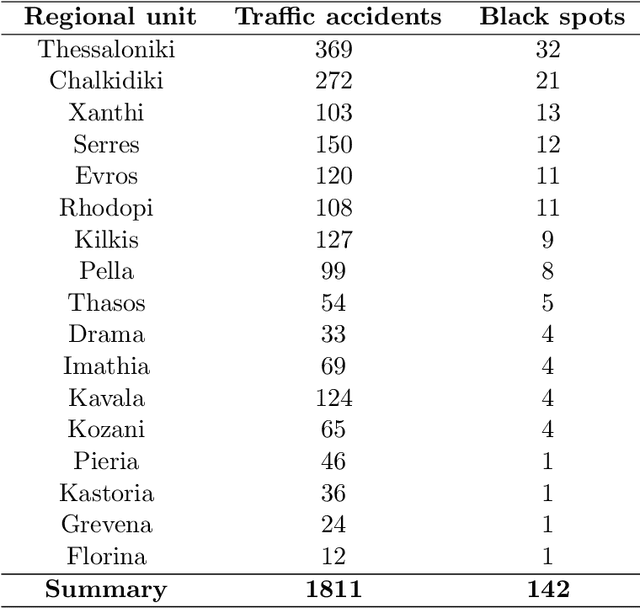
Black spot identification, a spatiotemporal phenomenon, involves analyzing the geographical location and time-based occurrence of road accidents. Typically, this analysis examines specific locations on road networks during set time periods to pinpoint areas with a higher concentration of accidents, known as black spots. By evaluating these problem areas, researchers can uncover the underlying causes and reasons for increased collision rates, such as road design, traffic volume, driver behavior, weather, and infrastructure. However, challenges in identifying black spots include limited data availability, data quality, and assessing contributing factors. Additionally, evolving road design, infrastructure, and vehicle safety technology can affect black spot analysis and determination. This study focused on traffic accidents in Greek road networks to recognize black spots, utilizing data from police and government-issued car crash reports. The study produced a publicly available dataset called Black Spots of North Greece (BSNG) and a highly accurate identification method.
Defect detection using weakly supervised learning
Mar 27, 2023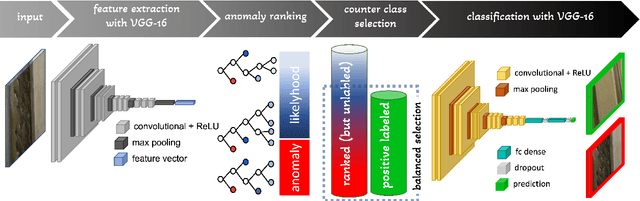

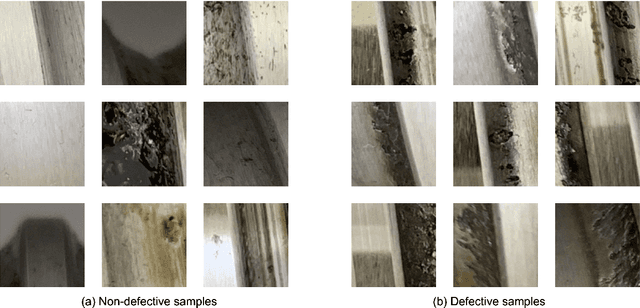
In many real-world scenarios, obtaining large amounts of labeled data can be a daunting task. Weakly supervised learning techniques have gained significant attention in recent years as an alternative to traditional supervised learning, as they enable training models using only a limited amount of labeled data. In this paper, the performance of a weakly supervised classifier to its fully supervised counterpart is compared on the task of defect detection. Experiments are conducted on a dataset of images containing defects, and evaluate the two classifiers based on their accuracy, precision, and recall. Our results show that the weakly supervised classifier achieves comparable performance to the supervised classifier, while requiring significantly less labeled data.