 Add to Chrome
 Add to Firefox
 Add to Edge
One Success Isn't Reliability: Thinkingbox, a Sandbox and Benchmark for Agents in Stateful Business Workflows
Aug 20, 2026
Recent agent benchmarks increasingly ground evaluation in executable environments, from code repair to web navigation, app APIs, and function calling. Yet completing consequential work beyond code requires more than producing a plausible response or valid tool call: agents must gather missing information over multiple turns, follow domain policies, coordinate dependent tools, and realize the correct persistent state transition without collateral effects. In this paper, we introduce Thinkingbox, a sandbox for tool-agent-user interaction that provides isolated MCP-compatible tool sessions, complete execution traces, and outcome evaluation over terminal backend state. Built on this sandbox, Thinkingbox-bench contains 507 policy-conditioned workflows across numerous scenarios, including retail, hospitality, auto insurance, neobank internal IT, and consulting IT/HR support. Each attempt is evaluated by task-specific executable checks that accept valid trajectories while rejecting wrong, missing, or extra effects; designated tasks additionally check required properties of the final response. Across proprietary and open-weight models, the strongest achieves 65.36% pass@1, but only 25.25% pass^20. Moreover, many failed trials show clean termination and valid state-changing actions, showing that response or tool-call-level signals are not clear proxies for end-to-end task completion. Thinkingbox-bench reveals a large gap between occasionally finding a successful trajectory and reliably completing stateful business tasks. We release both Thinkingbox and Thinkingbox-Bench: https://github.com/microsoft/thinkingbox

Information Planning for Text Data
Mar 21, 2018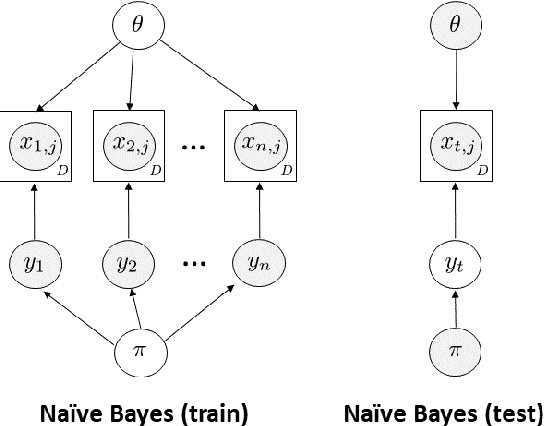
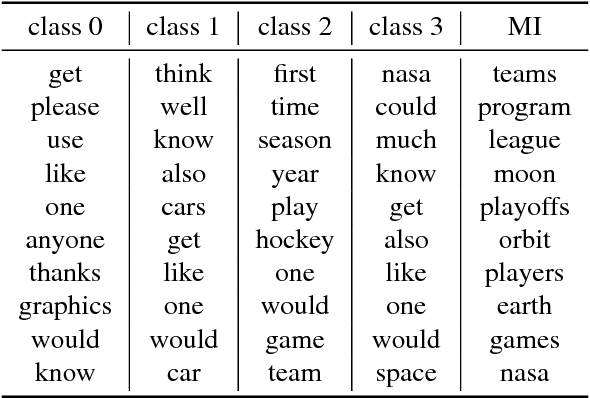
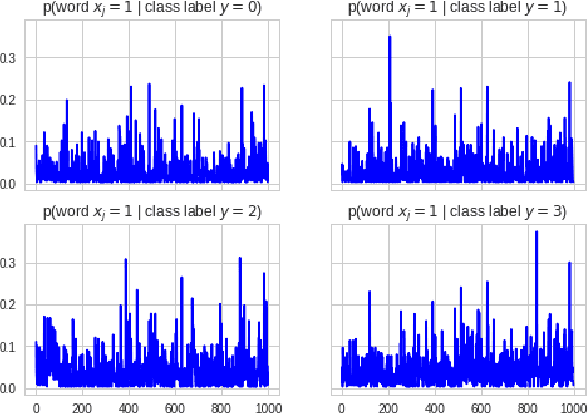
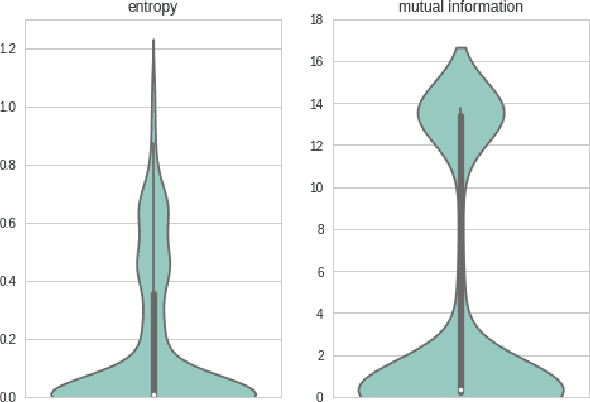
Information planning enables faster learning with fewer training examples. It is particularly applicable when training examples are costly to obtain. This work examines the advantages of information planning for text data by focusing on three supervised models: Naive Bayes, supervised LDA and deep neural networks. We show that planning based on entropy and mutual information outperforms random selection baseline and therefore accelerates learning.
Bayesian Nonparametric Modeling of Driver Behavior using HDP Split-Merge Sampling Algorithm
Jan 27, 2018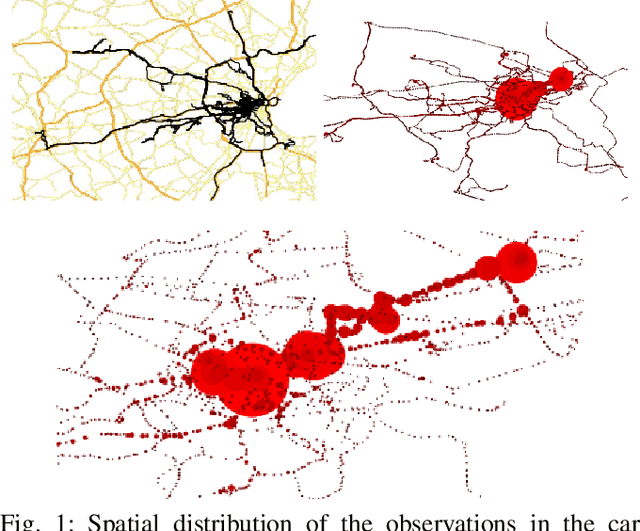
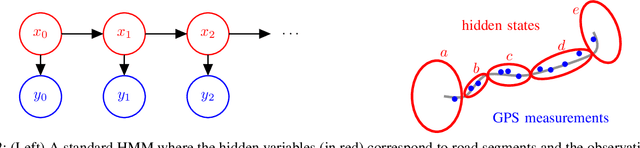
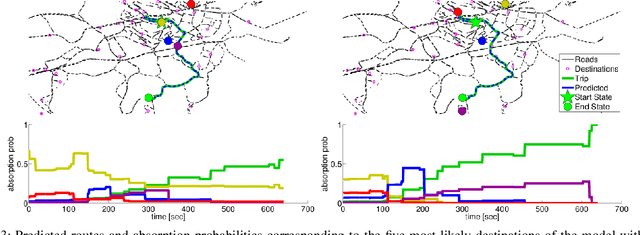
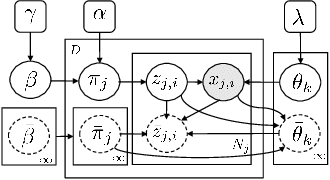
Modern vehicles are equipped with increasingly complex sensors. These sensors generate large volumes of data that provide opportunities for modeling and analysis. Here, we are interested in exploiting this data to learn aspects of behaviors and the road network associated with individual drivers. Our dataset is collected on a standard vehicle used to commute to work and for personal trips. A Hidden Markov Model (HMM) trained on the GPS position and orientation data is utilized to compress the large amount of position information into a small amount of road segment states. Each state has a set of observations, i.e. car signals, associated with it that are quantized and modeled as draws from a Hierarchical Dirichlet Process (HDP). The inference for the topic distributions is carried out using HDP split-merge sampling algorithm. The topic distributions over joint quantized car signals characterize the driving situation in the respective road state. In a novel manner, we demonstrate how the sparsity of the personal road network of a driver in conjunction with a hierarchical topic model allows data driven predictions about destinations as well as likely road conditions.
Adaptive Scan Gibbs Sampler for Large Scale Inference Problems
Jan 27, 2018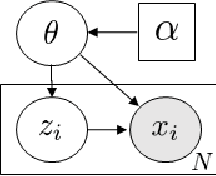
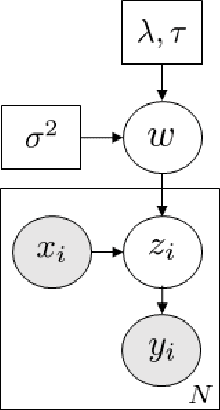
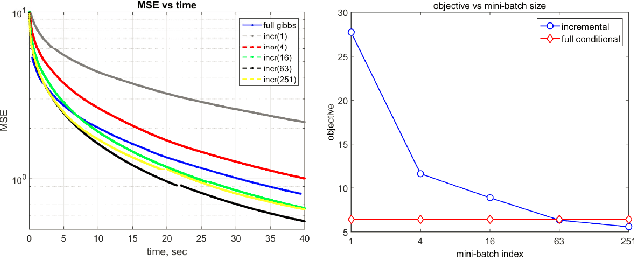
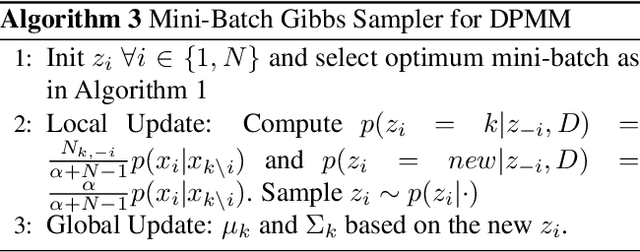
For large scale on-line inference problems the update strategy is critical for performance. We derive an adaptive scan Gibbs sampler that optimizes the update frequency by selecting an optimum mini-batch size. We demonstrate performance of our adaptive batch-size Gibbs sampler by comparing it against the collapsed Gibbs sampler for Bayesian Lasso, Dirichlet Process Mixture Models (DPMM) and Latent Dirichlet Allocation (LDA) graphical models.