 Add to Chrome
 Add to Firefox
 Add to Edge
Outdoor Crowd Flow Estimation Using RSRP from Commercial LTE Base Station: A Field Study
Dec 11, 2025
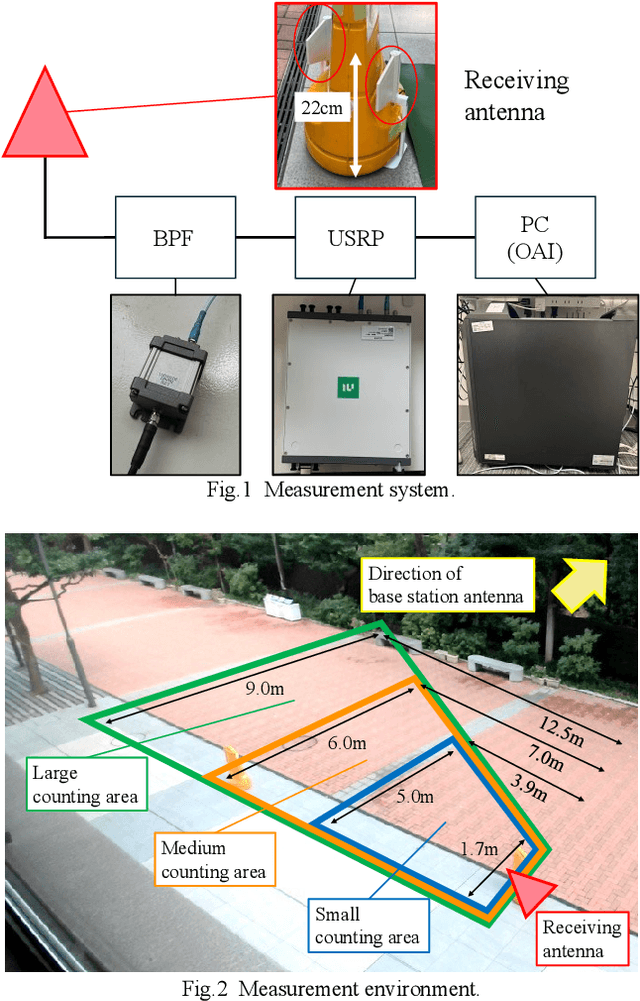
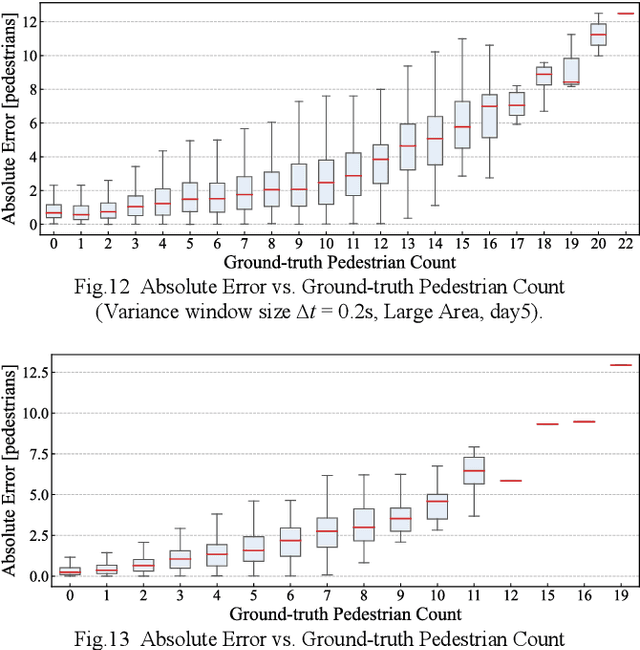
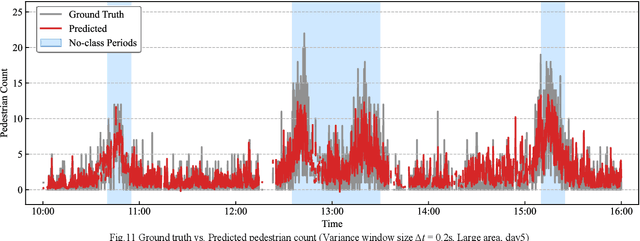
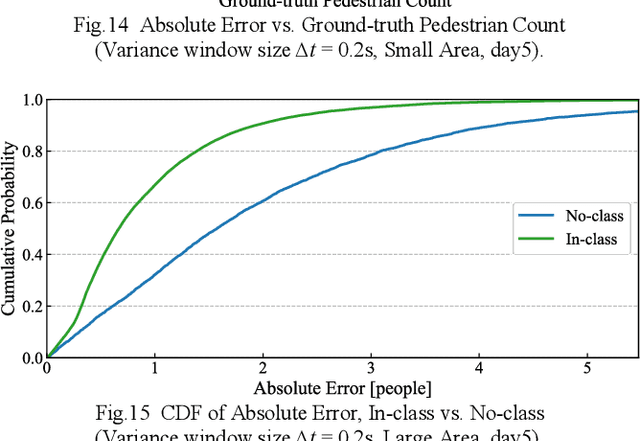
With the advent of the 6G era, Integrated Sensing and Communications (ISAC) has attracted increasing attention. One representative of use cases is crowd flow estimation on outdoor streets. However, most existing studies have focused on indoor environments or vehicles, and demonstrations of outdoor crowd flow estimation using commercial LTE base station remain limited. This study addresses this use case and proposes an analysis of a crowd flow estimation method using Reference Signal Received Power (RSRP) obtained from a commercial LTE base station. Specifically, pedestrian counts derived from a camera-based object recognition algorithm were associated with the variance of RSRP. The features obtained from the variance were quantitatively evaluated by combining a CatBoost regression model with SHapley Additive exPlanations (SHAP) analysis. Through this investigation, we clarified that an optimal variance window size for RSRP is 0.1 to 0.2 seconds and that enlarging the counting area increased the features obtained from the variance of RSRP, for machine learning. Consequently, this study is the first to quantitatively demonstrate the effectiveness of outdoor crowd flow estimation using commercial LTE, while also revealing the characteristic behavior of variance window size and counting area size in feature design.

Device-free Indoor WLAN Localization with Distributed Antenna Placement Optimization and Spatially Localized Regression
Jan 31, 2024
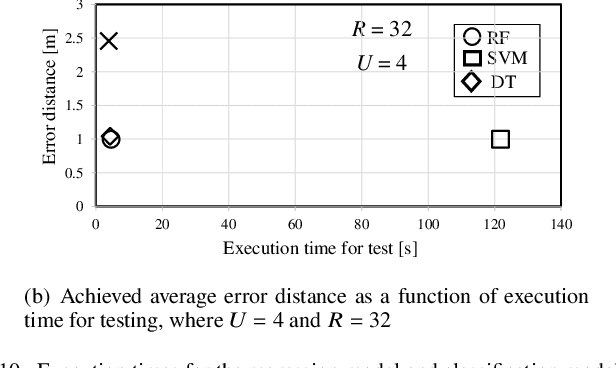
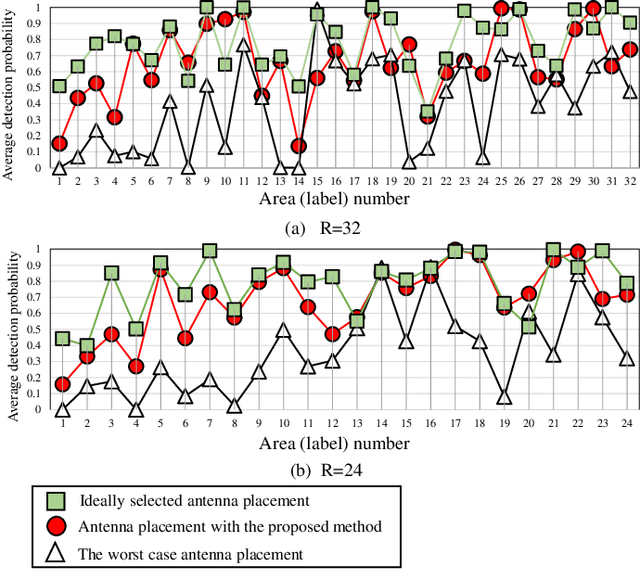

Wireless sensing is a promising technology for future wireless communication networks to realize various application services. Wireless local area network (WLAN)-based localization approaches using channel state information (CSI) have been investigated intensively. Further improvements in detection performance will depend on selecting appropriate feature information and determining the placements of distributed antenna elements. This paper presents a proposal of an enhanced device-free WLAN-based localization scheme with beam-tracing based antenna placement optimization and spatially localized regression, where beam-forming weights (BFWs) are used as feature information for training machine-learning (ML)-based models localized to partitioned areas. By this scheme, the antenna placement at the access point (AP) is determined by solving a combinational optimization problem with beam-tracing between AP and station (STA) without knowing the CSI. Additionally, we propose the use of localized regression to improve localization accuracy with low complexity, where classification and regression based ML models are used for coarse and precise estimations of the target position. We evaluate the proposed scheme effects on localization performance in an indoor environment. Experiment results demonstrate that the proposed antenna placement and localized regression scheme improve the localization accuracy while reducing the required complexity for both off-line training and on-line localization relative to other reference schemes.
CSI2Image: Image Reconstruction from Channel State Information Using Generative Adversarial Networks
Sep 16, 2020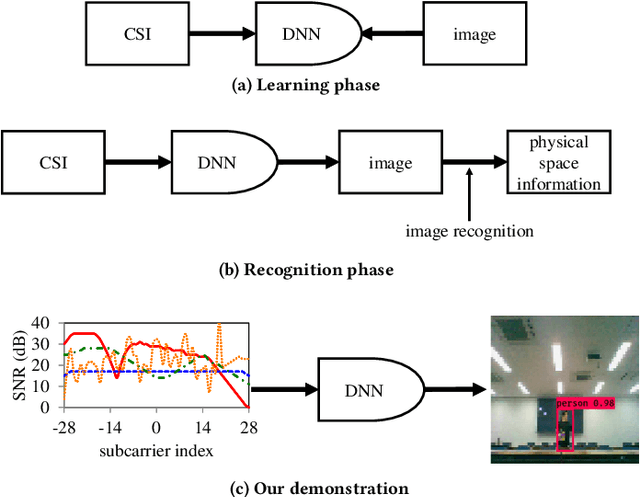
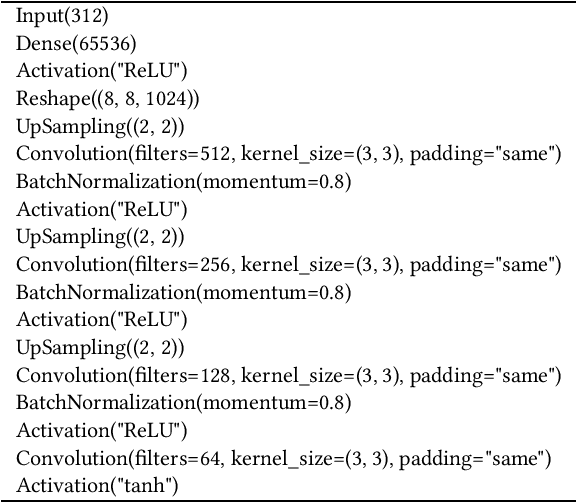
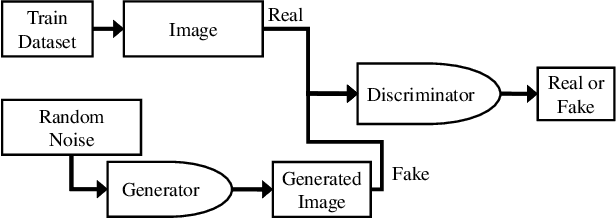
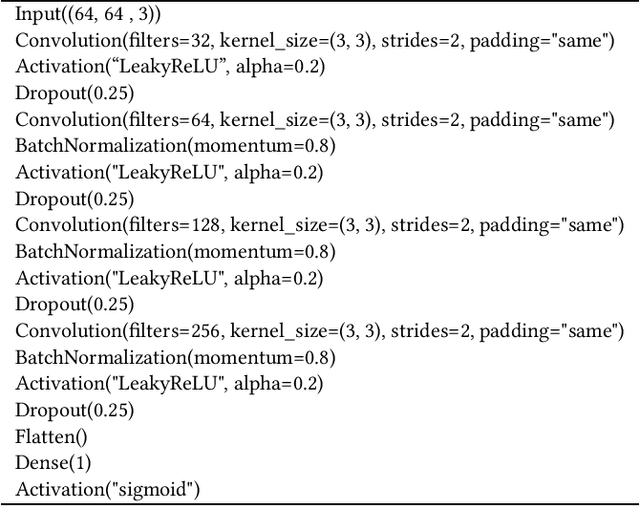
This study aims to find the upper limit of the wireless sensing capability of acquiring physical space information. This is a challenging objective, because at present, wireless sensing studies continue to succeed in acquiring novel phenomena. Thus, although a complete answer cannot be obtained yet, a step is taken towards it here. To achieve this, CSI2Image, a novel channel-state-information (CSI)-to-image conversion method based on generative adversarial networks (GANs), is proposed. The type of physical information acquired using wireless sensing can be estimated by checking wheth\-er the reconstructed image captures the desired physical space information. Three types of learning methods are demonstrated: gen\-er\-a\-tor-only learning, GAN-only learning, and hybrid learning. Evaluating the performance of CSI2Image is difficult, because both the clarity of the image and the presence of the desired physical space information must be evaluated. To solve this problem, a quantitative evaluation methodology using an object detection library is also proposed. CSI2Image was implemented using IEEE 802.11ac compressed CSI, and the evaluation results show that the image was successfully reconstructed. The results demonstrate that gen\-er\-a\-tor-only learning is sufficient for simple wireless sensing problems, but in complex wireless sensing problems, GANs are important for reconstructing generalized images with more accurate physical space information.