 Add to Chrome
 Add to Firefox
 Add to Edge
MemMachine: A Ground-Truth-Preserving Memory System for Personalized AI Agents
Apr 06, 2026
Large Language Model (LLM) agents require persistent memory to maintain personalization, factual continuity, and long-horizon reasoning, yet standard context-window and retrieval-augmented generation (RAG) pipelines degrade over multi-session interactions. We present MemMachine, an open-source memory system that integrates short-term, long-term episodic, and profile memory within a ground-truth-preserving architecture that stores entire conversational episodes and reduces lossy LLM-based extraction. MemMachine uses contextualized retrieval that expands nucleus matches with surrounding context, improving recall when relevant evidence spans multiple dialogue turns. Across benchmarks, MemMachine achieves strong accuracy-efficiency tradeoffs: on LoCoMo it reaches 0.9169 using gpt4.1-mini; on LongMemEvalS (ICLR 2025), a six-dimension ablation yields 93.0 percent accuracy, with retrieval-stage optimizations -- retrieval depth tuning (+4.2 percent), context formatting (+2.0 percent), search prompt design (+1.8 percent), and query bias correction (+1.4 percent) -- outperforming ingestion-stage gains such as sentence chunking (+0.8 percent). GPT-5-mini exceeds GPT-5 by 2.6 percent when paired with optimized prompts, making it the most cost-efficient setup. Compared to Mem0, MemMachine uses roughly 80 percent fewer input tokens under matched conditions. A companion Retrieval Agent adaptively routes queries among direct retrieval, parallel decomposition, or iterative chain-of-query strategies, achieving 93.2 percent on HotpotQA-hard and 92.6 percent on WikiMultiHop under randomized-noise conditions. These results show that preserving episodic ground truth while layering adaptive retrieval yields robust, efficient long-term memory for personalized LLM agents.

Optimizing and Fine-tuning Large Language Model for Urban Renewal
Nov 27, 2023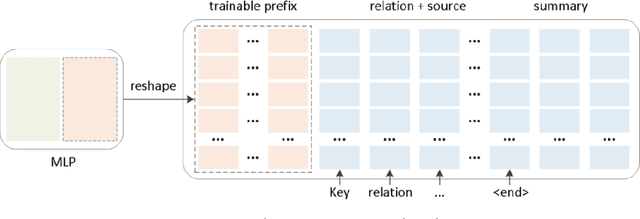
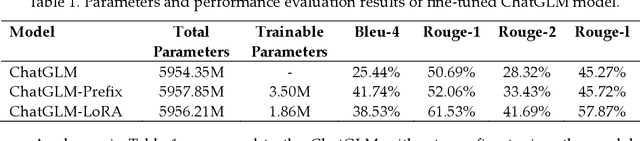
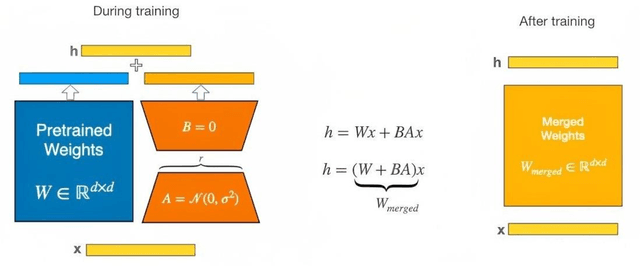

This study aims to innovatively explore adaptive applications of large language models (LLM) in urban renewal. It also aims to improve its performance and text generation quality for knowledge question-answering (QA) tasks. Based on the ChatGLM, we automatically generate QA datasets using urban renewal scientific literature corpora in a self-instruct manner and then conduct joint fine-tuning training on the model using the Prefix and LoRA fine-tuning methods to create an LLM for urban renewal. By guiding the LLM to automatically generate QA data based on prompt words and given text, it is possible to quickly obtain datasets in the urban renewal field and provide data support for the fine-tuning training of LLMs. The experimental results show that the joint fine-tuning training method proposed in this study can significantly improve the performance of LLM on the QA tasks. Compared with LoRA fine-tuning, the method improves the Bleu and Rouge metrics on the test by about 5%; compared with the model before fine-tuning, the method improves the Bleu and Rouge metrics by about 15%-20%. This study demonstrates the effectiveness and superiority of the joint fine-tuning method using Prefix and LoRA for ChatGLM in the urban renewal knowledge QA tasks. It provides a new approach for fine-tuning LLMs on urban renewal-related tasks.