 Add to Chrome
 Add to Firefox
 Add to Edge
Identity-Paired Progressive Depth Training: When Trainability Persists Beyond Expressibility
Jul 18, 2026
Variational Quantum Algorithms (VQAs) are a leading paradigm for near-term quantum computing, yet their training suffers from sensitivity to circuit depth, initialization, and landscape pathologies such as barren plateaus. We study \emph{progressive depth training} (PDT) -- a layerwise curriculum that trains a shallow circuit before appending new layers -- and identify a fundamental obstacle: fixed entangling gates (CNOTs) in hardware-efficient ansätze cause \emph{initialization shock}, an energy spike when new layers are added. We propose \emph{identity-paired progressive depth training} (IP-PDT), which appends forward/inverse block pairs -- each consisting of a standard rotation$+$CNOT block followed by its reverse -- that compose to the identity at initialization. Because the adjacent CNOT rings cancel, the effective circuit retains only \textit{a single entangling layer} surrounded by \textit{overparameterized local rotations}. We prove a simple \textit{Reachable Set Saturation Theorem}: under this construction the variational manifold expands exactly once (when post-entangler rotations are first introduced) and then \emph{saturates}; all subsequent depth increases provide pure overparameterization of single-qubit unitaries. Despite this saturation, progressive addition of rotation parameters can continue to improve optimization outcomes -- a phenomenon we term \emph{trainability beyond expressibility}. We formalize IP-PDT as a continuation method on nested manifolds, prove monotone energy guarantees under an acceptance rule, and connect energy error to ground-state fidelity through spectral-gap inequalities. A detailed resource analysis shows that IP-PDT achieves lower total gate cost than both baselines by eliminating most CNOT gates.

Automated Tensor-Relational Decomposition for Large-Scale Sparse Tensor Computation
Mar 09, 2026A \emph{tensor-relational} computation is a relational computation where individual tuples carry vectors, matrices, or higher-dimensional arrays. An advantage of tensor-relational computation is that the overall computation can be executed on top of a relational system, inheriting the system's ability to automatically handle very large inputs with high levels of sparsity while high-performance kernels (such as optimized matrix-matrix multiplication codes) can be used to perform most of the underlying mathematical operations. In this paper, we introduce upper-case-lower-case \texttt{EinSum}, which is a tensor-relational version of the classical Einstein Summation Notation. We study how to automatically rewrite a computation in Einstein Notation into upper-case-lower-case \texttt{EinSum} so that computationally intensive components are executed using efficient numerical kernels, while sparsity is managed relationally.
WSBD: Freezing-Based Optimizer for Quantum Neural Networks
Feb 11, 2026The training of Quantum Neural Networks (QNNs) is hindered by the high computational cost of gradient estimation and the barren plateau problem, where optimization landscapes become intractably flat. To address these challenges, we introduce Weighted Stochastic Block Descent (WSBD), a novel optimizer with a dynamic, parameter-wise freezing strategy. WSBD intelligently focuses computational resources by identifying and temporarily freezing less influential parameters based on a gradient-derived importance score. This approach significantly reduces the number of forward passes required per training step and helps navigate the optimization landscape more effectively. Unlike pruning or layer-wise freezing, WSBD maintains full expressive capacity while adapting throughout training. Our extensive evaluation shows that WSBD converges on average 63.9% faster than Adam for the popular ground-state-energy problem, an advantage that grows with QNN size. We provide a formal convergence proof for WSBD and show that parameter-wise freezing outperforms traditional layer-wise approaches in QNNs. Project page: https://github.com/Damrl-lab/WSBD-Stochastic-Freezing-Optimizer.
Three Birds with One Stone: Improving Performance, Convergence, and System Throughput with Nest
Oct 10, 2025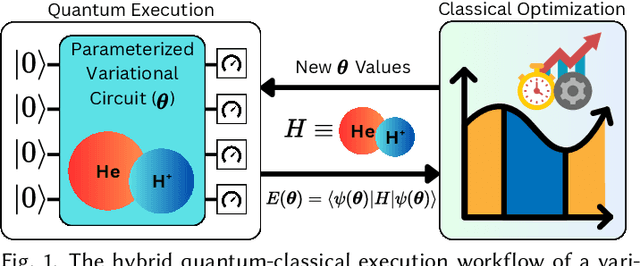

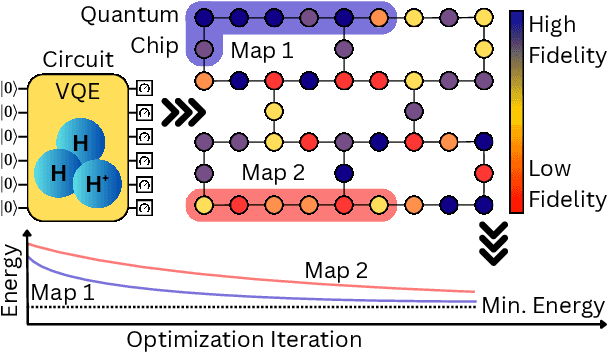
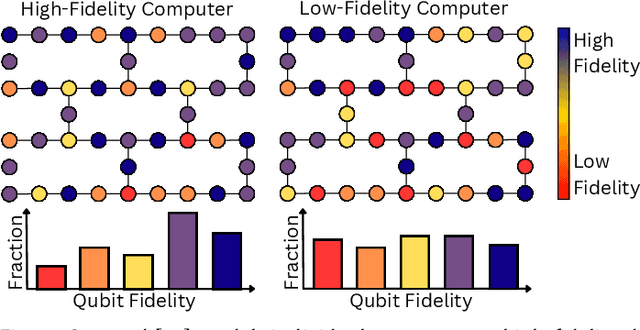
Variational quantum algorithms (VQAs) have the potential to demonstrate quantum utility on near-term quantum computers. However, these algorithms often get executed on the highest-fidelity qubits and computers to achieve the best performance, causing low system throughput. Recent efforts have shown that VQAs can be run on low-fidelity qubits initially and high-fidelity qubits later on to still achieve good performance. We take this effort forward and show that carefully varying the qubit fidelity map of the VQA over its execution using our technique, Nest, does not just (1) improve performance (i.e., help achieve close to optimal results), but also (2) lead to faster convergence. We also use Nest to co-locate multiple VQAs concurrently on the same computer, thus (3) increasing the system throughput, and therefore, balancing and optimizing three conflicting metrics simultaneously.
ResQ: A Novel Framework to Implement Residual Neural Networks on Analog Rydberg Atom Quantum Computers
Jun 26, 2025Research in quantum machine learning has recently proliferated due to the potential of quantum computing to accelerate machine learning. An area of machine learning that has not yet been explored is neural ordinary differential equation (neural ODE) based residual neural networks (ResNets), which aim to improve the effectiveness of neural networks using the principles of ordinary differential equations. In this work, we present our insights about why analog Rydberg atom quantum computers are especially well-suited for ResNets. We also introduce ResQ, a novel framework to optimize the dynamics of Rydberg atom quantum computers to solve classification problems in machine learning using analog quantum neural ODEs.
Quorum: Zero-Training Unsupervised Anomaly Detection using Quantum Autoencoders
Apr 17, 2025
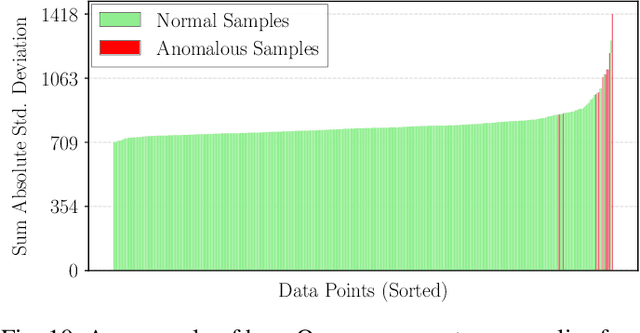
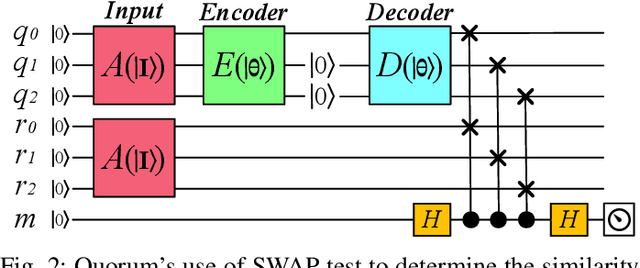
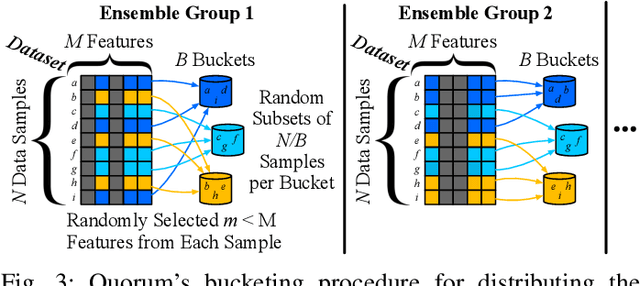
Detecting mission-critical anomalous events and data is a crucial challenge across various industries, including finance, healthcare, and energy. Quantum computing has recently emerged as a powerful tool for tackling several machine learning tasks, but training quantum machine learning models remains challenging, particularly due to the difficulty of gradient calculation. The challenge is even greater for anomaly detection, where unsupervised learning methods are essential to ensure practical applicability. To address these issues, we propose Quorum, the first quantum anomaly detection framework designed for unsupervised learning that operates without requiring any training.
EnQode: Fast Amplitude Embedding for Quantum Machine Learning Using Classical Data
Mar 18, 2025Amplitude embedding (AE) is essential in quantum machine learning (QML) for encoding classical data onto quantum circuits. However, conventional AE methods suffer from deep, variable-length circuits that introduce high output error due to extensive gate usage and variable error rates across samples, resulting in noise-driven inconsistencies that degrade model accuracy. We introduce EnQode, a fast AE technique based on symbolic representation that addresses these limitations by clustering dataset samples and solving for cluster mean states through a low-depth, machine-specific ansatz. Optimized to reduce physical gates and SWAP operations, EnQode ensures all samples face consistent, low noise levels by standardizing circuit depth and composition. With over 90% fidelity in data mapping, EnQode enables robust, high-performance QML on noisy intermediate-scale quantum (NISQ) devices. Our open-source solution provides a scalable and efficient alternative for integrating classical data with quantum models.
Qompose: A Technique to Select Optimal Algorithm- Specific Layout for Neutral Atom Quantum Architectures
Sep 29, 2024As quantum computing architecture matures, it is important to investigate new technologies that lend unique advantages. In this work, we propose, Qompose, a neutral atom quantum computing framework for efficiently composing quantum circuits on 2-D topologies of neutral atoms. Qompose selects an efficient topology for any given circuit in order to optimize for length of execution through efficient parallelism and for overall fidelity. our extensive evaluation demonstrates the Qompose is effective for a large collection of randomly-generated quantum circuits and a range of real-world benchmarks including VQE, ISING, and QAOA.
OrganiQ: Mitigating Classical Resource Bottlenecks of Quantum Generative Adversarial Networks on NISQ-Era Machines
Sep 29, 2024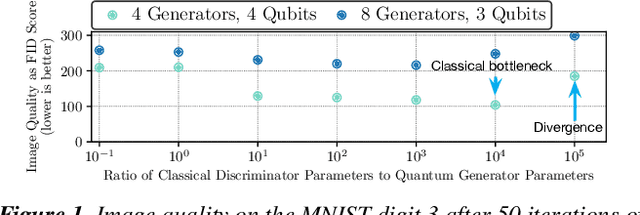
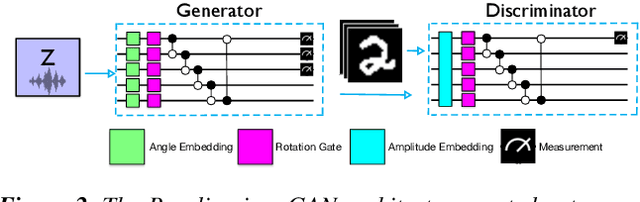
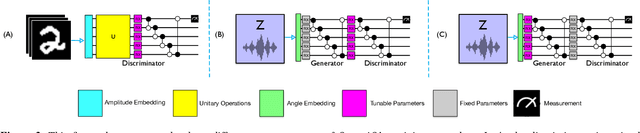

Driven by swift progress in hardware capabilities, quantum machine learning has emerged as a research area of interest. Recently, quantum image generation has produced promising results. However, prior quantum image generation techniques rely on classical neural networks, limiting their quantum potential and image quality. To overcome this, we introduce OrganiQ, the first quantum GAN capable of producing high-quality images without using classical neural networks.
ReCon: Reconfiguring Analog Rydberg Atom Quantum Computers for Quantum Generative Adversarial Networks
Aug 23, 2024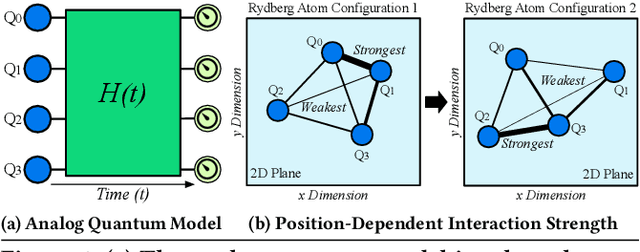
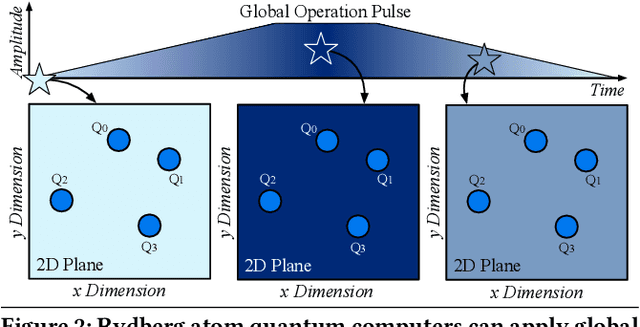
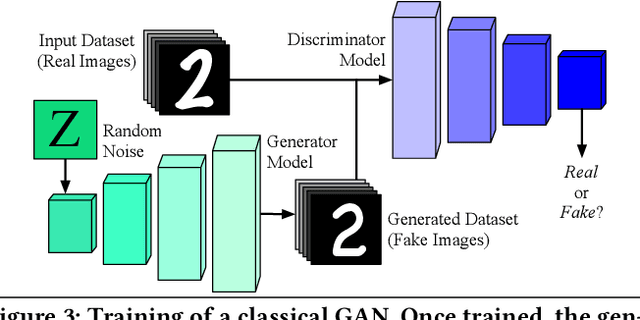

Quantum computing has shown theoretical promise of speedup in several machine learning tasks, including generative tasks using generative adversarial networks (GANs). While quantum computers have been implemented with different types of technologies, recently, analog Rydberg atom quantum computers have been demonstrated to have desirable properties such as reconfigurable qubit (quantum bit) positions and multi-qubit operations. To leverage the properties of this technology, we propose ReCon, the first work to implement quantum GANs on analog Rydberg atom quantum computers. Our evaluation using simulations and real-computer executions shows 33% better quality (measured using Frechet Inception Distance (FID)) in generated images than the state-of-the-art technique implemented on superconducting-qubit technology.