 Add to Chrome
 Add to Firefox
 Add to Edge
Conversational Orchestration for Organic 6G
Aug 11, 2026
The Organic 6G vision of a network of networks spanning an edge-cloud continuum complemented by non-terrestrial resources requires, to realize its promise, service provisioning that is simple to operate, scalable across independently administered domains, and agile under domain churn (i.e., domains dynamically joining and leaving). Despite advances in cross-domain orchestration, many proposals rely on heavy integration fabrics, multi-layer coordinators, and deep telemetry pipelines that hinder deployability and amplify coordination overhead. We propose a lightweight, decentralized conversational orchestration framework based on Large Language Model (LLM)-driven domain agents. Each domain remains autonomous: an agent observes local state via tools, reasons in a closed loop, and exchanges summaries with neighboring agents over an Agent-to-Agent (A2A) overlay aligned with data-plane coupling. Fast feasible placement is enabled by periodic, routing-like dissemination of reachability advertisements (latency, bottleneck bandwidth, and compute capacity), while safe re-optimization, scaling, and migration are handled through event-driven requests and negotiation. To meet real-time constraints, we deploy a compact reasoning model trained with verifier-based self-verification and periodically refined online via shadow updates. Simulations show manageable, near-linear control-plane overhead as domains scale and during domain joins, and robust decision quality, including recovery after objective changes. We close by outlining future research directions for principled, secure, and uncertainty-aware agentic orchestration in Organic 6G.

Exploiting Overlapping Fields of View for Redundancy-Aware Uplink Transmission in Vehicular 6G
Jul 11, 2026Emerging uplink-dominant 6G use cases, such as cooperative vehicular streaming, require efficient transmission of high-volume visual data over limited wireless resources. While semantic communications can reduce traffic by prioritizing task-relevant content, most existing approaches treat users independently and therefore overlook spatial redundancy among nearby devices' observations. This paper proposes a semantic-aware multiple access scheme that exploits overlapping fields of view among vehicular users to reduce redundant uplink transmissions. We formulate a joint perception and transmission control problem in which users decide which image patches to transmit, when to transmit them, and over which channel, subject to communication constraints. To address the resulting complexity, we introduce a practical two-phase approach. First, nearby vehicles share selected observation patches over Vehicle-to-Vehicle (V2V) links to calculate inter-user spatial redundancy. Second, users transmit only semantically important, non-redundant patches to the base station, where observations can be reconstructed using the received patches and complementary views from neighboring vehicles. Simulation results in a dense urban vehicular scenario demonstrate that our approach improves the proportion of users who achieve high-fidelity reconstruction, highlighting the potential of semantic-aware multiple access for sustainable and resource-efficient 6G uplink systems.
Semantic-Aware Multiple Access via Spatial Redundancy Exploitation for Uplink-Dominant 6G Use Cases
Jun 30, 2026Emerging uplink-dominant 6G use cases, such as cooperative vehicular streaming, require efficient transmission of high-volume visual data over limited wireless resources. While semantic communications can reduce traffic by prioritizing task-relevant content, most existing approaches treat users independently and therefore overlook spatial redundancy among nearby devices' observations. This paper proposes a semantic-aware multiple access scheme that exploits overlapping fields of view among vehicular users to reduce redundant uplink transmissions. We formulate a joint perception and transmission control problem in which users decide which image patches to transmit, when to transmit them, and over which channel, subject to communication constraints. To address the resulting complexity, we introduce a practical two-phase approach. First, nearby vehicles share selected observation patches over Vehicle-to-Vehicle (V2V) links to calculate inter-user spatial redundancy. Second, users transmit only semantically important, non-redundant patches to the base station, where observations can be reconstructed using the received patches and complementary views from neighboring vehicles. Simulation results in a dense urban vehicular scenario demonstrate that our approach improves the proportion of users who achieve high-fidelity reconstruction, highlighting the potential of semantic-aware multiple access for sustainable and resource-efficient 6G uplink systems.
An Autonomous Network Orchestration Framework Integrating Large Language Models with Continual Reinforcement Learning
Feb 22, 20256G networks aim to achieve global coverage, massive connectivity, and ultra-stringent requirements. Space-Air-Ground Integrated Networks (SAGINs) and Semantic Communication (SemCom) are essential for realizing these goals, yet they introduce considerable complexity in resource orchestration. Drawing inspiration from research in robotics, a viable solution to manage this complexity is the application of Large Language Models (LLMs). Although the use of LLMs in network orchestration has recently gained attention, existing solutions have not sufficiently addressed LLM hallucinations or their adaptation to network dynamics. To address this gap, this paper proposes a framework called Autonomous Reinforcement Coordination (ARC) for a SemCom-enabled SAGIN. This framework employs an LLM-based Retrieval-Augmented Generator (RAG) monitors services, users, and resources and processes the collected data, while a Hierarchical Action Planner (HAP) orchestrates resources. ARC decomposes orchestration into two tiers, utilizing LLMs for high-level planning and Reinforcement Learning (RL) agents for low-level decision-making, in alignment with the Mixture of Experts (MoE) concept. The LLMs utilize Chain-of-Thought (CoT) reasoning for few-shot learning, empowered by contrastive learning, while the RL agents employ replay buffer management for continual learning, thereby achieving efficiency, accuracy, and adaptability. Simulations are provided to demonstrate the effectiveness of ARC, along with a comprehensive discussion on potential future research directions to enhance and upgrade ARC.
Towards Secure Intelligent O-RAN Architecture: Vulnerabilities, Threats and Promising Technical Solutions using LLMs
Nov 13, 2024The evolution of wireless communication systems will be fundamentally impacted by an open radio access network (O-RAN), a new concept defining an intelligent architecture with enhanced flexibility, openness, and the ability to slice services more efficiently. For all its promises, and like any technological advancement, O-RAN is not without risks that need to be carefully assessed and properly addressed to accelerate its wide adoption in future mobile networks. In this paper, we present an in-depth security analysis of the O-RAN architecture, discussing the potential threats that may arise in the different O-RAN architecture layers and their impact on the Confidentiality, Integrity, and Availability (CIA) triad. We also promote the potential of zero trust, Moving Target Defense (MTD), blockchain, and large language models(LLM) technologies in fortifying O-RAN's security posture. Furthermore, we numerically demonstrate the effectiveness of MTD in empowering robust deep reinforcement learning methods for dynamic network slice admission control in the O-RAN architecture. Moreover, we examine the effect of explainable AI (XAI) based on LLMs in securing the system.
Fairness-Utilization Trade-off in Wireless Networks with Explainable Kolmogorov-Arnold Networks
Nov 04, 2024The effective distribution of user transmit powers is essential for the significant advancements that the emergence of 6G wireless networks brings. In recent studies, Deep Neural Networks (DNNs) have been employed to address this challenge. However, these methods frequently encounter issues regarding fairness and computational inefficiency when making decisions, rendering them unsuitable for future dynamic services that depend heavily on the participation of each individual user. To address this gap, this paper focuses on the challenge of transmit power allocation in wireless networks, aiming to optimize $\alpha$-fairness to balance network utilization and user equity. We introduce a novel approach utilizing Kolmogorov-Arnold Networks (KANs), a class of machine learning models that offer low inference costs compared to traditional DNNs through superior explainability. The study provides a comprehensive problem formulation, establishing the NP-hardness of the power allocation problem. Then, two algorithms are proposed for dataset generation and decentralized KAN training, offering a flexible framework for achieving various fairness objectives in dynamic 6G environments. Extensive numerical simulations demonstrate the effectiveness of our approach in terms of fairness and inference cost. The results underscore the potential of KANs to overcome the limitations of existing DNN-based methods, particularly in scenarios that demand rapid adaptation and fairness.
Distributed Computation Offloading for Energy Provision Minimization in WP-MEC Networks with Multiple HAPs
Nov 01, 2024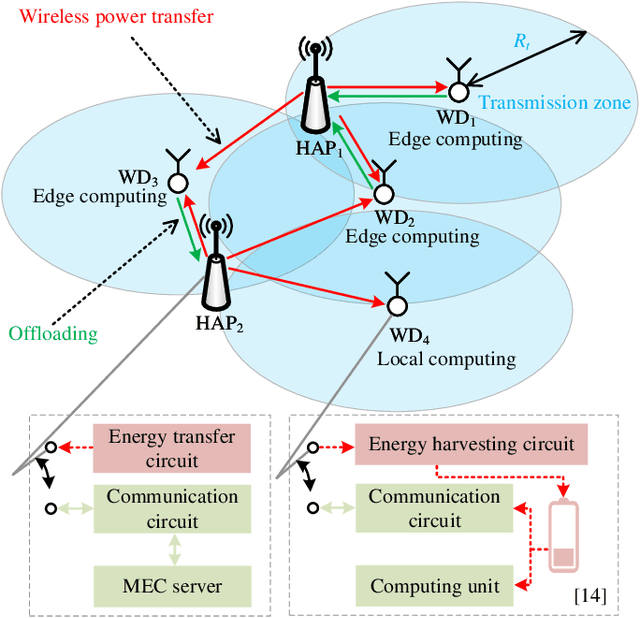
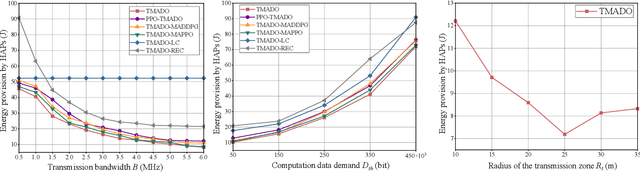
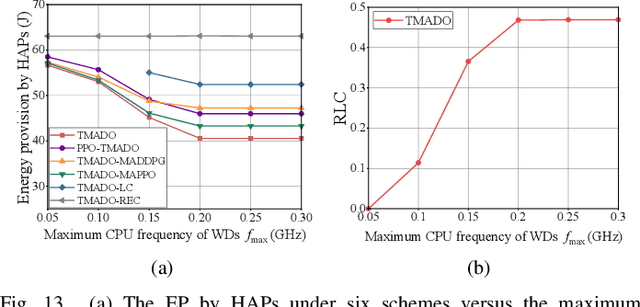
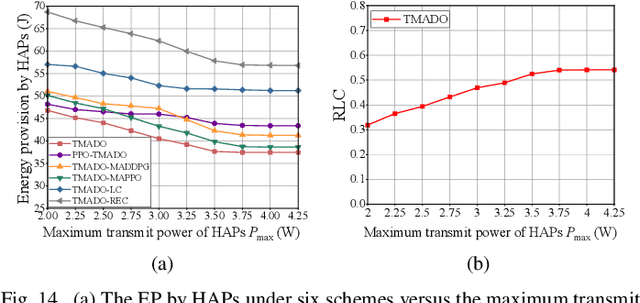
This paper investigates a wireless powered mobile edge computing (WP-MEC) network with multiple hybrid access points (HAPs) in a dynamic environment, where wireless devices (WDs) harvest energy from radio frequency (RF) signals of HAPs, and then compute their computation data locally (i.e., local computing mode) or offload it to the chosen HAPs (i.e., edge computing mode). In order to pursue a green computing design, we formulate an optimization problem that minimizes the long-term energy provision of the WP-MEC network subject to the energy, computing delay and computation data demand constraints. The transmit power of HAPs, the duration of the wireless power transfer (WPT) phase, the offloading decisions of WDs, the time allocation for offloading and the CPU frequency for local computing are jointly optimized adapting to the time-varying generated computation data and wireless channels of WDs. To efficiently address the formulated non-convex mixed integer programming (MIP) problem in a distributed manner, we propose a Two-stage Multi-Agent deep reinforcement learning-based Distributed computation Offloading (TMADO) framework, which consists of a high-level agent and multiple low-level agents. The high-level agent residing in all HAPs optimizes the transmit power of HAPs and the duration of the WPT phase, while each low-level agent residing in each WD optimizes its offloading decision, time allocation for offloading and CPU frequency for local computing. Simulation results show the superiority of the proposed TMADO framework in terms of the energy provision minimization.
Multi-Model based Federated Learning Against Model Poisoning Attack: A Deep Learning Based Model Selection for MEC Systems
Sep 12, 2024Federated Learning (FL) enables training of a global model from distributed data, while preserving data privacy. However, the singular-model based operation of FL is open with uploading poisoned models compatible with the global model structure and can be exploited as a vulnerability to conduct model poisoning attacks. This paper proposes a multi-model based FL as a proactive mechanism to enhance the opportunity of model poisoning attack mitigation. A master model is trained by a set of slave models. To enhance the opportunity of attack mitigation, the structure of client models dynamically change within learning epochs, and the supporter FL protocol is provided. For a MEC system, the model selection problem is modeled as an optimization to minimize loss and recognition time, while meeting a robustness confidence. In adaption with dynamic network condition, a deep reinforcement learning based model selection is proposed. For a DDoS attack detection scenario, results illustrate a competitive accuracy gain under poisoning attack with the scenario that the system is without attack, and also a potential of recognition time improvement.
Semantic Revolution from Communications to Orchestration for 6G: Challenges, Enablers, and Research Directions
Jun 24, 2024In the context of emerging 6G services, the realization of everything-to-everything interactions involving a myriad of physical and digital entities presents a crucial challenge. This challenge is exacerbated by resource scarcity in communication infrastructures, necessitating innovative solutions for effective service implementation. Exploring the potential of Semantic Communications (SemCom) to enhance point-to-point physical layer efficiency shows great promise in addressing this challenge. However, achieving efficient SemCom requires overcoming the significant hurdle of knowledge sharing between semantic decoders and encoders, particularly in the dynamic and non-stationary environment with stringent end-to-end quality requirements. To bridge this gap in existing literature, this paper introduces the Knowledge Base Management And Orchestration (KB-MANO) framework. Rooted in the concepts of Computing-Network Convergence (CNC) and lifelong learning, KB-MANO is crafted for the allocation of network and computing resources dedicated to updating and redistributing KBs across the system. The primary objective is to minimize the impact of knowledge management activities on actual service provisioning. A proof-of-concept is proposed to showcase the integration of KB-MANO with resource allocation in radio access networks. Finally, the paper offers insights into future research directions, emphasizing the transformative potential of semantic-oriented communication systems in the realm of 6G technology.
Towards a Dynamic Future with Adaptable Computing and Network Convergence (ACNC)
Mar 12, 2024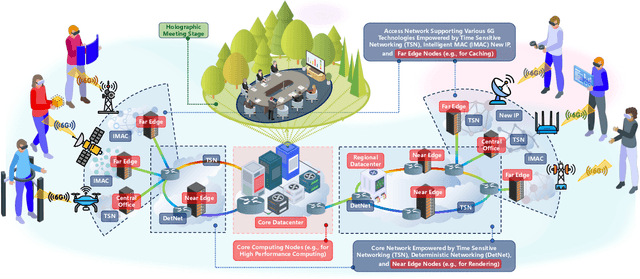

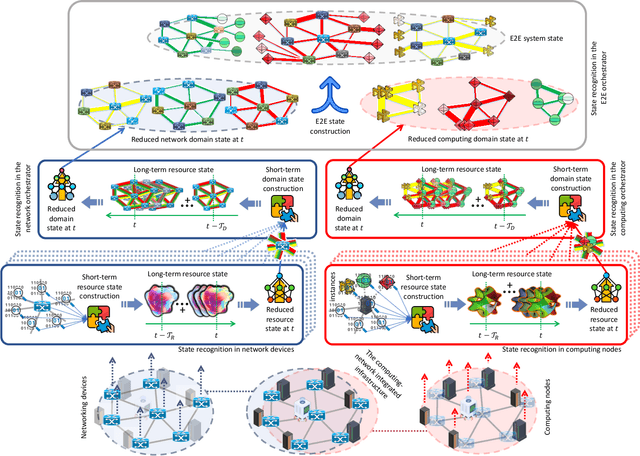

In the context of advancing 6G, a substantial paradigm shift is anticipated, highlighting comprehensive everything-to-everything interactions characterized by numerous connections and stringent adherence to Quality of Service/Experience (QoS/E) prerequisites. The imminent challenge stems from resource scarcity, prompting a deliberate transition to Computing-Network Convergence (CNC) as an auspicious approach for joint resource orchestration. While CNC-based mechanisms have garnered attention, their effectiveness in realizing future services, particularly in use cases like the Metaverse, may encounter limitations due to the continually changing nature of users, services, and resources. Hence, this paper presents the concept of Adaptable CNC (ACNC) as an autonomous Machine Learning (ML)-aided mechanism crafted for the joint orchestration of computing and network resources, catering to dynamic and voluminous user requests with stringent requirements. ACNC encompasses two primary functionalities: state recognition and context detection. Given the intricate nature of the user-service-computing-network space, the paper employs dimension reduction to generate live, holistic, abstract system states in a hierarchical structure. To address the challenges posed by dynamic changes, Continual Learning (CL) is employed, classifying the system state into contexts controlled by dedicated ML agents, enabling them to operate efficiently. These two functionalities are intricately linked within a closed loop overseen by the End-to-End (E2E) orchestrator to allocate resources. The paper introduces the components of ACNC, proposes a Metaverse scenario to exemplify ACNC's role in resource provisioning with Segment Routing v6 (SRv6), outlines ACNC's workflow, details a numerical analysis for efficiency assessment, and concludes with discussions on relevant challenges and potential avenues for future research.