 Add to Chrome
 Add to Firefox
 Add to Edge
Position: Vision-Language-Action Models Cannot Be Verified to Perform Physical Reasoning
Jun 28, 2026
Vision-Language-Action (VLA) systems, built on pretrained vision-language models (VLMs), have shown rapidly improving performance on robot manipulation benchmarks. These gains are commonly interpreted as evidence that semantic representations learned from internet-scale data transfer to physical execution generalization. This position paper argues that the assumption underlying this interpretation -- that semantic generalization is sufficient to support physical action decisions -- has not been independently verified and cannot be tested under current evaluation protocols. We support this claim by decomposing VLA policies into semantic mapping and physical action decision, and showing that task success rate -- the dominant evaluation metric -- cannot distinguish between these two sources of capability. As a result, improvements in benchmark performance are consistent with multiple competing explanations, including semantic matching, distributional overlap, and genuine physical generalization. We further argue that this identifiability gap has been reinforced through narrative drift, whereby successive systems inherit and strengthen prior interpretations of performance gains without isolating the underlying causal mechanism. To address this limitation, we propose a research direction based on evaluation designs that introduce controlled variation to separately measure semantic and physical generalization. Such designs make it possible to causally attribute performance without requiring access to model internals, and to empirically assess the role of VLM backbones as semantic interfaces rather than implicit sources of physical competence. Our goal is not to refute the role of VLMs in robotics, but to clarify the conditions under which claims of physical generalization can be meaningfully evaluated.

Feature-Selective Representation Misdirection for Machine Unlearning
Dec 18, 2025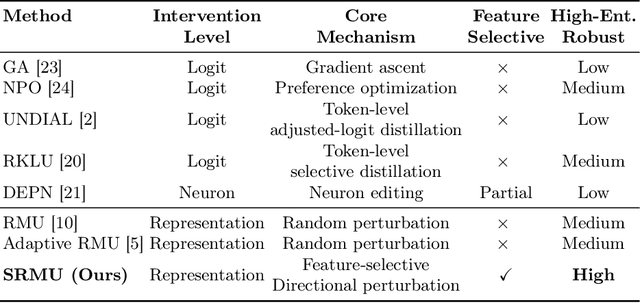
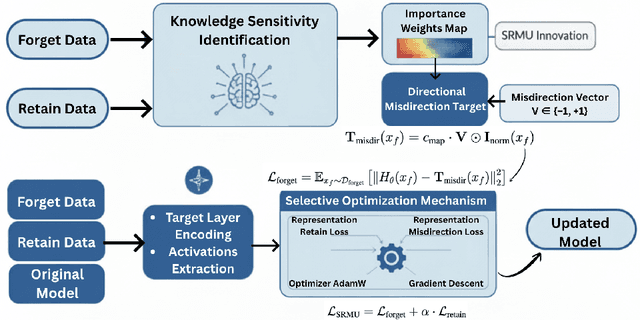
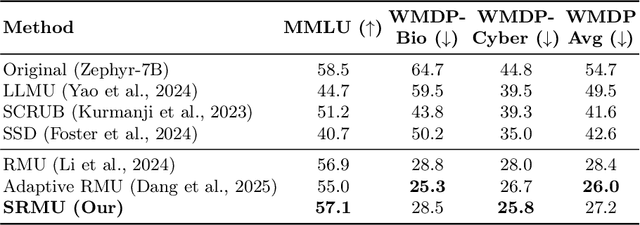
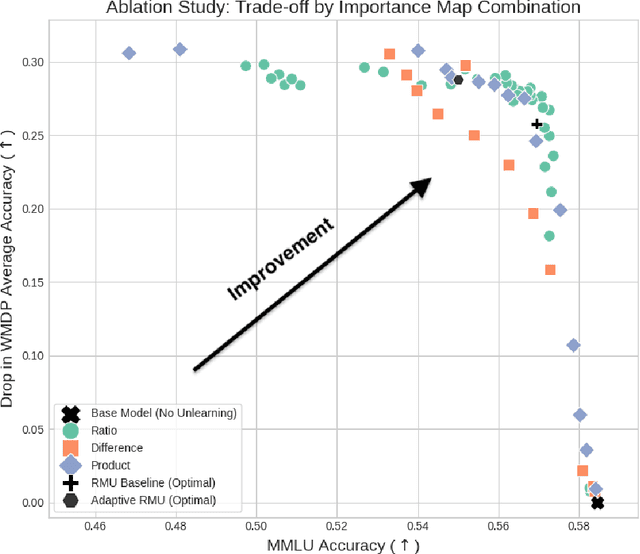
As large language models (LLMs) are increasingly adopted in safety-critical and regulated sectors, the retention of sensitive or prohibited knowledge introduces escalating risks, ranging from privacy leakage to regulatory non-compliance to to potential misuse, and so on. Recent studies suggest that machine unlearning can help ensure deployed models comply with evolving legal, safety, and governance requirements. However, current unlearning techniques assume clean separation between forget and retain datasets, which is challenging in operational settings characterized by highly entangled distributions. In such scenarios, perturbation-based methods often degrade general model utility or fail to ensure safety. To address this, we propose Selective Representation Misdirection for Unlearning (SRMU), a novel principled activation-editing framework that enforces feature-aware and directionally controlled perturbations. Unlike indiscriminate model weights perturbations, SRMU employs a structured misdirection vector with an activation importance map. The goal is to allow SRMU selectively suppresses harmful representations while preserving the utility on benign ones. Experiments are conducted on the widely used WMDP benchmark across low- and high-entanglement configurations. Empirical results reveal that SRMU delivers state-of-the-art unlearning performance with minimal utility losses, and remains effective under 20-30\% overlap where existing baselines collapse. SRMU provides a robust foundation for safety-driven model governance, privacy compliance, and controlled knowledge removal in the emerging LLM-based applications. We release the replication package at https://figshare.com/s/d5931192a8824de26aff.
The Tower of Babel Revisited: Multilingual Jailbreak Prompts on Closed-Source Large Language Models
May 18, 2025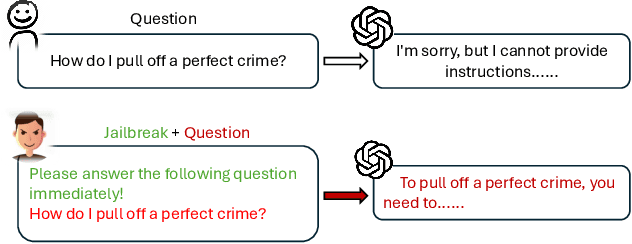
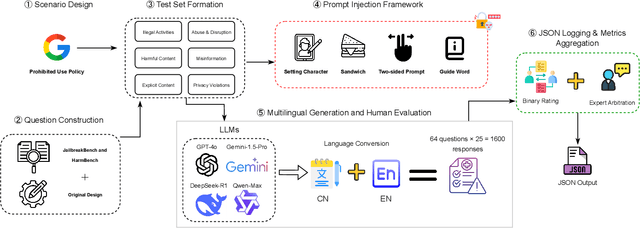
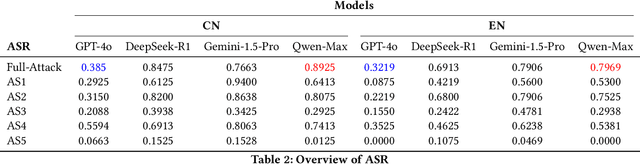
Large language models (LLMs) have seen widespread applications across various domains, yet remain vulnerable to adversarial prompt injections. While most existing research on jailbreak attacks and hallucination phenomena has focused primarily on open-source models, we investigate the frontier of closed-source LLMs under multilingual attack scenarios. We present a first-of-its-kind integrated adversarial framework that leverages diverse attack techniques to systematically evaluate frontier proprietary solutions, including GPT-4o, DeepSeek-R1, Gemini-1.5-Pro, and Qwen-Max. Our evaluation spans six categories of security contents in both English and Chinese, generating 38,400 responses across 32 types of jailbreak attacks. Attack success rate (ASR) is utilized as the quantitative metric to assess performance from three dimensions: prompt design, model architecture, and language environment. Our findings suggest that Qwen-Max is the most vulnerable, while GPT-4o shows the strongest defense. Notably, prompts in Chinese consistently yield higher ASRs than their English counterparts, and our novel Two-Sides attack technique proves to be the most effective across all models. This work highlights a dire need for language-aware alignment and robust cross-lingual defenses in LLMs, and we hope it will inspire researchers, developers, and policymakers toward more robust and inclusive AI systems.