 Add to Chrome
 Add to Firefox
 Add to Edge
AgentKGV: Agentic LLM-RAG Framework with Two-Stage Training for the Fact Verification of Knowledge Graphs
Jul 10, 2026
Knowledge graphs (KGs) are often automatically constructed from large-scale corpora, but they inevitably contain factual errors due to noisy sources and extraction failures, and verifying them reliably at industrial scale remains a critical challenge. To address this, we propose AgentKGV, the Agentic LLM-RAG framework for KG fact Verification, that integrates dynamic routing and iterative query rewriting, which handles surface-form mismatch in document-level retrieval. To make this framework more accurate and cost-efficient for industrial deployment, we further introduce a two-stage training strategy: turn-level distillation-based SFT that transfers reasoning ability from a large teacher model into a small model for stable query rewriting and reasoning, and trajectory-level GRPO that optimizes the search policy to reduce unnecessary retrieval at scale. On the long-tail-predicate split of the open-domain T-REx benchmark, our framework improves macro-F1 over single-turn RAG by 5.5 \%p, and two-stage training does it further by 9.4 \%p. GRPO also cuts the average number of search calls from 3.24 to 1.63 without lowering accuracy.

Anatomy-Grounded Synthetic Coronary Angiography for Geometry-Informed Multi-View Matching
Jun 26, 2026Accurate correspondence matching across multiple angiographic views is the prerequisite for 3D coronary reconstruction and interventional guidance. However, the development of robust deep learning models for this task has been stifled by a fundamental data bottleneck. Obtaining ground truth for matching tasks in angiography pairs is prohibitively expensive and hard to scale. To overcome this barrier, we introduce a physically-grounded data generation framework that synthesizes high-fidelity Digital Reconstructed Radiographs (DRRs) from 3D Coronary CT Angiography (CCTA) volumes. Our framework generates dense, highly accurate 3D-to-2D projection labels by simulating realistic C-arm acquisition geometry on patient anatomy at zero human cost. Leveraging this dense supervision, we propose a Geometry-Informed Matching Module (GIMM) that integrates global feature and anatomical structure into correspondence learning. Unlike real angiography where assessment relies on subjective human annotation, our dataset provides 2D correspondence labels with paired images, allowing human-free evaluation. We comprehensively evaluate our method on the proposed CT-derived DRR dataset and demonstrate improvements over other matching baseline models.
EditCrafter: Tuning-free High-Resolution Image Editing via Pretrained Diffusion Model
Apr 11, 2026We propose EditCrafter, a high-resolution image editing method that operates without tuning, leveraging pretrained text-to-image (T2I) diffusion models to process images at resolutions significantly exceeding those used during training. Leveraging the generative priors of large-scale T2I diffusion models enables the development of a wide array of novel generation and editing applications. Although numerous image editing methods have been proposed based on diffusion models and exhibit high-quality editing results, they are difficult to apply to images with arbitrary aspect ratios or higher resolutions since they only work at the training resolutions (512x512 or 1024x1024). Naively applying patch-wise editing fails with unrealistic object structures and repetition. To address these challenges, we introduce EditCrafter, a simple yet effective editing pipeline. EditCrafter operates by first performing tiled inversion, which preserves the original identity of the input high-resolution image. We further propose a noise-damped manifold-constrained classifier-free guidance (NDCFG++) that is tailored for high resolution image editing from the inverted latent. Our experiments show that the our EditCrafter can achieve impressive editing results across various resolutions without fine-tuning and optimization.
Class Granularity: How richly does your knowledge graph represent the real world?
Nov 10, 2024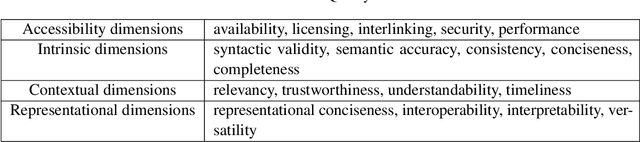
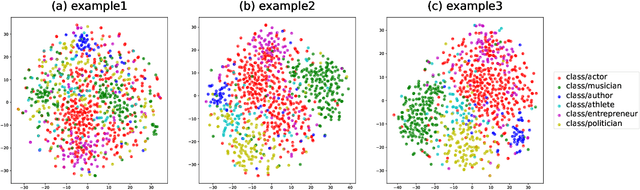
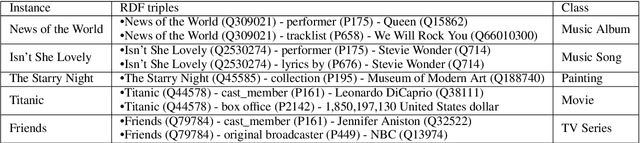
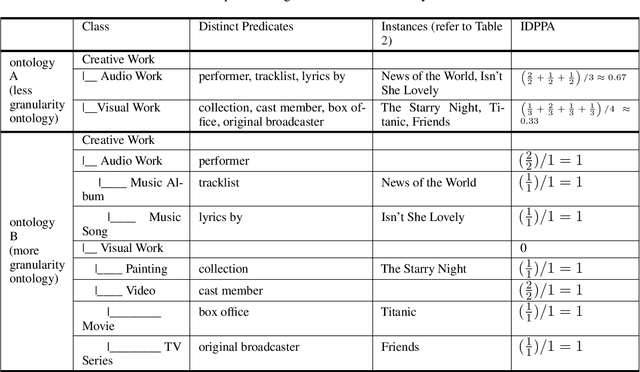
To effectively manage and utilize knowledge graphs, it is crucial to have metrics that can assess the quality of knowledge graphs from various perspectives. While there have been studies on knowledge graph quality metrics, there has been a lack of research on metrics that measure how richly ontologies, which form the backbone of knowledge graphs, are defined or the impact of richly defined ontologies. In this study, we propose a new metric called Class Granularity, which measures how well a knowledge graph is structured in terms of how finely classes with unique characteristics are defined. Furthermore, this research presents potential impact of Class Granularity in knowledge graph's on downstream tasks. In particular, we explore its influence on graph embedding and provide experimental results. Additionally, this research goes beyond traditional Linked Open Data comparison studies, which mainly focus on factors like scale and class distribution, by using Class Granularity to compare four different LOD sources.
ELVIS: Empowering Locality of Vision Language Pre-training with Intra-modal Similarity
Apr 11, 2023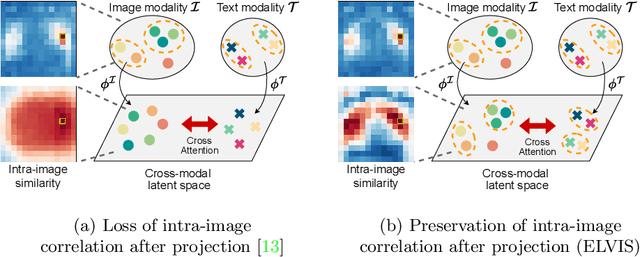
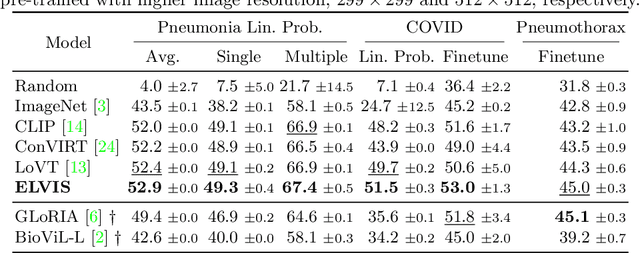
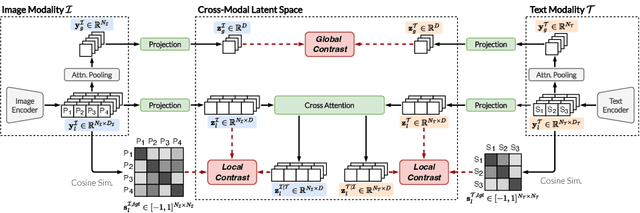
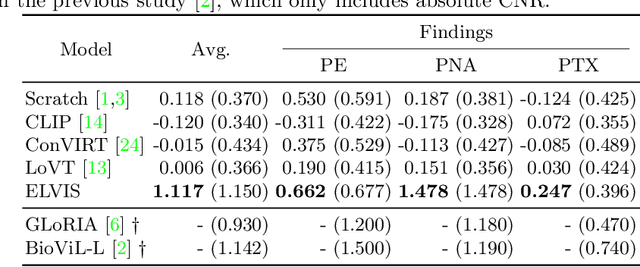
Deep learning has shown great potential in assisting radiologists in reading chest X-ray (CXR) images, but its need for expensive annotations for improving performance prevents widespread clinical application. Visual language pre-training (VLP) can alleviate the burden and cost of annotation by leveraging routinely generated reports for radiographs, which exist in large quantities as well as in paired form (imagetext pairs). Additionally, extensions to localization-aware VLPs are being proposed to address the needs of accurate localization of abnormalities for CAD in CXR. However, we find that the formulation proposed by locality-aware VLP literatures actually leads to loss in spatial relationships required for downstream localization tasks. Therefore, we propose Empowering Locality of VLP with Intra-modal Similarity, ELVIS, a VLP aware of intra-modal locality, to better preserve the locality within radiographs or reports, which enhances the ability to comprehend location references in text reports. Our locality-aware VLP method significantly outperforms state-of-the art baselines in multiple segmentation tasks and the MS-CXR phrase grounding task. Qualitatively, ELVIS is able to focus well on regions of interest described in the report text compared to prior approaches, allowing for enhanced interpretability.
Structural Quality Metrics to Evaluate Knowledge Graphs
Dec 09, 2022This work presents six structural quality metrics that can measure the quality of knowledge graphs and analyzes five cross-domain knowledge graphs on the web (Wikidata, DBpedia, YAGO, Google Knowledge Graph, Freebase) as well as 'Raftel', Naver's integrated knowledge graph. The 'Good Knowledge Graph' should define detailed classes and properties in its ontology so that knowledge in the real world can be expressed abundantly. Also, instances and RDF triples should use the classes and properties actively. Therefore, we tried to examine the internal quality of knowledge graphs numerically by focusing on the structure of the ontology, which is the schema of knowledge graphs, and the degree of use thereof. As a result of the analysis, it was possible to find the characteristics of a knowledge graph that could not be known only by scale-related indicators such as the number of classes and properties.