 Add to Chrome
 Add to Firefox
 Add to Edge
Reconstructing Randomly Masked Spectra Helps DNNs Identify Discriminant Wavenumbers
Jun 19, 2026
Nondestructive detection methods, based on vibrational spectroscopy, are vitally important in a wide range of applications including industrial chemistry, pharmacy and national defense. Recently, deep learning has been introduced into vibrational spectroscopy showing great potential. Different from images, text, etc. that offer large labeled data sets, vibrational spectroscopic data is very limited, which requires novel concepts beyond transfer and meta learning. To tackle this, we propose a task-enhanced augmentation network (TeaNet). The key component of TeaNet is a reconstruction module that inputs randomly masked spectra and outputs reconstructed samples that are similar to the original ones, but include additional variations learned from the domain. These augmented samples are used to train the classification model. The reconstruction and prediction parts are trained simultaneously, end-to-end with back-propagation. Results on both synthetic and real-world datasets verified the superiority of the proposed method. In the most difficult synthetic scenarios TeaNet outperformed CNN by 17%. We visualized and analysed the neuron responses of TeaNet and CNN, and found that TeaNet's ability to identify discriminant wavenumbers was excellent compared to CNN. Our approach is general and can be easily adapted to other domains, offering a solution to more accurate and interpretable few-shot learning.

HoneyFaces: Increasing the Security and Privacy of Authentication Using Synthetic Facial Images
Nov 11, 2016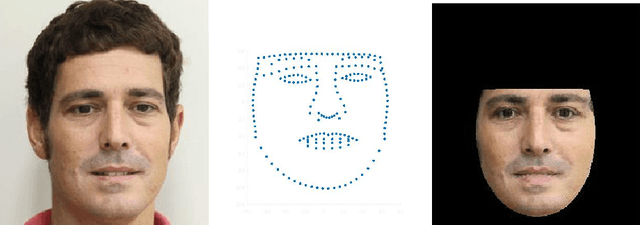
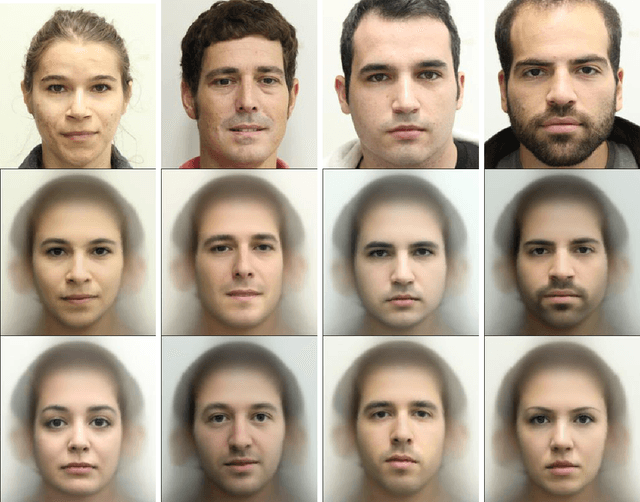
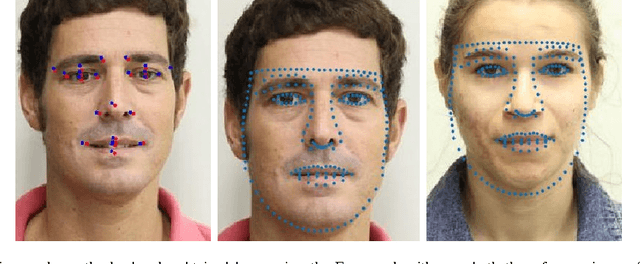
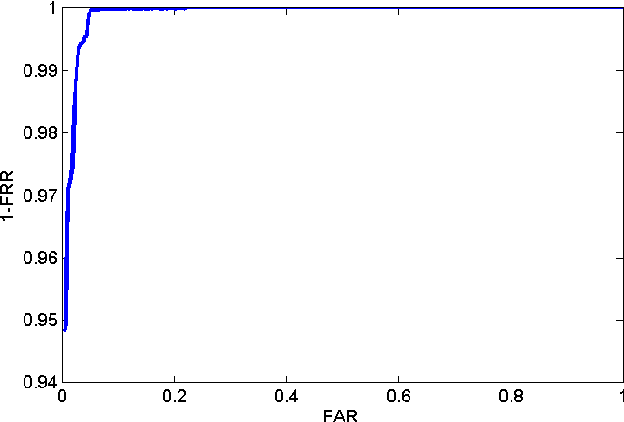
One of the main challenges faced by Biometric-based authentication systems is the need to offer secure authentication while maintaining the privacy of the biometric data. Previous solutions, such as Secure Sketch and Fuzzy Extractors, rely on assumptions that cannot be guaranteed in practice, and often affect the authentication accuracy. In this paper, we introduce HoneyFaces: the concept of adding a large set of synthetic faces (indistinguishable from real) into the biometric "password file". This password inflation protects the privacy of users and increases the security of the system without affecting the accuracy of the authentication. In particular, privacy for the real users is provided by "hiding" them among a large number of fake users (as the distributions of synthetic and real faces are equal). In addition to maintaining the authentication accuracy, and thus not affecting the security of the authentication process, HoneyFaces offer several security improvements: increased exfiltration hardness, improved leakage detection, and the ability to use a Two-server setting like in HoneyWords. Finally, HoneyFaces can be combined with other security and privacy mechanisms for biometric data. We implemented the HoneyFaces system and tested it with a password file composed of 270 real users. The "password file" was then inflated to accommodate up to $2^{36.5}$ users (resulting in a 56.6 TB "password file"). At the same time, the inclusion of additional faces does not affect the true acceptance rate or false acceptance rate which were 93.33\% and 0.01\%, respectively.