 Add to Chrome
 Add to Firefox
 Add to Edge
Exploiting Out-of-Band Information for Millimeter-Wave MIMO Channel Estimation: Performance in Static and Dynamic Scenarios
Apr 03, 2026
To support the high data rates for latency-critical applications, future wireless systems will employ fully digital beamforming multiple-input multiple-output (MIMO) architectures at millimeter wave (mmWave) frequencies. Moreover, mmWave MIMO deployments will coexist with conventional sub-6 GHz MIMO systems, creating opportunities to exploit out-of-band sub-6 GHz information to enhance channel estimation at mmWave frequencies. In this work, we analyze the pilot-aided channel estimation performance of mmWave MIMO systems under various pilot configurations in both static and dynamic environments. We evaluate the system performance in terms of spectral efficiency (SE) for line-of-sight and non-line-of-sight propagation conditions. Simulation results show that incorporating out-of-band sub-6 GHz information yields notable SE gains in both static and dynamic scenarios.
* Accepted to be presented at the European Conference on Networks and Communications and the 6G Summit (EuCNC & 6G Summit), 2026

Multi-Band Patch Antenna Array for Out-of-Band Aided Millimeter Wave Communication
Apr 03, 2026Future wireless communication systems will integrate both sub-6 GHz and millimeter wave (mmWave) frequency bands within multi-antenna architectures to meet the increasing demand for high data rates. In such multi-band systems, reliable information obtained from the sub-6 GHz band can be exploited to support communication at mmWave frequencies. To ensure that both systems experience similar multi-path propagation effects, the sub-6GHz and mmWave antenna arrays have to be colocated and precisely aligned. However, such a configuration may adversely alter the radiation characteristics of the arrays, potentially degrading their performance. In this paper, we investigate the impact of positioning a mmWave antenna structure in front of a sub-6 GHz antenna structure. Through both simulations and measurements, we evaluate how the presence of the mmWave structure affects the radiation pattern of the sub-6 GHz one. The results demonstrate that the influence of the mmWave structure on the sub-6 GHz performance is minor, indicating that co-located configurations are feasible with negligible degradation.
* Published at the IEEE International Workshop on Antenna Technology (iWAT), 2026
Cooperative Deep Reinforcement Learning for Fair RIS Allocation
Mar 26, 2026The deployment of reconfigurable intelligent surfaces (RISs) introduces new challenges for resource allocation in multi-cell wireless networks, particularly when user loads are uneven across base stations. In this work, we consider RISs as shared infrastructure that must be dynamically assigned among competing base stations, and we address this problem using a simultaneous ascending auction mechanism. To mitigate performance imbalances between cells, we propose a fairness-aware collaborative multi-agent reinforcement learning approach in which base stations adapt their bidding strategies based on both expected utility gains and relative service quality. A centrally computed performance-dependent fairness indicator is incorporated into the agents' observations, enabling implicit coordination without direct inter-base-station communication. Simulation results show that the proposed framework effectively redistributes RIS resources toward weaker-performing cells, substantially improving the rates of the worst-served users while preserving overall throughput. The results demonstrate that fairness-oriented RIS allocation can be achieved through cooperative learning, providing a flexible tool for balancing efficiency and equity in future wireless networks.
DNN-Enabled Multi-User Beamforming for Throughput Maximization under Adjustable Fairness
Feb 17, 2026Ensuring user fairness in wireless communications is a fundamental challenge, as balancing the trade-off between fairness and sum rate leads to a non-convex, multi-objective optimization whose complexity grows with network scale. To alleviate this conflict, we propose an optimization-based unsupervised learning approach based on the wireless transformer (WiT) architecture that learns from channel state information (CSI) features. We reformulate the trade-off by combining the sum rate and fairness objectives through a Lagrangian multiplier, which is updated automatically via a dual-ascent algorithm. This mechanism allows for a controllable fairness constraint while simultaneously maximizing the sum rate, effectively realizing a trace on the Pareto front between two conflicting objectives. Our findings show that the proposed approach offers a flexible solution for managing the trade-off optimization under prescribed fairness.
Performance Analysis of Digital Beamforming mmWave MIMO with Low-Resolution DACs/ADCs
Jan 22, 2026Future wireless communications will rely on multiple-input multiple-output (MIMO) beamforming operating at millimeter wave (mmWave) frequency bands to deliver high data rates. To support flexible spatial processing and meet the demands of latency critical applications, it is essential to use fully digital mmWave MIMO beamforming, which relies on accurate channel estimation. However, ensuring power efficiency in fully digital mmWave MIMO systems requires the use of low-resolution digital-to-analog converters (DACs) and analog-to-digital converters (ADCs). The reduced resolution of these quantizers introduces distortion in both transmitted and received signals, ultimately degrading system performance. In this paper, we investigate the channel estimation performance of mmWave MIMO systems employing fully digital beamforming with low-resolution quantization, under practical system constraints. We evaluate the system performance in terms of spectral efficiency (SE) and energy efficiency (EE). Simulation results demonstrate that a moderate quantization resolutions of 4-bit per DAC/ADC offers a favorable trade-off between energy consumption and achievable data rate.
* Published at the IEEE Radio and Antenna Days of the Indian Ocean (RADIO), 2025
Deep Learning-based mmWave MIMO Channel Estimation using sub-6 GHz Channel Information: CNN and UNet Approaches
Jun 13, 2025
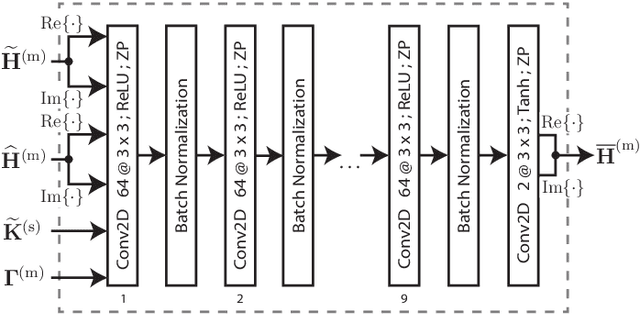
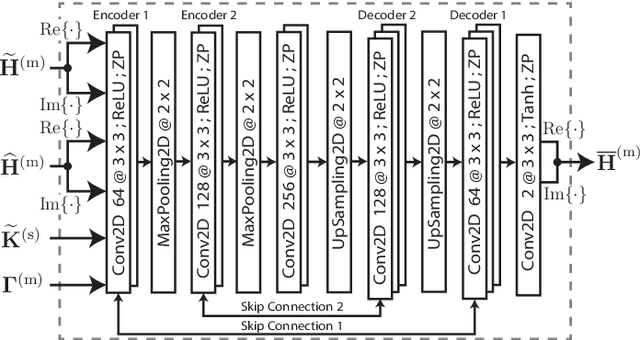
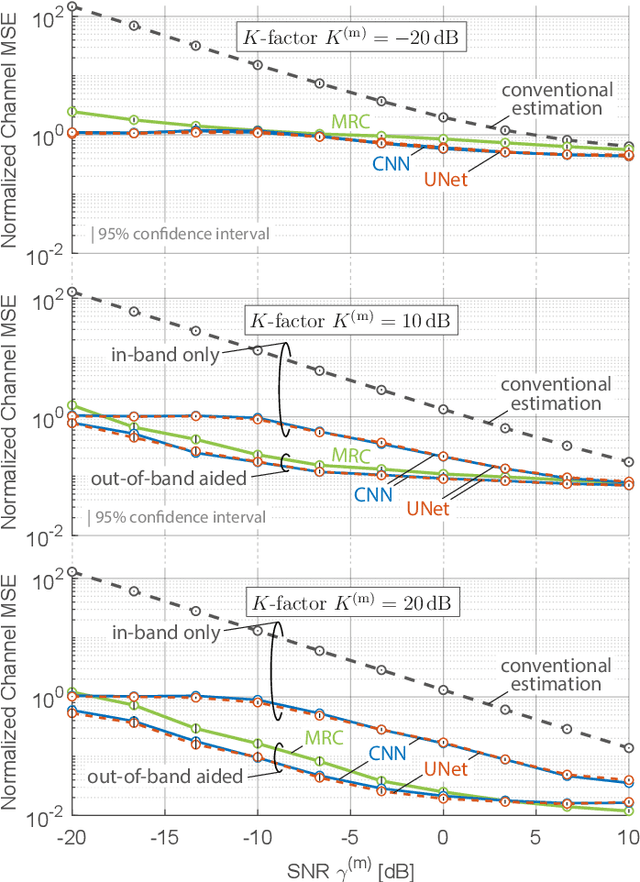
Future wireless multiple-input multiple-output (MIMO) systems will integrate both sub-6 GHz and millimeter wave (mmWave) frequency bands to meet the growing demands for high data rates. MIMO link establishment typically requires accurate channel estimation, which is particularly challenging at mmWave frequencies due to the low signal-to-noise ratio (SNR). In this paper, we propose two novel deep learning-based methods for estimating mmWave MIMO channels by leveraging out-of-band information from the sub-6 GHz band. The first method employs a convolutional neural network (CNN), while the second method utilizes a UNet architecture. We compare these proposed methods against deep-learning methods that rely solely on in-band information and with other state-of-the-art out-of-band aided methods. Simulation results show that our proposed out-of-band aided deep-learning methods outperform existing alternatives in terms of achievable spectral efficiency.
* Submitted to IEEE Conference on Computer Communications Workshops (INFOCOM WKSHPS), 2025
Identification of RIS-Assisted Paths for Wireless Integrated Sensing and Communication
Jun 04, 2025Distinguishing between reconfigurable intelligent surface (RIS) assisted paths and non-line-of-sight (NLOS) paths is a fundamental problem for RIS-assisted integrated sensing and communication. In this work, we propose a pattern alternation scheme for the RIS response that uses part of the RIS as a dynamic part to modulate the estimated channel power, which can considerably help the user equipments (UEs) to identify the RIS-assisted paths. Under such a dynamic setup, we formulate the detection framework for a single UE, where we develop a statistical model of the estimated channel power, allowing us to analytically evaluate the performance of the system. We investigate our method under two critical factors: the number of RIS elements allocated for the dynamic part and the allocation of RIS elements among different users. Simulation results verify the accuracy of our analysis.
Hybrid Channel Modeling and Environment Reconstruction for Terahertz Monostatic Sensing
Nov 12, 2024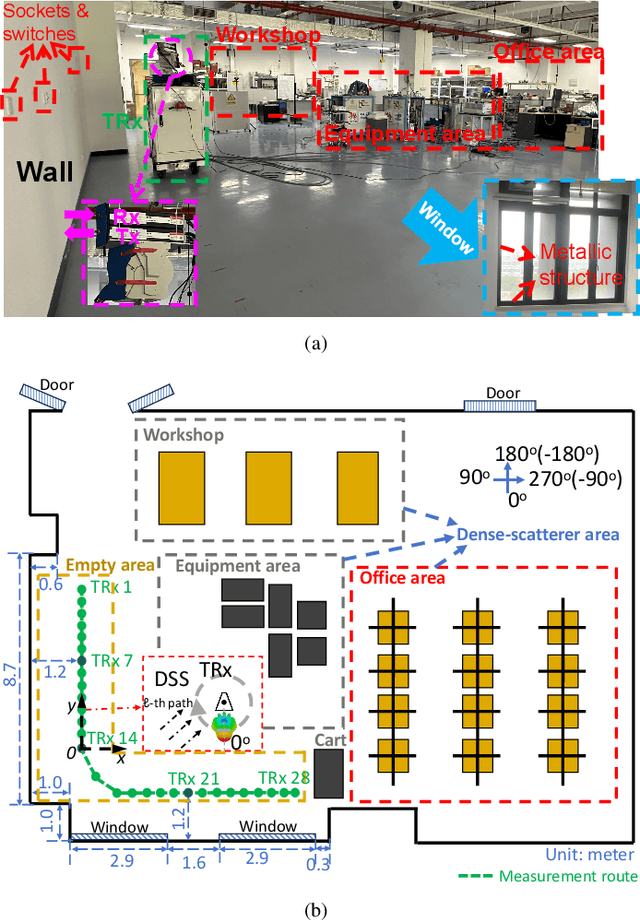
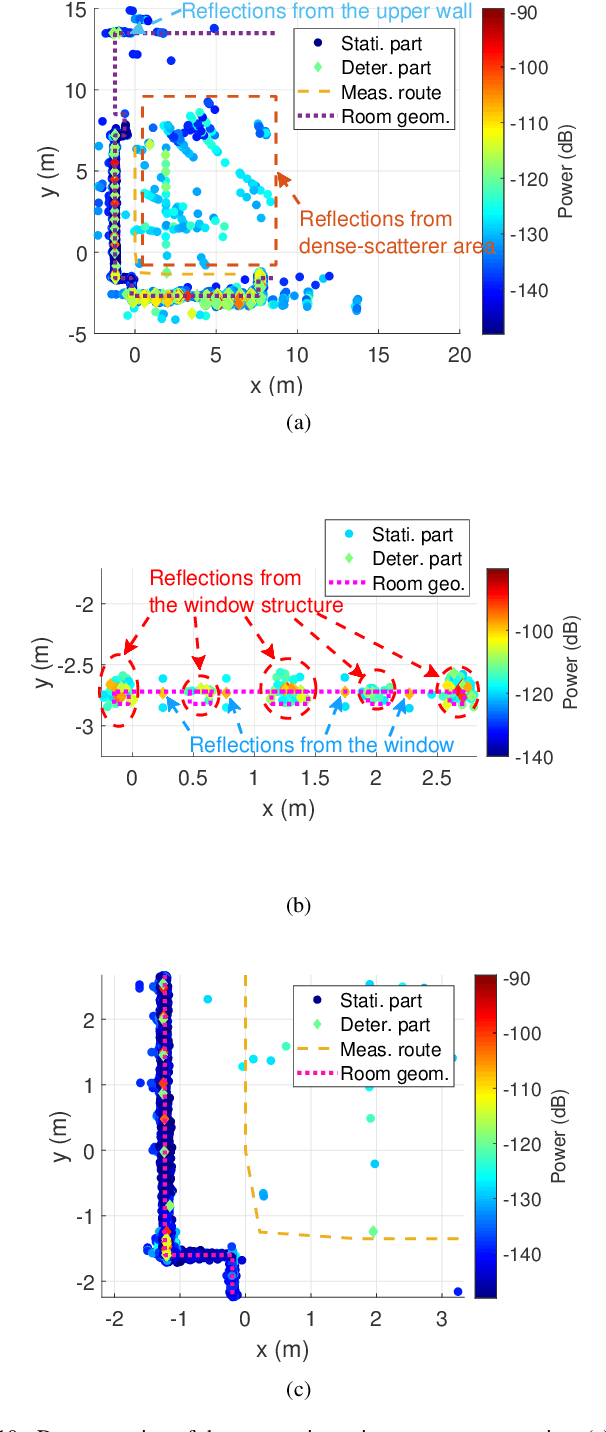
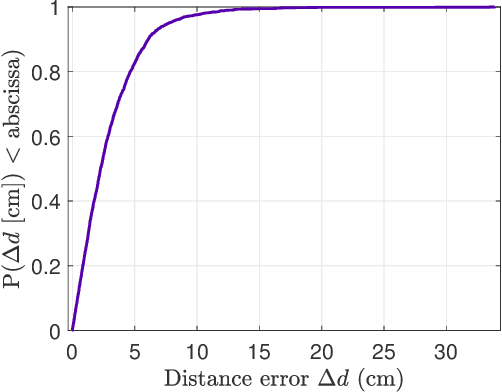
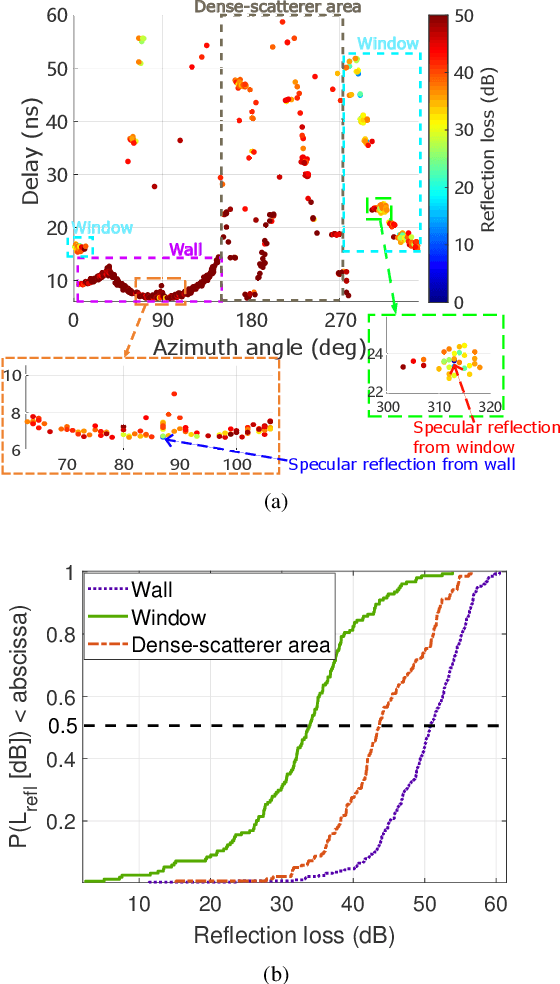
THz ISAC aims to integrate novel functionalities, such as positioning and environmental sensing, into communication systems. Accurate channel modeling is crucial for the design and performance evaluation of future ISAC systems. In this paper, a THz measurement campaign for monostatic sensing is presented. VNA-based channel measurements are conducted in a laboratory scenario, where the transmitter and receiver are positioned together to mimic monostatic sensing. The centering frequency and measured bandwidth for these measurements are 300 GHz and 20 GHz, respectively. A DSS scheme is employed to capture spatial sensing channel profiles. Measurements are conducted across 28 transceiver locations arranged along an 'L'-shaped route. Then, an element-wise SAGE algorithm is used to estimate the MPC parameters, i.e., amplitude and delay. Specular and diffuse reflections are analyzed based on geometric principles and the estimated MPC parameters, where the effects from the radiation pattern are observed. A geometry-based MPC trajectory tracking algorithm is then proposed to classify the MPCs and de-embed the effects of the radiation pattern. Following this algorithm, a hybrid channel model is proposed based on the de-embedded MPC parameters. In this hybrid channel model for monostatic sensing, the MPCs are categorized into target-related and environment-related components. The target-related components are utilized for target detection and identification, while the environment-related ones focus on geometrical scenario reconstruction. A demonstration of geometrical environment reconstruction, along with an analysis of reflection loss for target identification, is subsequently presented. This work offers valuable insights into THz monostatic sensing channel modeling and the design of future THz ISAC systems.
Channel Estimation for mmWave MIMO using sub-6 GHz Out-of-Band Information
Nov 16, 2023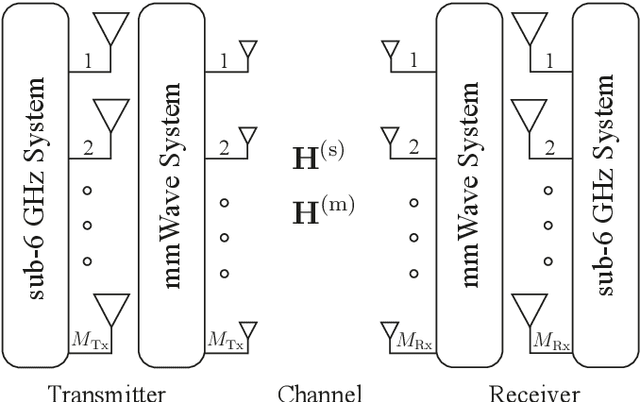
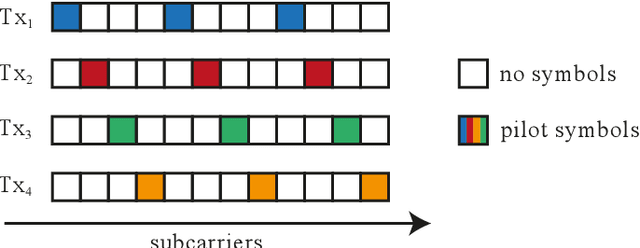
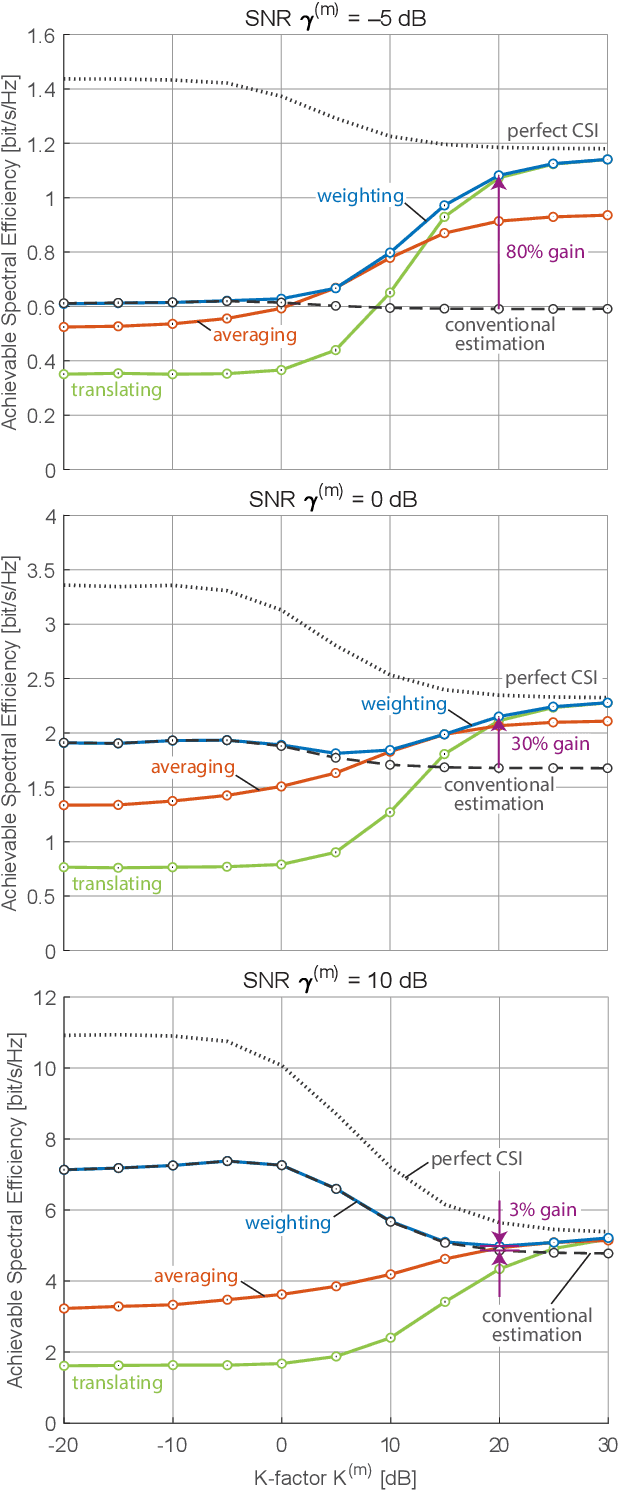
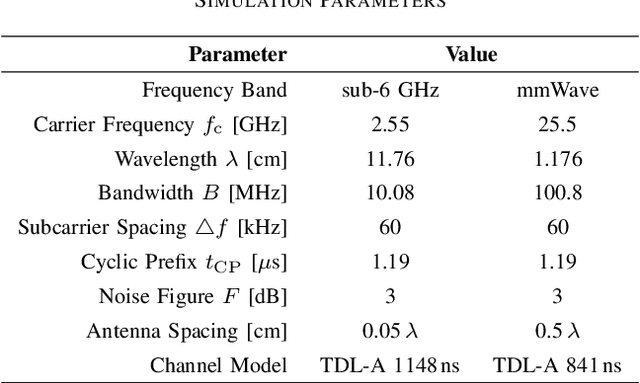
Future wireless multiple-input multiple-output (MIMO) communication systems will employ sub-6 GHz and millimeter wave (mmWave) frequency bands working cooperatively. Establishing a MIMO communication link usually relies on estimating channel state information (CSI) which is difficult to acquire at mmWave frequencies due to a low signal-to-noise ratio (SNR). In this paper, we propose three novel methods to estimate mmWave MIMO channels using out-of-band information obtained from the sub-6GHz band. We compare the proposed channel estimation methods with a conventional one utilizing only in-band information. Simulation results show that the proposed methods outperform the conventional mmWave channel estimation method in terms of achievable spectral efficiency, especially at low SNR and high K-factor.
Self-Supervised and Invariant Representations for Wireless Localization
Feb 14, 2023


In this work, we present a wireless localization method that operates on self-supervised and unlabeled channel estimates. Our self-supervising method learns general-purpose channel features robust to fading and system impairments. Learned representations are easily transferable to new environments and ready to use for other wireless downstream tasks. To the best of our knowledge, the proposed method is the first joint-embedding self-supervised approach to forsake the dependency on contrastive channel estimates. Our approach outperforms fully-supervised techniques in small data regimes under fine-tuning and, in some cases, linear evaluation. We assess the performance in centralized and distributed massive MIMO systems for multiple datasets. Moreover, our method works indoors and outdoors without additional assumptions or design changes.