 Add to Chrome
 Add to Firefox
 Add to Edge
The Computational Anatomy of Humility: Modeling Intellectual Humility in Online Public Discourse
Oct 19, 2024

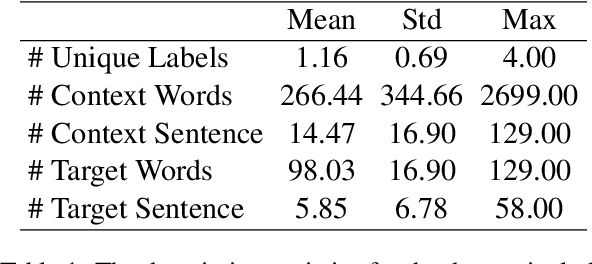
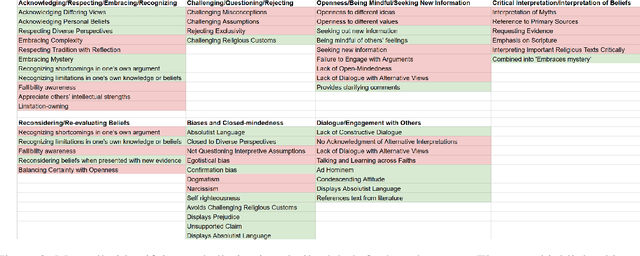
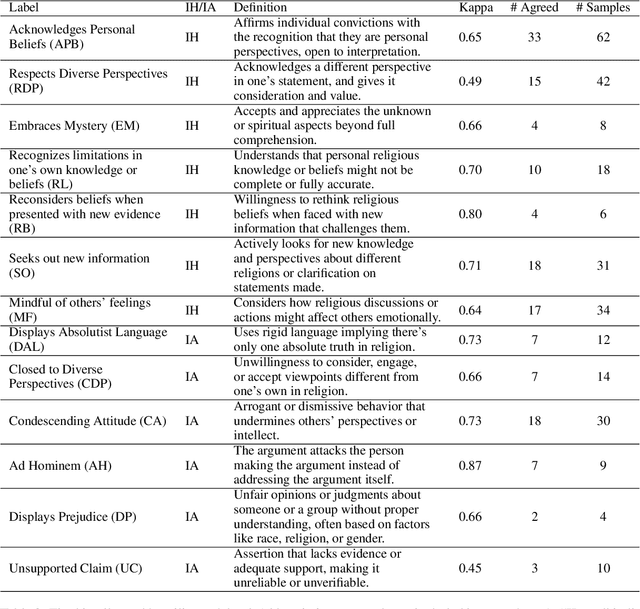
The ability for individuals to constructively engage with one another across lines of difference is a critical feature of a healthy pluralistic society. This is also true in online discussion spaces like social media platforms. To date, much social media research has focused on preventing ills -- like political polarization and the spread of misinformation. While this is important, enhancing the quality of online public discourse requires not just reducing ills but also promoting foundational human virtues. In this study, we focus on one particular virtue: ``intellectual humility'' (IH), or acknowledging the potential limitations in one's own beliefs. Specifically, we explore the development of computational methods for measuring IH at scale. We manually curate and validate an IH codebook on 350 posts about religion drawn from subreddits and use them to develop LLM-based models for automating this measurement. Our best model achieves a Macro-F1 score of 0.64 across labels (and 0.70 when predicting IH/IA/Neutral at the coarse level), higher than an expected naive baseline of 0.51 (0.32 for IH/IA/Neutral) but lower than a human annotator-informed upper bound of 0.85 (0.83 for IH/IA/Neutral). Our results both highlight the challenging nature of detecting IH online -- opening the door to new directions in NLP research -- and also lay a foundation for computational social science researchers interested in analyzing and fostering more IH in online public discourse.

AlphaLoRA: Assigning LoRA Experts Based on Layer Training Quality
Oct 14, 2024Parameter-efficient fine-tuning methods, such as Low-Rank Adaptation (LoRA), are known to enhance training efficiency in Large Language Models (LLMs). Due to the limited parameters of LoRA, recent studies seek to combine LoRA with Mixture-of-Experts (MoE) to boost performance across various tasks. However, inspired by the observed redundancy in traditional MoE structures, previous studies identify similar redundancy among LoRA experts within the MoE architecture, highlighting the necessity for non-uniform allocation of LoRA experts across different layers. In this paper, we leverage Heavy-Tailed Self-Regularization (HT-SR) Theory to design a fine-grained allocation strategy. Our analysis reveals that the number of experts per layer correlates with layer training quality, which exhibits significant variability across layers. Based on this, we introduce AlphaLoRA, a theoretically principled and training-free method for allocating LoRA experts to further mitigate redundancy. Experiments on three models across ten language processing and reasoning benchmarks demonstrate that AlphaLoRA achieves comparable or superior performance over all baselines. Our code is available at https://github.com/morelife2017/alphalora.
Enhanced Detection of Conversational Mental Manipulation Through Advanced Prompting Techniques
Aug 14, 2024

This study presents a comprehensive, long-term project to explore the effectiveness of various prompting techniques in detecting dialogical mental manipulation. We implement Chain-of-Thought prompting with Zero-Shot and Few-Shot settings on a binary mental manipulation detection task, building upon existing work conducted with Zero-Shot and Few- Shot prompting. Our primary objective is to decipher why certain prompting techniques display superior performance, so as to craft a novel framework tailored for detection of mental manipulation. Preliminary findings suggest that advanced prompting techniques may not be suitable for more complex models, if they are not trained through example-based learning.
Semantic Compositions Enhance Vision-Language Contrastive Learning
Jul 01, 2024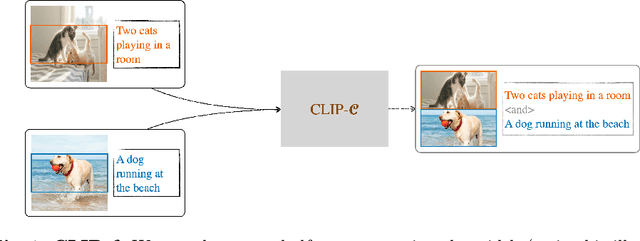
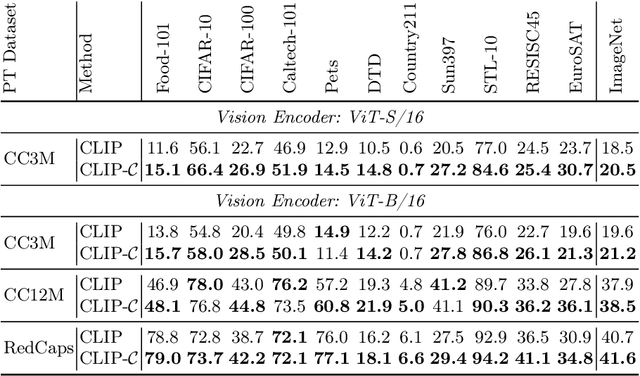
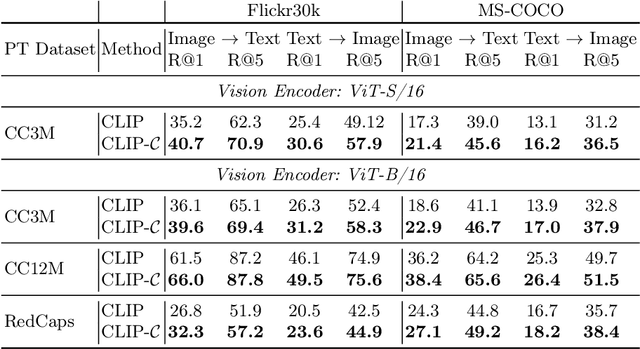
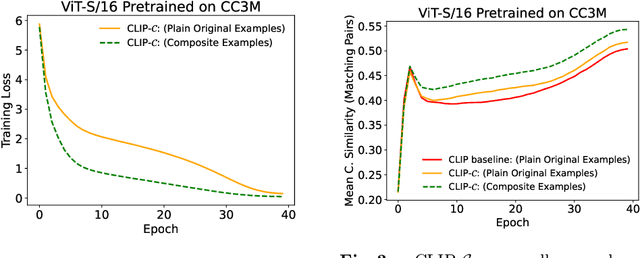
In the field of vision-language contrastive learning, models such as CLIP capitalize on matched image-caption pairs as positive examples and leverage within-batch non-matching pairs as negatives. This approach has led to remarkable outcomes in zero-shot image classification, cross-modal retrieval, and linear evaluation tasks. We show that the zero-shot classification and retrieval capabilities of CLIP-like models can be improved significantly through the introduction of semantically composite examples during pretraining. Inspired by CutMix in vision categorization, we create semantically composite image-caption pairs by merging elements from two distinct instances in the dataset via a novel procedure. Our method fuses the captions and blends 50% of each image to form a new composite sample. This simple technique (termed CLIP-C for CLIP Compositions), devoid of any additional computational overhead or increase in model parameters, significantly improves zero-shot image classification and cross-modal retrieval. The benefits of CLIP-C are particularly pronounced in settings with relatively limited pretraining data.
Serial Position Effects of Large Language Models
Jun 23, 2024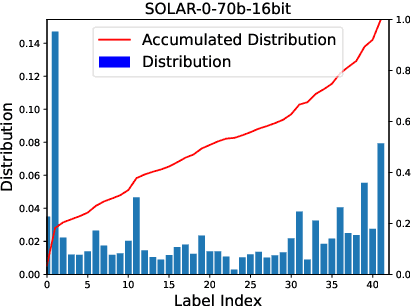
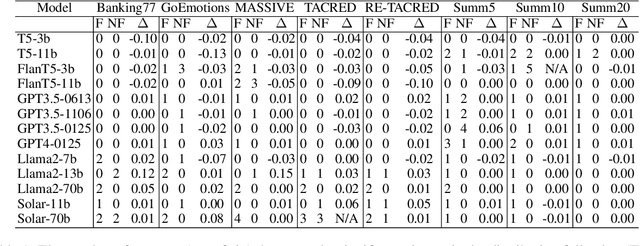
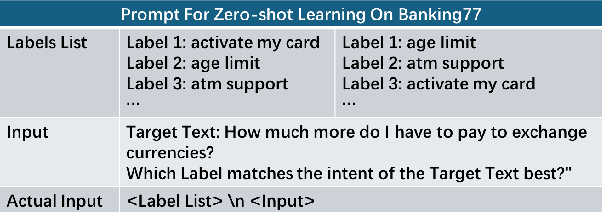
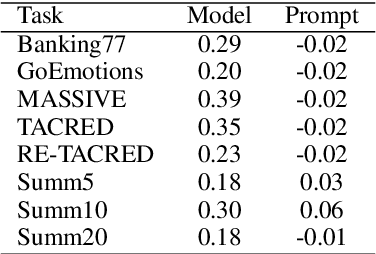
Large Language Models (LLMs) have shown remarkable capabilities in zero-shot learning applications, generating responses to queries using only pre-training information without the need for additional fine-tuning. This represents a significant departure from traditional machine learning approaches. Previous research has indicated that LLMs may exhibit serial position effects, such as primacy and recency biases, which are well-documented cognitive biases in human psychology. Our extensive testing across various tasks and models confirms the widespread occurrence of these effects, although their intensity varies. We also discovered that while carefully designed prompts can somewhat mitigate these biases, their effectiveness is inconsistent. These findings underscore the significance of serial position effects during the inference process, particularly in scenarios where there are no ground truth labels, highlighting the need for greater focus on addressing these effects in LLM applications.
Judging the Judges: A Systematic Investigation of Position Bias in Pairwise Comparative Assessments by LLMs
Jun 12, 2024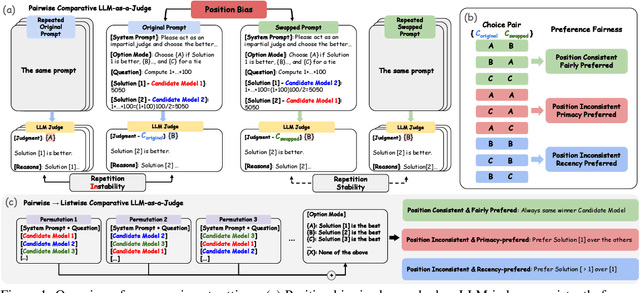
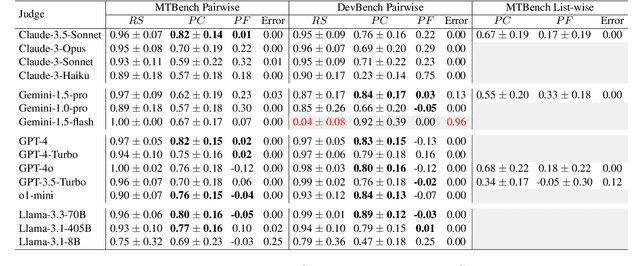
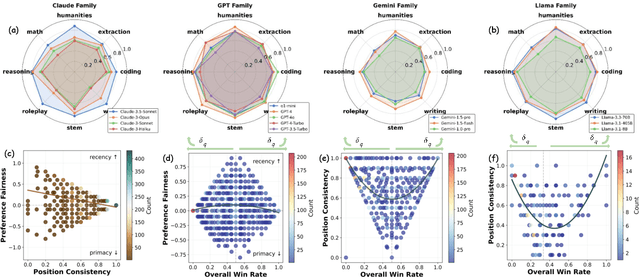
LLM-as-a-Judge offers a promising alternative to human judges across various tasks, yet inherent biases, particularly position bias - a systematic preference for answers based on their position in the prompt - compromise its effectiveness. Our study investigates this issue by developing a framework to systematically study and quantify position bias using metrics such as repetitional consistency, positional consistency, and positional fairness. We conduct experiments with 9 judge models across 22 tasks from the MTBench and DevBench benchmarks and nearly 40 answer-generating models, generating approximately 80,000 evaluation instances. This comprehensive assessment reveals significant variations in bias across judges and tasks. Although GPT-4 often excels in positional consistency and fairness, some more cost-effective models perform comparably or even better in specific tasks, highlighting essential trade-offs between consistency, fairness, and cost. Our results also demonstrate high consistency of judgment across repetitions, confirming that position bias is not due to random variations. This research significantly contributes to the field by introducing new concepts for understanding position bias and providing a multi-dimensional framework for evaluation. These insights guide the selection of optimal judge models, enhance benchmark design, and lay the foundation for future research into effective debiasing strategies, ultimately enhancing the reliability of LLM evaluators.
MODABS: Multi-Objective Learning for Dynamic Aspect-Based Summarization
Jun 05, 2024
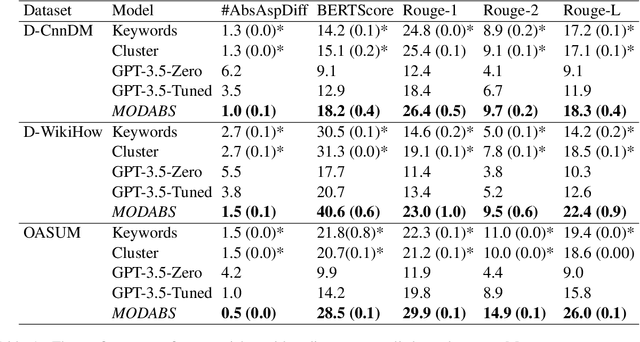
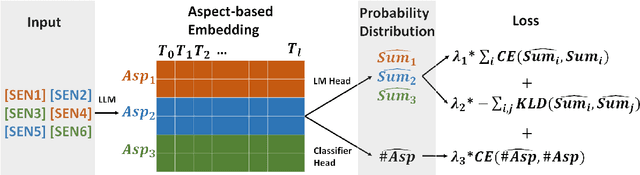
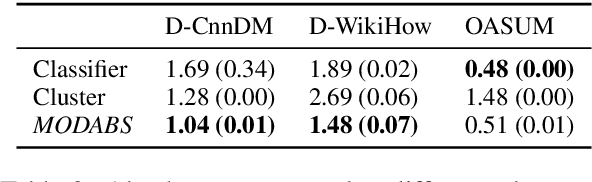
The rapid proliferation of online content necessitates effective summarization methods, among which dynamic aspect-based summarization stands out. Unlike its traditional counterpart, which assumes a fixed set of known aspects, this approach adapts to the varied aspects of the input text. We introduce a novel multi-objective learning framework employing a Longformer-Encoder-Decoder for this task. The framework optimizes aspect number prediction, minimizes disparity between generated and reference summaries for each aspect, and maximizes dissimilarity across aspect-specific summaries. Extensive experiments show our method significantly outperforms baselines on three diverse datasets, largely due to the effective alignment of generated and reference aspect counts without sacrificing single-aspect summarization quality.
MentalManip: A Dataset For Fine-grained Analysis of Mental Manipulation in Conversations
May 26, 2024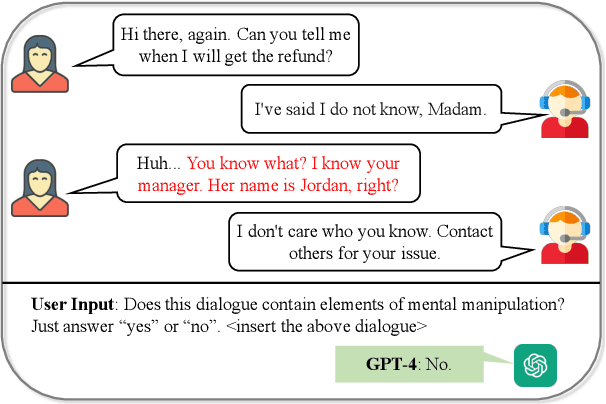
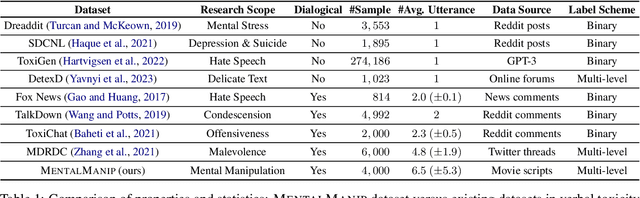
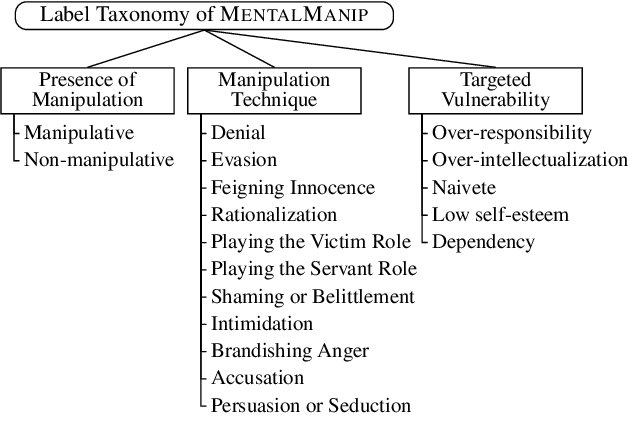

Mental manipulation, a significant form of abuse in interpersonal conversations, presents a challenge to identify due to its context-dependent and often subtle nature. The detection of manipulative language is essential for protecting potential victims, yet the field of Natural Language Processing (NLP) currently faces a scarcity of resources and research on this topic. Our study addresses this gap by introducing a new dataset, named ${\rm M{\small ental}M{\small anip}}$, which consists of $4,000$ annotated movie dialogues. This dataset enables a comprehensive analysis of mental manipulation, pinpointing both the techniques utilized for manipulation and the vulnerabilities targeted in victims. Our research further explores the effectiveness of leading-edge models in recognizing manipulative dialogue and its components through a series of experiments with various configurations. The results demonstrate that these models inadequately identify and categorize manipulative content. Attempts to improve their performance by fine-tuning with existing datasets on mental health and toxicity have not overcome these limitations. We anticipate that ${\rm M{\small ental}M{\small anip}}$ will stimulate further research, leading to progress in both understanding and mitigating the impact of mental manipulation in conversations.
Disordered-DABS: A Benchmark for Dynamic Aspect-Based Summarization in Disordered Texts
Feb 16, 2024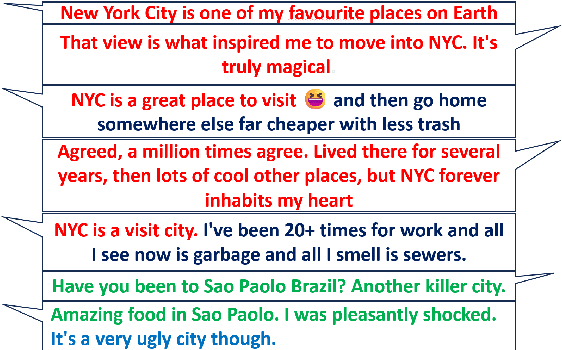
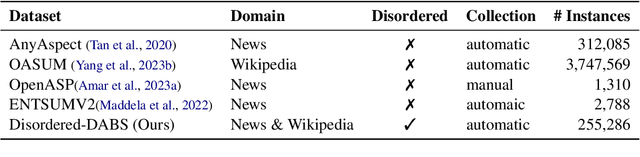

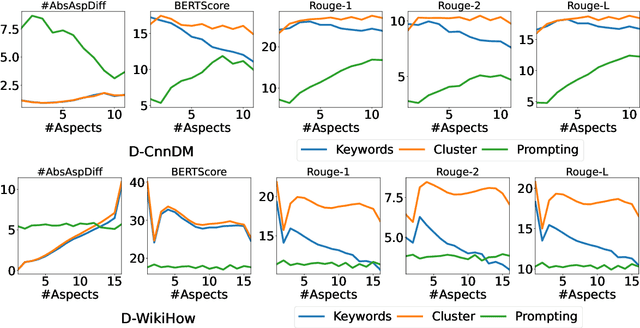
Aspect-based summarization has seen significant advancements, especially in structured text. Yet, summarizing disordered, large-scale texts, like those found in social media and customer feedback, remains a significant challenge. Current research largely targets predefined aspects within structured texts, neglecting the complexities of dynamic and disordered environments. Addressing this gap, we introduce Disordered-DABS, a novel benchmark for dynamic aspect-based summarization tailored to unstructured text. Developed by adapting existing datasets for cost-efficiency and scalability, our comprehensive experiments and detailed human evaluations reveal that Disordered-DABS poses unique challenges to contemporary summarization models, including state-of-the-art language models such as GPT-3.5.
Proto-lm: A Prototypical Network-Based Framework for Built-in Interpretability in Large Language Models
Nov 12, 2023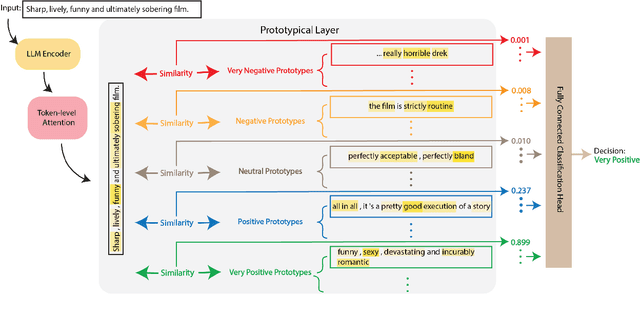

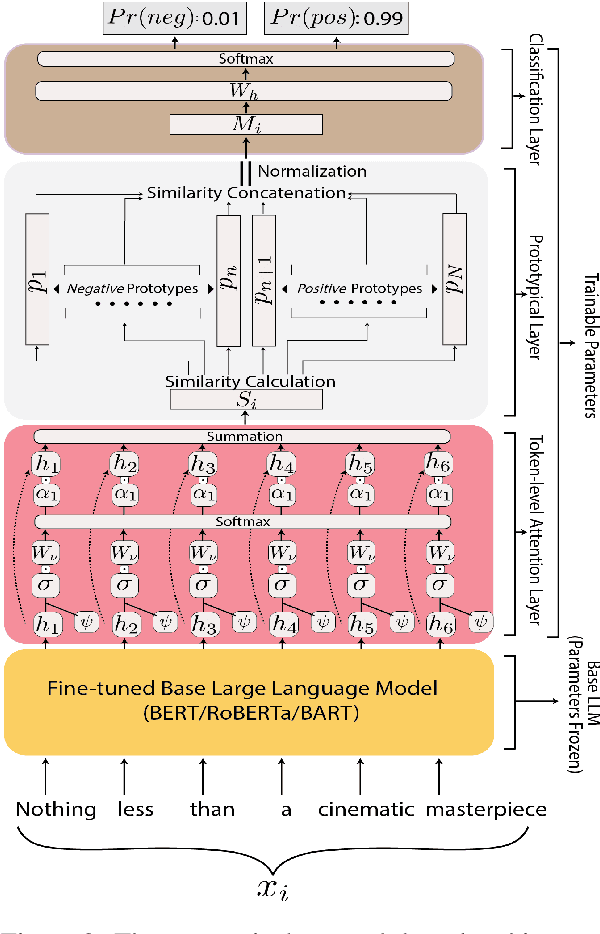
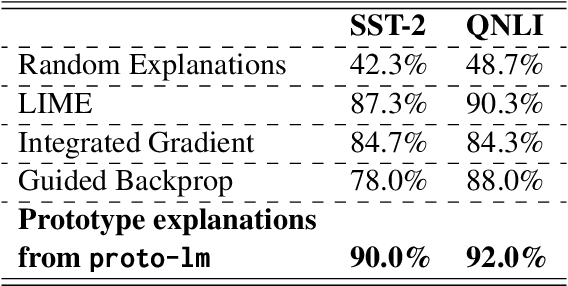
Large Language Models (LLMs) have significantly advanced the field of Natural Language Processing (NLP), but their lack of interpretability has been a major concern. Current methods for interpreting LLMs are post hoc, applied after inference time, and have limitations such as their focus on low-level features and lack of explainability at higher level text units. In this work, we introduce proto-lm, a prototypical network-based white-box framework that allows LLMs to learn immediately interpretable embeddings during the fine-tuning stage while maintaining competitive performance. Our method's applicability and interpretability are demonstrated through experiments on a wide range of NLP tasks, and our results indicate a new possibility of creating interpretable models without sacrificing performance. This novel approach to interpretability in LLMs can pave the way for more interpretable models without the need to sacrifice performance.