 Add to Chrome
 Add to Firefox
 Add to Edge
Retrieval Augmented Generation of Literature-derived Polymer Knowledge: The Example of a Biodegradable Polymer Expert System
Feb 18, 2026
Polymer literature contains a large and growing body of experimental knowledge, yet much of it is buried in unstructured text and inconsistent terminology, making systematic retrieval and reasoning difficult. Existing tools typically extract narrow, study-specific facts in isolation, failing to preserve the cross-study context required to answer broader scientific questions. Retrieval-augmented generation (RAG) offers a promising way to overcome this limitation by combining large language models (LLMs) with external retrieval, but its effectiveness depends strongly on how domain knowledge is represented. In this work, we develop two retrieval pipelines: a dense semantic vector-based approach (VectorRAG) and a graph-based approach (GraphRAG). Using over 1,000 polyhydroxyalkanoate (PHA) papers, we construct context-preserving paragraph embeddings and a canonicalized structured knowledge graph supporting entity disambiguation and multi-hop reasoning. We evaluate these pipelines through standard retrieval metrics, comparisons with general state-of-the-art systems such as GPT and Gemini, and qualitative validation by a domain chemist. The results show that GraphRAG achieves higher precision and interpretability, while VectorRAG provides broader recall, highlighting complementary trade-offs. Expert validation further confirms that the tailored pipelines, particularly GraphRAG, produce well-grounded, citation-reliable responses with strong domain relevance. By grounding every statement in evidence, these systems enable researchers to navigate the literature, compare findings across studies, and uncover patterns that are difficult to extract manually. More broadly, this work establishes a practical framework for building materials science assistants using curated corpora and retrieval design, reducing reliance on proprietary models while enabling trustworthy literature analysis at scale.

Accelerating materials discovery for polymer solar cells: Data-driven insights enabled by natural language processing
Feb 29, 2024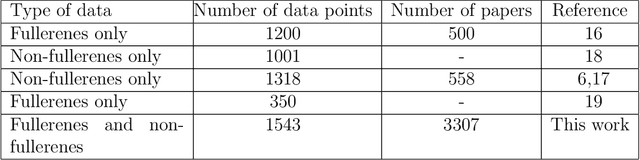

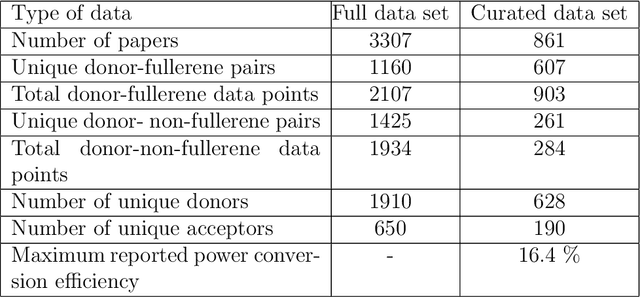
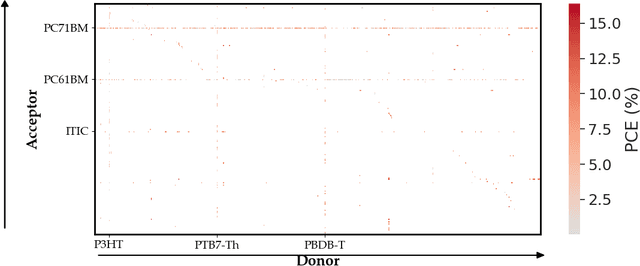
We present a natural language processing pipeline that was used to extract polymer solar cell property data from the literature and simulate various active learning strategies. While data-driven methods have been well established to discover novel materials faster than Edisonian trial-and-error approaches, their benefits have not been quantified. Our approach demonstrates a potential reduction in discovery time by approximately 75 %, equivalent to a 15 year acceleration in material innovation. Our pipeline enables us to extract data from more than 3300 papers which is ~5 times larger than similar data sets reported by others. We also trained machine learning models to predict the power conversion efficiency and used our model to identify promising donor-acceptor combinations that are as yet unreported. We thus demonstrate a workflow that goes from published literature to extracted material property data which in turn is used to obtain data-driven insights. Our insights include active learning strategies that can simultaneously optimize the material system and train strong predictive models of material properties. This work provides a valuable framework for research in material science.