 Add to Chrome
 Add to Firefox
 Add to Edge
DataComp-VLM: Improved Open Datasets for Vision-Language Models
Jun 30, 2026
Building performant Vision-Language Models (VLMs) requires carefully curating large-scale training datasets, yet the community lacks systematic benchmarks for evaluating such curation strategies. We introduce DataComp for VLMs (DCVLM), a benchmark for controlled data-centric experiments to improve VLM training. As part of DCVLM, we collect 160 datasets spanning four data types -- image-caption pairs, multimodal interleaved documents, text-only, and instruction-tuning data -- into a corpus of 6T multimodal tokens. DCVLM allows participants to test curation strategies (filtering, mixing, formatting, sampling) across 1B-8B models and 6.25B-200B token budgets. Models are then evaluated on a carefully selected suite of up to 52 downstream benchmarks across 9 domains. We conduct extensive experiments on DCVLM and find that data mixing, not filtering, is key to a high-quality training dataset: instruction-heavy mixtures scale better than caption-heavy ones, with gains widening at larger scales. The resulting dataset, DCVLM-Baseline, enables training an 8B VLM to 63.6% accuracy on our 33-task core suite with 200B training tokens. Compared to FineVision, the state-of-the-art open VLM training dataset, this represents an improvement of +5.4pp. DCVLM and all accompanying artifacts will be made publicly available at https://www.datacomp.ai/dcvlm/.

Thinking Past the Answer: Evaluating Harmful Overthinking in Large Reasoning Models
Jun 01, 2026Large Reasoning Models (LRMs) improve performance by generating explicit intermediate reasoning traces through increased test-time compute, yet the assumption that longer reasoning is consistently beneficial remains under-examined. While recent evidence shows that additional reasoning can lead models to overthink, we ask: "Once a model has reached the correct answer, does further reasoning refine the solution, or deviate from it?" To study the dynamics after correctness, we introduce a prefix-level trajectory evaluation protocol grounded in reasoning sufficiency, defining the minimum reasoning budget required for a model to first generate the correct answer. This allows us to disentangle verbose overthinking, where additional reasoning is redundant but harmless, from harmful overthinking, where continued reasoning destabilizes an already-correct trajectory. Starting from multimodal benchmarks, we find that many instances considered reasoning-intensive require surprisingly little reasoning. Moreover, stopping at the first correct prefix improves accuracy over standard reasoning up to 21%, revealing that current models are limited not only by their ability to reason, but also by their inability to stop at the right time. Furthermore, while common efficiency strategies like early stopping substantially reduce verbose overthinking (up to 50%), they fail to mitigate harmful overthinking. Failure analysis reveals that correctness deviations are mainly driven by logical drift and visual reinterpretation. Finally, we show that our findings generalize to language-only reasoning benchmarks, highlighting harmful overthinking as a broader reliability risk. Code available at https://simonecaldarella.github.io/thinking-past-the-answer.
SEM: Sparse Embedding Modulation for Post-Hoc Debiasing of Vision-Language Models
Mar 19, 2026Models that bridge vision and language, such as CLIP, are key components of multimodal AI, yet their large-scale, uncurated training data introduce severe social and spurious biases. Existing post-hoc debiasing methods often operate directly in the dense CLIP embedding space, where bias and task-relevant information are highly entangled. This entanglement limits their ability to remove bias without degrading semantic fidelity. In this work, we propose Sparse Embedding Modulation (SEM), a post-hoc, zero-shot debiasing framework that operates in a Sparse Autoencoder (SAE) latent space. By decomposing CLIP text embeddings into disentangled features, SEM identifies and modulates bias-relevant neurons while preserving query-relevant ones. This enables more precise, non-linear interventions. Across four benchmark datasets and two CLIP backbones, SEM achieves substantial fairness gains in retrieval and zero-shot classification. Our results demonstrate that sparse latent representations provide an effective foundation for post-hoc debiasing of vision-language models.
The Phantom Menace: Unmasking Privacy Leakages in Vision-Language Models
Aug 02, 2024Vision-Language Models (VLMs) combine visual and textual understanding, rendering them well-suited for diverse tasks like generating image captions and answering visual questions across various domains. However, these capabilities are built upon training on large amount of uncurated data crawled from the web. The latter may include sensitive information that VLMs could memorize and leak, raising significant privacy concerns. In this paper, we assess whether these vulnerabilities exist, focusing on identity leakage. Our study leads to three key findings: (i) VLMs leak identity information, even when the vision-language alignment and the fine-tuning use anonymized data; (ii) context has little influence on identity leakage; (iii) simple, widely used anonymization techniques, like blurring, are not sufficient to address the problem. These findings underscore the urgent need for robust privacy protection strategies when deploying VLMs. Ethical awareness and responsible development practices are essential to mitigate these risks.
Incremental Object-Based Novelty Detection with Feedback Loop
Nov 15, 2023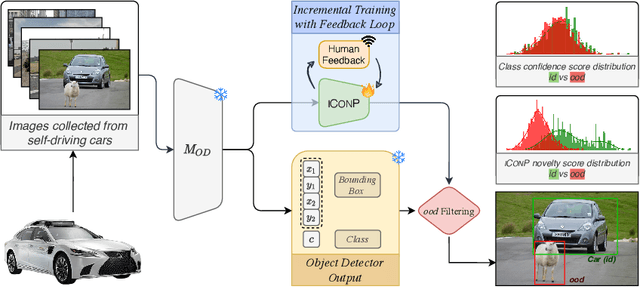
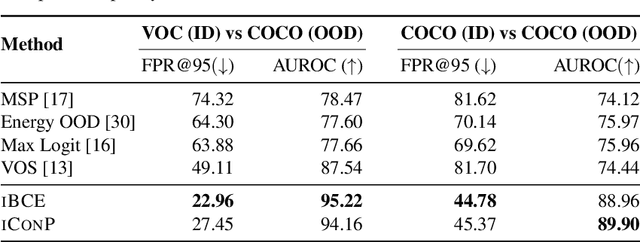
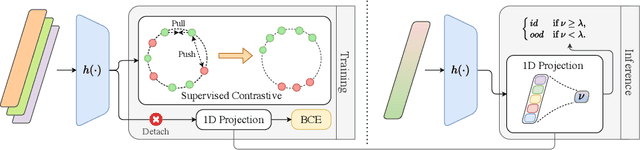
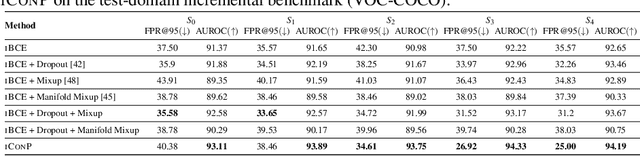
Object-based Novelty Detection (ND) aims to identify unknown objects that do not belong to classes seen during training by an object detection model. The task is particularly crucial in real-world applications, as it allows to avoid potentially harmful behaviours, e.g. as in the case of object detection models adopted in a self-driving car or in an autonomous robot. Traditional approaches to ND focus on one time offline post processing of the pretrained object detection output, leaving no possibility to improve the model robustness after training and discarding the abundant amount of out-of-distribution data encountered during deployment. In this work, we propose a novel framework for object-based ND, assuming that human feedback can be requested on the predicted output and later incorporated to refine the ND model without negatively affecting the main object detection performance. This refinement operation is repeated whenever new feedback is available. To tackle this new formulation of the problem for object detection, we propose a lightweight ND module attached on top of a pre-trained object detection model, which is incrementally updated through a feedback loop. We also propose a new benchmark to evaluate methods on this new setting and test extensively our ND approach against baselines, showing increased robustness and a successful incorporation of the received feedback.
Response Generation in Longitudinal Dialogues: Which Knowledge Representation Helps?
May 25, 2023Longitudinal Dialogues (LD) are the most challenging type of conversation for human-machine dialogue systems. LDs include the recollections of events, personal thoughts, and emotions specific to each individual in a sparse sequence of dialogue sessions. Dialogue systems designed for LDs should uniquely interact with the users over multiple sessions and long periods of time (e.g. weeks), and engage them in personal dialogues to elaborate on their feelings, thoughts, and real-life events. In this paper, we study the task of response generation in LDs. We evaluate whether general-purpose Pre-trained Language Models (PLM) are appropriate for this purpose. We fine-tune two PLMs, GePpeTto (GPT-2) and iT5, using a dataset of LDs. We experiment with different representations of the personal knowledge extracted from LDs for grounded response generation, including the graph representation of the mentioned events and participants. We evaluate the performance of the models via automatic metrics and the contribution of the knowledge via the Integrated Gradients technique. We categorize the natural language generation errors via human evaluations of contextualization, appropriateness and engagement of the user.