 Add to Chrome
 Add to Firefox
 Add to Edge
Do Coverage and Mutation Scores of LLM-Generated Test Suites Correlate with Their Effectiveness? (Replicability Study)
Jul 24, 2026
Recent advances in large language models (LLMs) have driven growing interest in using LLMs to automate test generation. Prior work commonly evaluates generated test suites using proxy metrics such as code coverage and mutation score. However, studies by Inozemtseva et al. and Papadakis et al. show that, for human-written tests, correlations among coverage, mutation, and real-bug detection can largely vanish once test suite size is controlled, raising concerns about the validity of evaluations based on proxy metrics. It also remains unclear whether these conclusions carry over to LLM-generated tests, given that prevailing LLM-based test-generation workflows differ substantially from traditional approaches. In this paper, we conduct a large-scale replication study of these two prior works using a wide range of test suites generated by a diverse set of LLMs, and re-examine the relationships among coverage, mutation, and real-bug detection effectiveness. Our findings diverge substantially from prior results. We show that the usefulness of coverage and mutation is highly context-dependent: in regression-style settings where the code provided to the LLM can be reasonably assumed bug-free, these metrics can provide meaningful signals when comparing across models; in another common scenario where the code-under-test may already be buggy and the goal is to expose the bug within the code-under-test, they no longer serve as reliable indicators. We also find little evidence that test suite size is a dominant confounder for correlations among coverage, mutation, and real-bug detection for LLM-generated tests. Based on these findings, we discuss how to interpret results from prior studies and provide actionable guidance for evaluating LLM-based test generation.

Evaluating and Mitigating the Misguidance Effect of Buggy Code in LLM-Generated Unit Tests
Jul 24, 2026While Large Language Models (LLMs) show great promise for automating unit test generation, recent studies suggest that the quality of generated tests can be negatively impacted when models are prompted with buggy code. This paper presents a new metric to quantitatively measure the "misguidance effect," a phenomenon where buggy code steers LLMs toward generating tests that validate its erroneous behavior rather than expose it. Our analysis reveals that prompting LLMs with buggy code has a severe, twofold impact: it significantly increases "misguided tests" that assert incorrect behavior while simultaneously suppressing the generation of effective, bug-finding tests. We further corroborate this effect from a model-internal perspective, showing that buggy code skews LLMs' preference toward tests that assert the same erroneous behavior. To counter this, we introduce and validate a specification-based unit test generation paradigm that replaces the code under test in the prompt with an LLM-generated specification docstring. Our results show that this paradigm effectively reduces misguided tests while substantially increasing effective tests, improves multi-round, feedback-driven test generation pipelines, and remains applicable to both buggy and bug-free code. Overall, these results suggest that specification-based prompting is a promising strategy for mitigating misguidance from buggy code in LLM-generated unit tests.
LLMs in Mobile Apps: Practices, Challenges, and Opportunities
Feb 21, 2025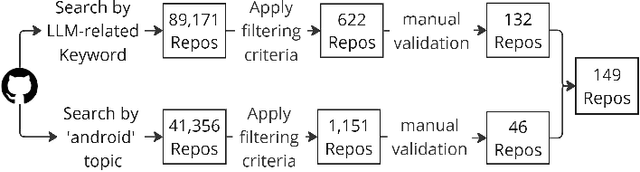

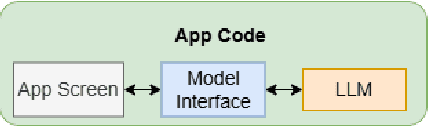
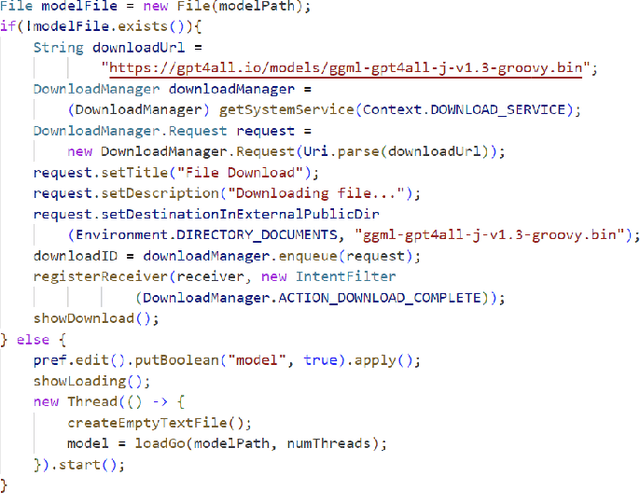
The integration of AI techniques has become increasingly popular in software development, enhancing performance, usability, and the availability of intelligent features. With the rise of large language models (LLMs) and generative AI, developers now have access to a wealth of high-quality open-source models and APIs from closed-source providers, enabling easier experimentation and integration of LLMs into various systems. This has also opened new possibilities in mobile application (app) development, allowing for more personalized and intelligent apps. However, integrating LLM into mobile apps might present unique challenges for developers, particularly regarding mobile device constraints, API management, and code infrastructure. In this project, we constructed a comprehensive dataset of 149 LLM-enabled Android apps and conducted an exploratory analysis to understand how LLMs are deployed and used within mobile apps. This analysis highlights key characteristics of the dataset, prevalent integration strategies, and common challenges developers face. Our findings provide valuable insights for future research and tooling development aimed at enhancing LLM-enabled mobile apps.
A Meta-Summary of Challenges in Building Products with ML Components -- Collecting Experiences from 4758+ Practitioners
Mar 31, 2023Incorporating machine learning (ML) components into software products raises new software-engineering challenges and exacerbates existing challenges. Many researchers have invested significant effort in understanding the challenges of industry practitioners working on building products with ML components, through interviews and surveys with practitioners. With the intention to aggregate and present their collective findings, we conduct a meta-summary study: We collect 50 relevant papers that together interacted with over 4758 practitioners using guidelines for systematic literature reviews. We then collected, grouped, and organized the over 500 mentions of challenges within those papers. We highlight the most commonly reported challenges and hope this meta-summary will be a useful resource for the research community to prioritize research and education in this field.
* 15 pages, 2 figures, 3 tables, published in CAIN 2023
Aspirations and Practice of Model Documentation: Moving the Needle with Nudging and Traceability
Apr 13, 2022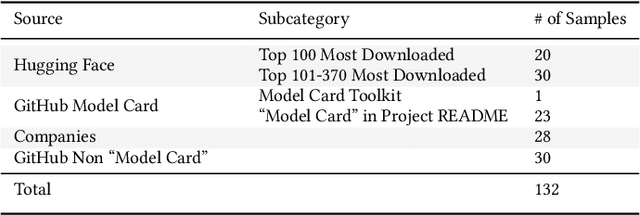
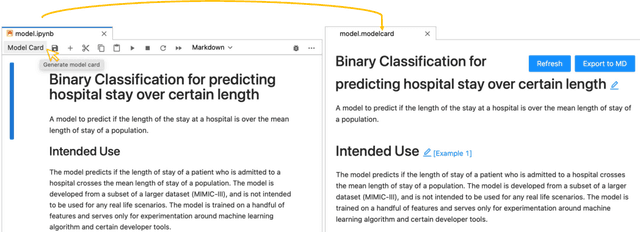
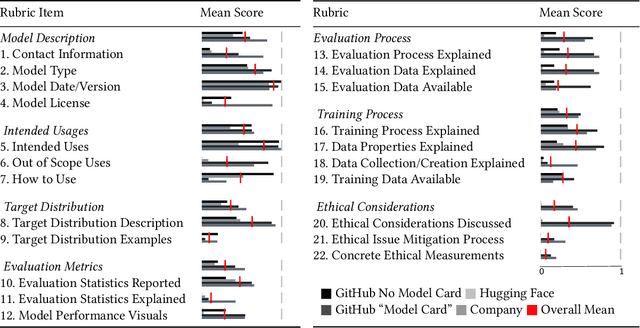
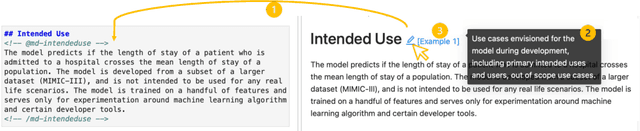
Machine learning models have been widely developed, released, and adopted in numerous applications. Meanwhile, the documentation practice for machine learning models often falls short of established practices for traditional software components, which impedes model accountability, inadvertently abets inappropriate or misuse of models, and may trigger negative social impact. Recently, model cards, a template for documenting machine learning models, have attracted notable attention, but their impact on the practice of model documentation is unclear. In this work, we examine publicly available model cards and other similar documentation. Our analysis reveals a substantial gap between the suggestions made in the original model card work and the content in actual documentation. Motivated by this observation and literature on fields such as software documentation, interaction design, and traceability, we further propose a set of design guidelines that aim to support the documentation practice for machine learning models including (1) the collocation of documentation environment with the coding environment, (2) nudging the consideration of model card sections during model development, and (3) documentation derived from and traced to the source. We designed a prototype tool named DocML following those guidelines to support model development in computational notebooks. A lab study reveals the benefit of our tool to shift the behavior of data scientists towards documentation quality and accountability.
More Engineering, No Silos: Rethinking Processes and Interfaces in Collaboration between Interdisciplinary Teams for Machine Learning Projects
Oct 19, 2021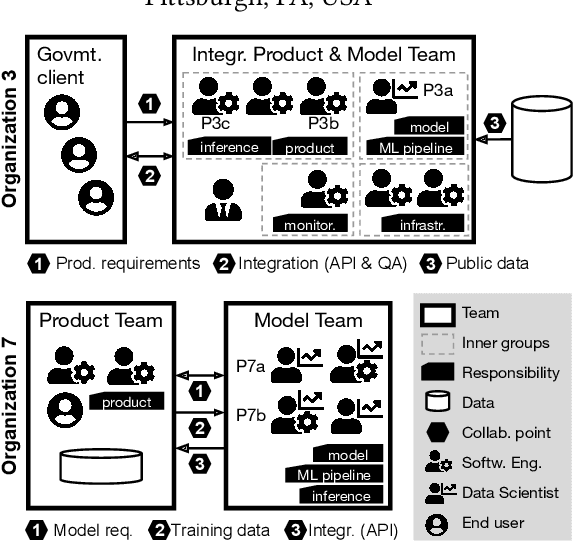
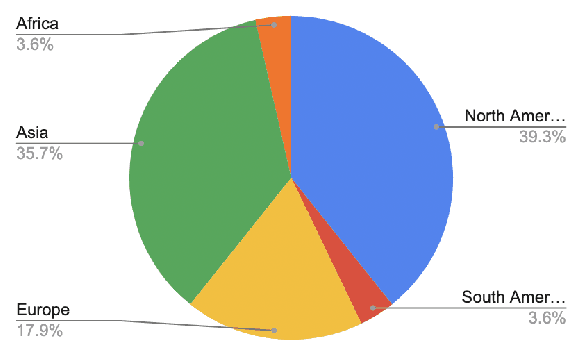
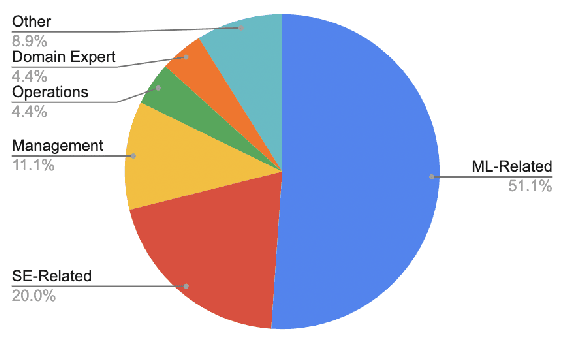
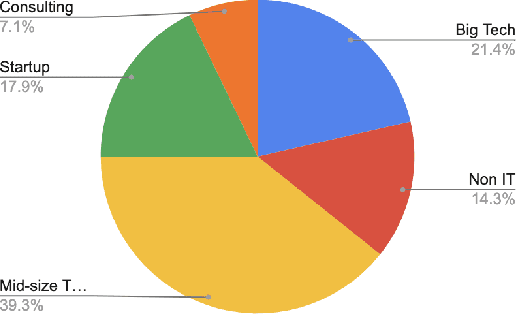
The introduction of machine learning (ML) components in software projects has created the need for software engineers to collaborate with data scientists and other specialists. While collaboration can always be challenging, ML introduces additional challenges with its exploratory model development process, additional skills and knowledge needed, difficulties testing ML systems, need for continuous evolution and monitoring, and non-traditional quality requirements such as fairness and explainability. Through interviews with 45 practitioners from 28 organizations, we identified key collaboration challenges that teams face when building and deploying ML systems into production. We report on common collaboration points in the development of production ML systems for requirements, data, and integration, as well as corresponding team patterns and challenges. We find that most of these challenges center around communication, documentation, engineering, and process and collect recommendations to address these challenges.