 Add to Chrome
 Add to Firefox
 Add to Edge
Copilot-Assisted Second-Thought Framework for Brain-to-Robot Hand Motion Decoding
Mar 29, 2026
Motor kinematics prediction (MKP) from electroencephalography (EEG) is an important research area for developing movement-related brain-computer interfaces (BCIs). While traditional methods often rely on convolutional neural networks (CNNs) or recurrent neural networks (RNNs), Transformer-based models have shown strong ability in modeling long sequential EEG data. In this study, we propose a CNN-attention hybrid model for decoding hand kinematics from EEG during grasp-and-lift tasks, achieving strong performance in within-subject experiments. We further extend this approach to EEG-EMG multimodal decoding, which yields substantially improved results. Within-subject tests achieve PCC values of 0.9854, 0.9946, and 0.9065 for the X, Y, and Z axes, respectively, computed on the midpoint trajectory between the thumb and index finger, while cross-subject tests result in 0.9643, 0.9795, and 0.5852. The decoded trajectories from both modalities are then used to control a Franka Panda robotic arm in a MuJoCo simulation. To enhance trajectory fidelity, we introduce a copilot framework that filters low-confidence decoded points using a motion-state-aware critic within a finite-state machine. This post-processing step improves the overall within-subject PCC of EEG-only decoding to 0.93 while excluding fewer than 20% of the data points.

Dynamic User Interface Generation for Enhanced Human-Computer Interaction Using Variational Autoencoders
Dec 19, 2024
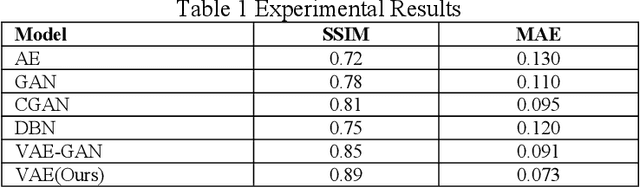


This study presents a novel approach for intelligent user interaction interface generation and optimization, grounded in the variational autoencoder (VAE) model. With the rapid advancement of intelligent technologies, traditional interface design methods struggle to meet the evolving demands for diversity and personalization, often lacking flexibility in real-time adjustments to enhance the user experience. Human-Computer Interaction (HCI) plays a critical role in addressing these challenges by focusing on creating interfaces that are functional, intuitive, and responsive to user needs. This research leverages the RICO dataset to train the VAE model, enabling the simulation and creation of user interfaces that align with user aesthetics and interaction habits. By integrating real-time user behavior data, the system dynamically refines and optimizes the interface, improving usability and underscoring the importance of HCI in achieving a seamless user experience. Experimental findings indicate that the VAE-based approach significantly enhances the quality and precision of interface generation compared to other methods, including autoencoders (AE), generative adversarial networks (GAN), conditional GANs (cGAN), deep belief networks (DBN), and VAE-GAN. This work contributes valuable insights into HCI, providing robust technical solutions for automated interface generation and enhanced user experience optimization.
Emotion-Aware Interaction Design in Intelligent User Interface Using Multi-Modal Deep Learning
Nov 10, 2024In an era where user interaction with technology is ubiquitous, the importance of user interface (UI) design cannot be overstated. A well-designed UI not only enhances usability but also fosters more natural, intuitive, and emotionally engaging experiences, making technology more accessible and impactful in everyday life. This research addresses this growing need by introducing an advanced emotion recognition system to significantly improve the emotional responsiveness of UI. By integrating facial expressions, speech, and textual data through a multi-branch Transformer model, the system interprets complex emotional cues in real-time, enabling UIs to interact more empathetically and effectively with users. Using the public MELD dataset for validation, our model demonstrates substantial improvements in emotion recognition accuracy and F1 scores, outperforming traditional methods. These findings underscore the critical role that sophisticated emotion recognition plays in the evolution of UIs, making technology more attuned to user needs and emotions. This study highlights how enhanced emotional intelligence in UIs is not only about technical innovation but also about fostering deeper, more meaningful connections between users and the digital world, ultimately shaping how people interact with technology in their daily lives.