 Add to Chrome
 Add to Firefox
 Add to Edge
PeeriScope: A Multi-Faceted Framework for Evaluating Peer Review Quality
Apr 27, 2026
The increasing scale and variability of peer review in scholarly venues has created an urgent need for systematic, interpretable, and extensible tools to assess review quality. We present PeeriScope, a modular platform that integrates structured features, rubric-guided large language model assessments, and supervised prediction to evaluate peer review quality along multiple dimensions. Designed for openness and integration, PeeriScope provides both a public interface and a documented API, supporting practical deployment and research extensibility. The demonstration illustrates its use for reviewer self-assessment, editorial triage, and large-scale auditing, and it enables the continued development of quality evaluation methods within scientific peer review. PeeriScope is available both as a live demo at https://app.reviewer.ly/app/peeriscope and via API services at https://github.com/Reviewerly-Inc/Peeriscope.

Peerispect: Claim Verification in Scientific Peer Reviews
Apr 19, 2026Peer review is central to scientific publishing, yet reviewers frequently include claims that are subjective, rhetorical, or misaligned with the submitted work. Assessing whether review statements are factual and verifiable is crucial for fairness and accountability. At the scale of modern conferences and journals, manually inspecting the grounding of such claims is infeasible. We present Peerispect, an interactive system that operationalizes claim-level verification in peer reviews by extracting check-worthy claims from peer reviews, retrieving relevant evidence from the manuscript, and verifying the claims through natural language inference. Results are presented through a visual interface that highlights evidence directly in the paper, enabling rapid inspection and interpretation. Peerispect is designed as a modular Information Retrieval (IR) pipeline, supporting alternative retrievers, rerankers, and verifiers, and is intended for use by reviewers, authors, and program committees. We demonstrate Peerispect through a live, publicly available demo (https://app.reviewer.ly/app/peerispect) and API services (https://github.com/Reviewerly-Inc/Peerispect), accompanied by a video tutorial (https://www.youtube.com/watch?v=pc9RkvkUh14).
Extended Deep Submodular Functions
Sep 18, 2024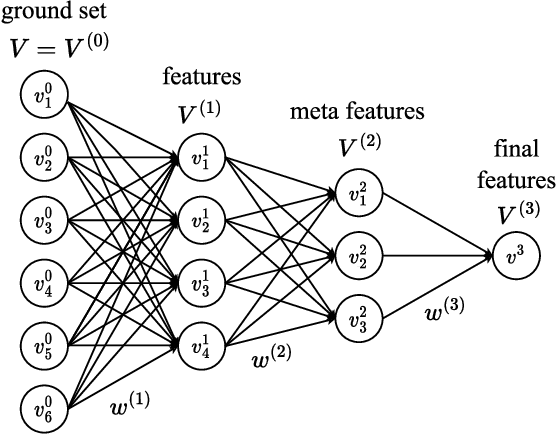
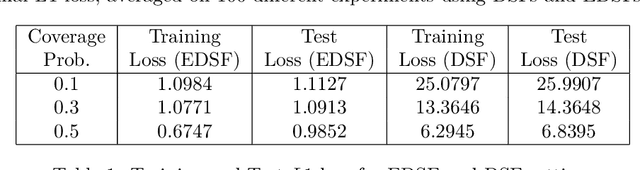
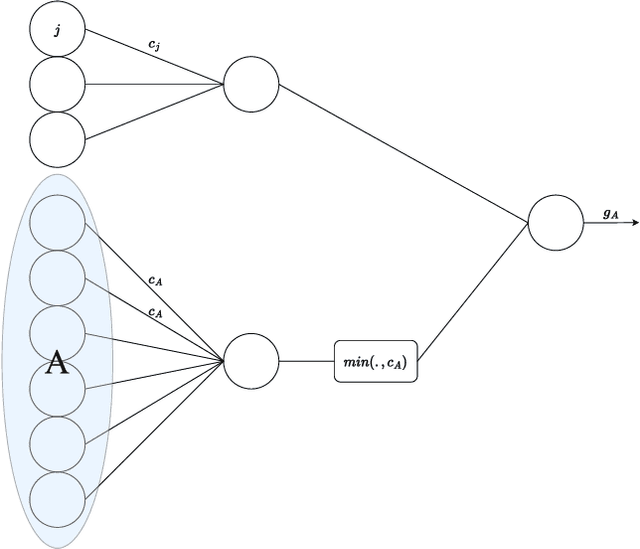
We introduce a novel category of set functions called Extended Deep Submodular functions (EDSFs), which are neural network-representable. EDSFs serve as an extension of Deep Submodular Functions (DSFs), inheriting crucial properties from DSFs while addressing innate limitations. It is known that DSFs can represent a limiting subset of submodular functions. In contrast, through an analysis of polymatroid properties, we establish that EDSFs possess the capability to represent all monotone submodular functions, a notable enhancement compared to DSFs. Furthermore, our findings demonstrate that EDSFs can represent any monotone set function, indicating the family of EDSFs is equivalent to the family of all monotone set functions. Additionally, we prove that EDSFs maintain the concavity inherent in DSFs when the components of the input vector are non-negative real numbers-an essential feature in certain combinatorial optimization problems. Through extensive experiments, we illustrate that EDSFs exhibit significantly lower empirical generalization error than DSFs in the learning of coverage functions. This suggests that EDSFs present a promising advancement in the representation and learning of set functions with improved generalization capabilities.