 Add to Chrome
 Add to Firefox
 Add to Edge
Federated Hyperdimensional Computing for Resource-Constrained Industrial IoT
Mar 20, 2026
In the Industrial Internet of Things (IIoT) systems, edge devices often operate under strict constraints in memory, compute capability, and wireless bandwidth. These limitations challenge the deployment of advanced data analytics tasks, such as predictive and prescriptive maintenance. In this work, we explore hyperdimensional computing (HDC) as a lightweight learning paradigm for resource-constrained IIoT. Conventional centralized HDC leverages the properties of high-dimensional vector spaces to enable energy-efficient training and inference. We integrate this paradigm into a federated learning (FL) framework where devices exchange only prototype representations, which significantly reduces communication overhead. Our numerical results highlight the potential of federated HDC to support collaborative learning in IIoT with fast convergence speed and communication efficiency. These results indicate that HDC represents a lightweight and resilient framework for distributed intelligence in large-scale and resource-constrained IIoT environments.

Large-Margin Hyperdimensional Computing: A Learning-Theoretical Perspective
Mar 04, 2026Overparameterized machine learning (ML) methods such as neural networks may be prohibitively resource intensive for devices with limited computational capabilities. Hyperdimensional computing (HDC) is an emerging resource efficient and low-complexity ML method that allows hardware efficient implementations of (re-)training and inference procedures. In this paper, we propose a maximum-margin HDC classifier, which significantly outperforms baseline HDC methods on several benchmark datasets. Our method leverages a formal relation between HDC and support vector machines (SVMs) that we established for the first time. Our findings may inspire novel HDC methods with potentially more hardware-oriented implementations compared to SVMs, thus enabling more efficient learning solutions for various intelligent resource-constrained applications.
On the Spatial Consistency of Sub-Terahertz Channel Characteristics for Beyond-6G Systems
Feb 23, 2026Ray tracing is a versatile approach for precise sub-terahertz (sub-THz, 100-300 GHz) channel modeling when designing new mechanisms for beyond-6G cellular systems. Theoretically, wireless channels may exhibit variations over wavelength distances. In the sub-THz band, close-to-millimeter wavelengths thus require extremely large computational efforts for ray-tracing modeling. However, in practice, channel characteristics may remain quantitatively similar over much larger distances, which can drastically decrease computational efforts. The aim of this study is to experimentally characterize the degree of spatial consistency in sub-THz channel characteristics. To this end, we performed a large-scale measurement campaign in the 140-150 GHz frequency band in an indoor-hall (InH) environment and characterized the channel at separation distances from 2.5 mm up to 1 m. Our results show that channel characteristics including delay spread, angular delay spread, and K-factor change only slightly over multiple tens of centimeter distances. This implies that, in the considered InH environment, the mesh grid can be in the range of 10-50 wavelengths (at 145 GHz) along stable line-of-sight (LoS) directions, while a finer resolution is needed in regions not dominated by LoS. For coarser grids, advanced interpolation is required to capture rapidly varying scattered components.
Effects of Small-Scale User Mobility on Highly Directional XR Communications
Jul 08, 2024The development of next-generation communication systems promises to enable extended reality (XR) applications, such as XR gaming with ultra-realistic content and human-grade sensory feedback. These demanding applications impose stringent performance requirements on the underlying wireless communication infrastructure. To meet the expected Quality of Experience (QoE) for XR applications, high-capacity connections are necessary, which can be achieved by using millimeter-wave (mmWave) frequency bands and employing highly directional beams. However, these narrow beams are susceptible to even minor misalignments caused by small-scale user mobility, such as changes in the orientation of the XR head-mounted device (HMD) or minor shifts in user body position. This article explores the impact of small-scale user mobility on mmWave connectivity for XR and reviews approaches to resolve the challenges arising due to small-scale mobility. To deepen our understanding of small-scale mobility during XR usage, we prepared a dataset of user mobility during XR gaming. We use this dataset to study the effects of user mobility on highly directional communication, identifying specific aspects of user mobility that significantly affect the performance of narrow-beam wireless communication systems. Our results confirm the substantial influence of small-scale mobility on beam misalignment, highlighting the need for enhanced mechanisms to effectively manage the consequences of small-scale mobility.
Resource-Efficient Federated Hyperdimensional Computing
Jun 02, 2023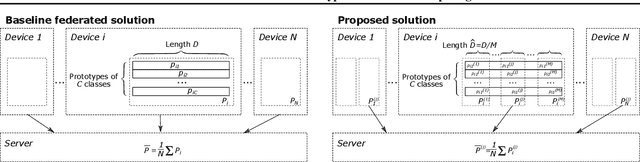

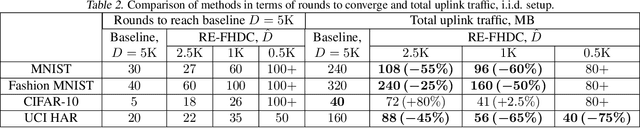
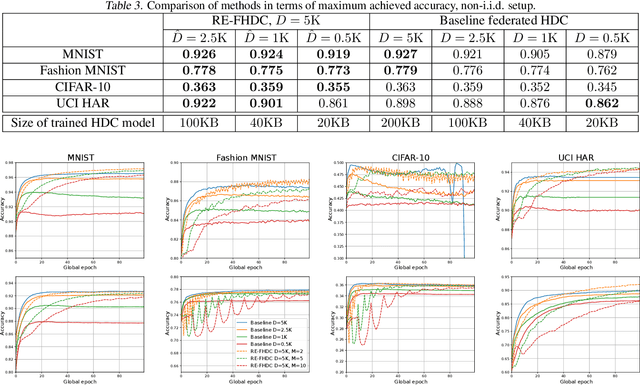
In conventional federated hyperdimensional computing (HDC), training larger models usually results in higher predictive performance but also requires more computational, communication, and energy resources. If the system resources are limited, one may have to sacrifice the predictive performance by reducing the size of the HDC model. The proposed resource-efficient federated hyperdimensional computing (RE-FHDC) framework alleviates such constraints by training multiple smaller independent HDC sub-models and refining the concatenated HDC model using the proposed dropout-inspired procedure. Our numerical comparison demonstrates that the proposed framework achieves a comparable or higher predictive performance while consuming less computational and wireless resources than the baseline federated HDC implementation.
Multi-Task Model Personalization for Federated Supervised SVM in Heterogeneous Networks
Apr 01, 2023Federated systems enable collaborative training on highly heterogeneous data through model personalization, which can be facilitated by employing multi-task learning algorithms. However, significant variation in device computing capabilities may result in substantial degradation in the convergence rate of training. To accelerate the learning procedure for diverse participants in a multi-task federated setting, more efficient and robust methods need to be developed. In this paper, we design an efficient iterative distributed method based on the alternating direction method of multipliers (ADMM) for support vector machines (SVMs), which tackles federated classification and regression. The proposed method utilizes efficient computations and model exchange in a network of heterogeneous nodes and allows personalization of the learning model in the presence of non-i.i.d. data. To further enhance privacy, we introduce a random mask procedure that helps avoid data inversion. Finally, we analyze the impact of the proposed privacy mechanisms and participant hardware and data heterogeneity on the system performance.
AI-Aided Integrated Terrestrial and Non-Terrestrial 6G Solutions for Sustainable Maritime Networking
Jan 25, 2022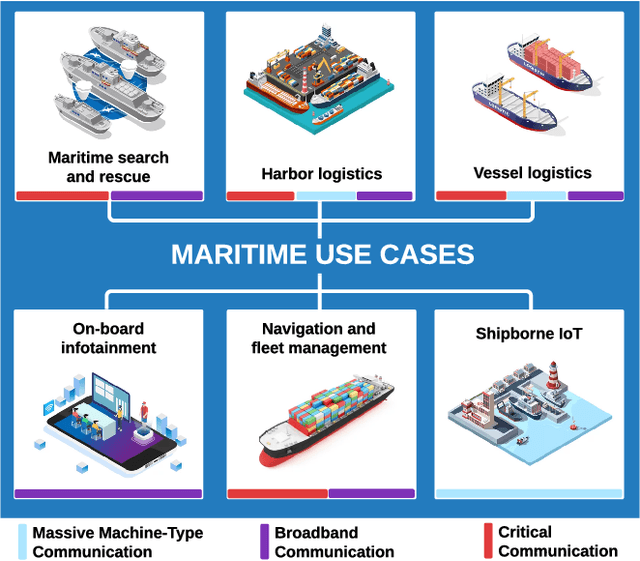
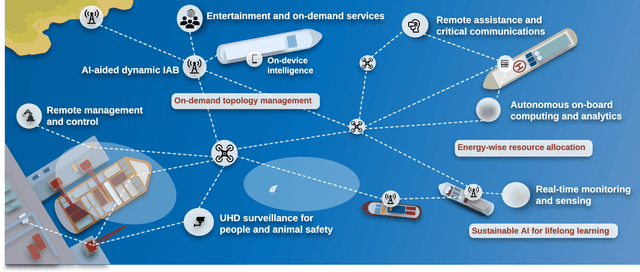
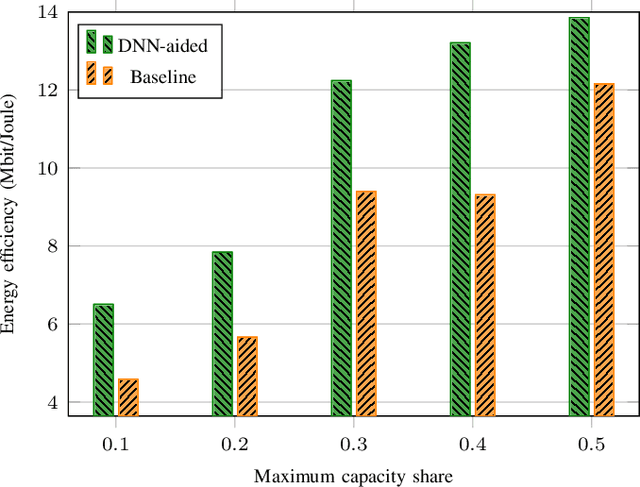
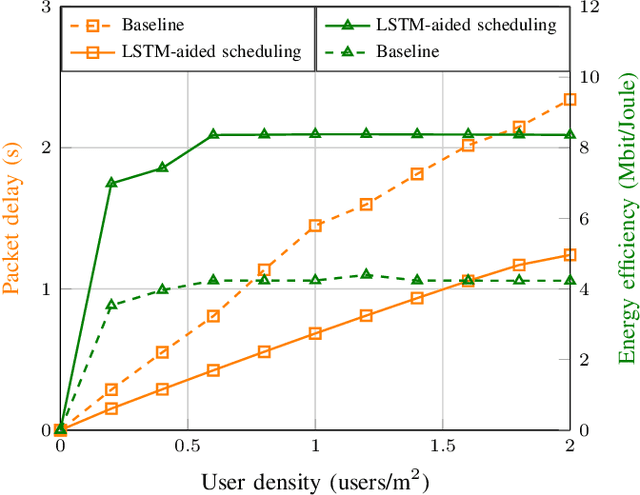
The maritime industry is experiencing a technological revolution that affects shipbuilding, operation of both seagoing and inland vessels, cargo management, and working practices in harbors. This ongoing transformation is driven by the ambition to make the ecosystem more sustainable and cost-efficient. Digitalization and automation help achieve these goals by transforming shipping and cruising into a much more cost- and energy-efficient, and decarbonized industry segment. The key enablers in these processes are always-available connectivity and content delivery services, which can not only aid shipping companies in improving their operational efficiency and reducing carbon emissions but also contribute to enhanced crew welfare and passenger experience. Due to recent advancements in integrating high-capacity and ultra-reliable terrestrial and non-terrestrial networking technologies, ubiquitous maritime connectivity is becoming a reality. To cope with the increased complexity of managing these integrated systems, this article advocates the use of artificial intelligence and machine learning-based approaches to meet the service requirements and energy efficiency targets in various maritime communications scenarios.
Dynamic Network-Assisted D2D-Aided Coded Distributed Learning
Nov 26, 2021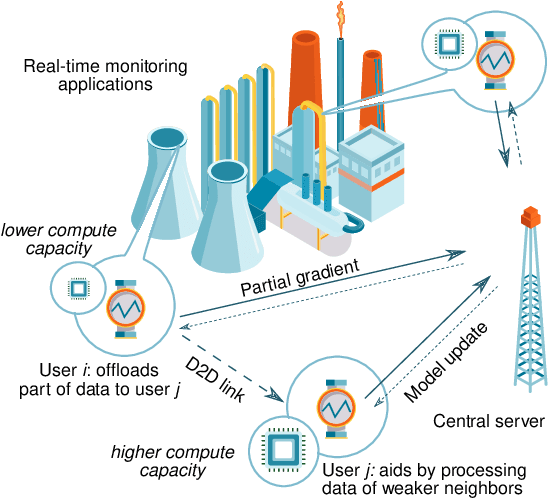
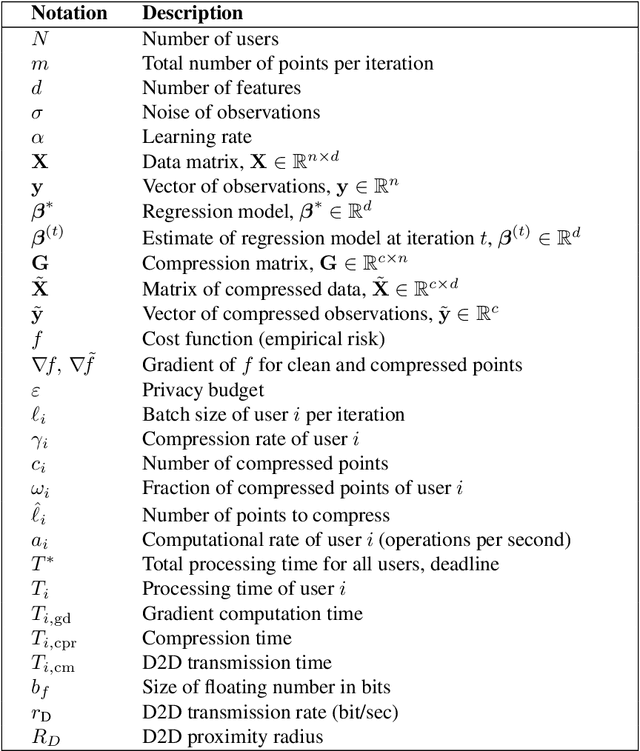
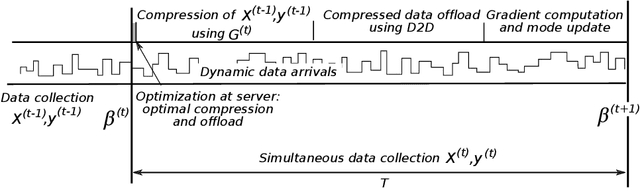
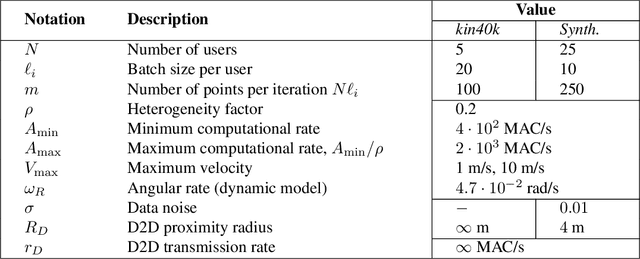
Today, various machine learning (ML) applications offer continuous data processing and real-time data analytics at the edge of a wireless network. Distributed ML solutions are seriously challenged by resource heterogeneity, in particular, the so-called straggler effect. To address this issue, we design a novel device-to-device (D2D)-aided coded federated learning method (D2D-CFL) for load balancing across devices while characterizing privacy leakage. The proposed solution captures system dynamics, including data (time-dependent learning model, varied intensity of data arrivals), device (diverse computational resources and volume of training data), and deployment (varied locations and D2D graph connectivity). We derive an optimal compression rate for achieving minimum processing time and establish its connection with the convergence time. The resulting optimization problem provides suboptimal compression parameters, which improve the total training time. Our proposed method is beneficial for real-time collaborative applications, where the users continuously generate training data.
Swish-Driven GoogleNet for Intelligent Analog Beam Selection in Terahertz Beamspace MIMO
Oct 12, 2021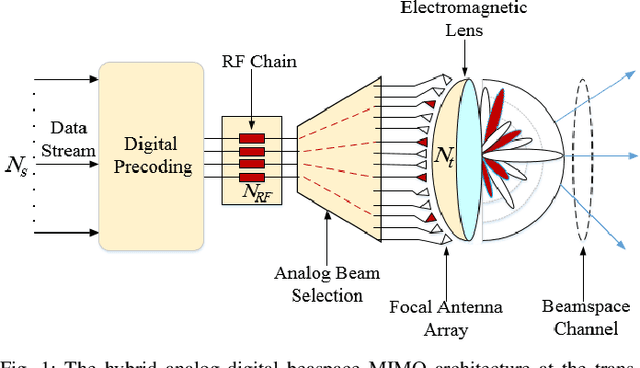
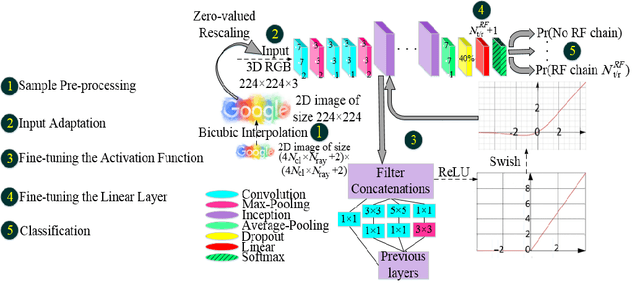
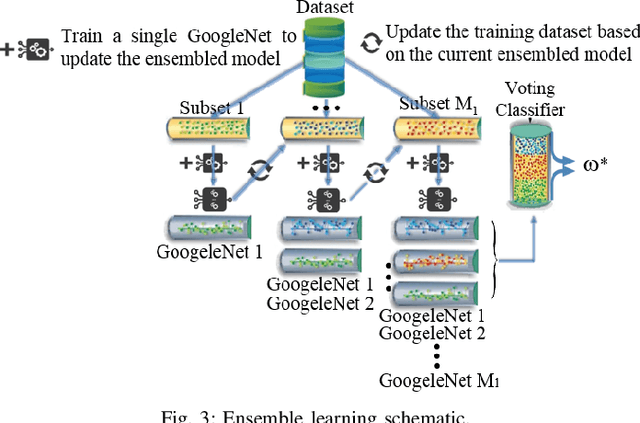
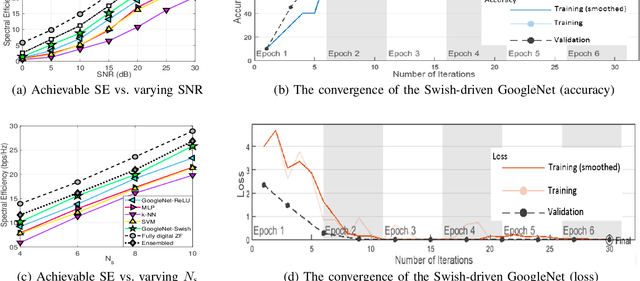
In this paper, we propose an intelligent analog beam selection strategy in a terahertz (THz) band beamspace multiple-input multiple-output (MIMO) system. First inspired by transfer learning, we fine-tune the pre-trained off-the-shelf GoogleNet classifier, to learn analog beam selection as a multi-class mapping problem. Simulation results show 83% accuracy for the analog beam selection, which subsequently results in 12% spectral efficiency (SE) gain, upon the existing counterparts. Towards a more accurate classifier, we replace the conventional rectified linear unit (ReLU) activation function of the GoogleNet with the recently proposed Swish and retrain the fine-tuned GoogleNet to learn analog beam selection. It is numerically indicated that the fine-tuned Swish-driven GoogleNet achieves 86% accuracy, as well as 18% improvement in achievable SE, upon the similar schemes. Eventually, a strong ensembled classifier is developed to learn analog beam selection by sequentially training multiple fine-tuned Swish-driven GoogleNet classifiers. According to the simulations, the strong ensembled model is 90% accurate and yields 27% gain in achievable SE, in comparison with prior methods.
Understanding UAV-Based WPCN-Aided Capabilities for Offshore Monitoring Applications
Dec 23, 2020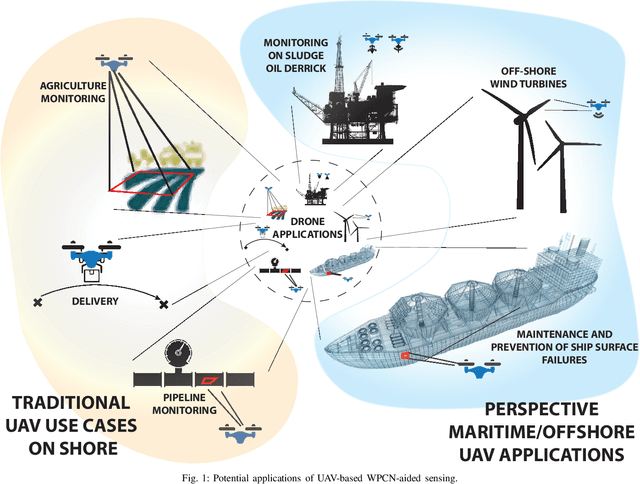
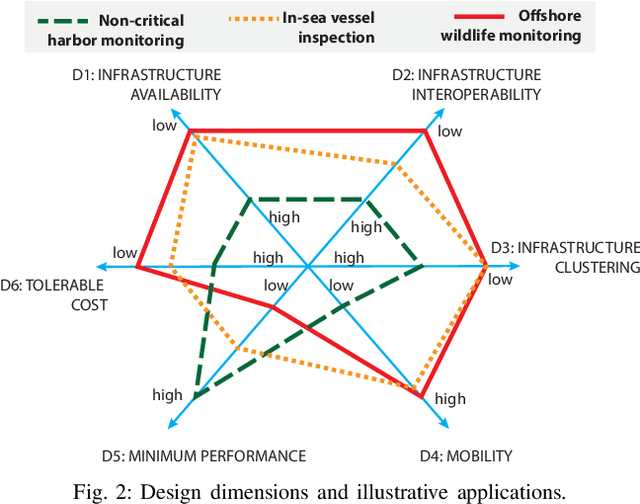
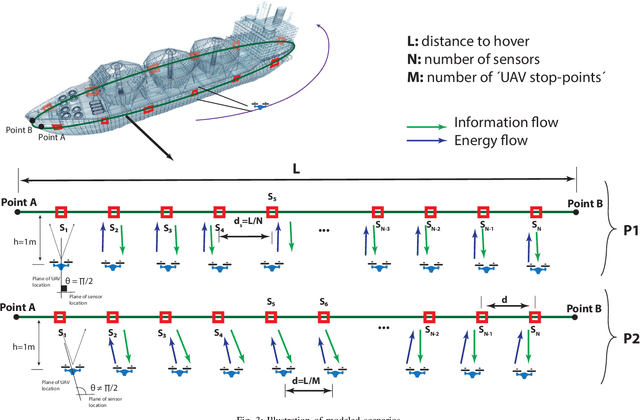
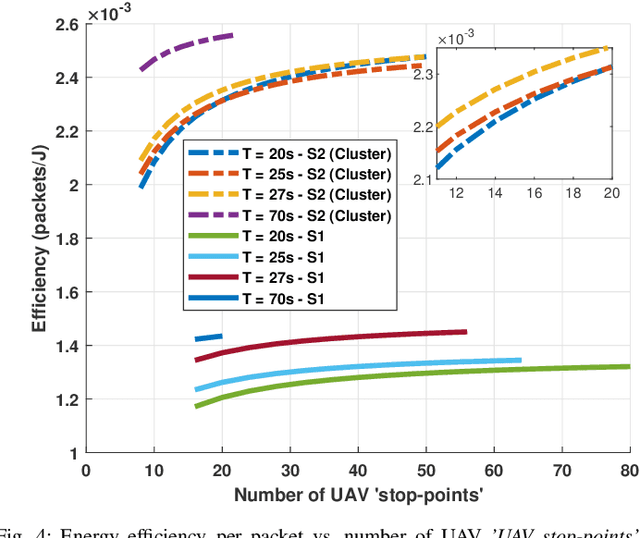
Despite the immense progress in the recent years, efficient solutions for monitoring remote areas are still missing today. This is especially notable in the context of versatile maritime and offshore use cases, owing to a broader span of operating regions and a lack of radio network infrastructures. In this article, we address the noted challenge by delivering a conceptual solution based on the convergence of three emerging technologies -- unmanned aerial vehicles (UAVs), battery-less sensors, and wireless powered communication networks (WPCNs). Our contribution offers a systematic description of the ecosystem related to the proposed solution by identifying its key actors and design dimensions together with the relevant resources and performance metrics. A system-level modeling-based evaluation of an illustrative scenario delivers deeper insights into the considered operation and the associated trade-offs. Further, unresolved challenges and perspective directions are underpinned for a subsequent study.