 Add to Chrome
 Add to Firefox
 Add to Edge
Towards sample-optimal learning of bosonic Gaussian quantum states
Mar 18, 2026
Continuous-variable systems enable key quantum technologies in computation, communication, and sensing. Bosonic Gaussian states emerge naturally in various such applications, including gravitational-wave and dark-matter detection. A fundamental question is how to characterize an unknown bosonic Gaussian state from as few samples as possible. Despite decades-long exploration, the ultimate efficiency limit remains unclear. In this work, we study the necessary and sufficient number of copies to learn an $n$-mode Gaussian state, with energy less than $E$, to $\varepsilon$ trace distance with high probability. We prove a lower bound of $Ω(n^3/\varepsilon^2)$ for Gaussian measurements, matching the best known upper bound up to doubly-log energy dependence, and $Ω(n^2/\varepsilon^2)$ for arbitrary measurements. We further show an upper bound of $\widetilde{O}(n^2/\varepsilon^2)$ given that the Gaussian state is promised to be either pure or passive. Interestingly, while Gaussian measurements suffice for nearly optimal learning of pure Gaussian states, non-Gaussian measurements are provably required for optimal learning of passive Gaussian states. Finally, focusing on learning single-mode Gaussian states via non-entangling Gaussian measurements, we provide a nearly tight bound of $\widetildeΘ(E/\varepsilon^2)$ for any non-adaptive schemes, showing adaptivity is indispensable for nearly energy-independent scaling. As a byproduct, we establish sharp bounds on the trace distance between Gaussian states in terms of the total variation distance between their Wigner distributions, and obtain a nearly tight sample complexity bound for learning the Wigner distribution of any Gaussian state to $\varepsilon$ total variation distance. Our results greatly advance quantum learning theory in the bosonic regimes and have practical impact in quantum sensing and benchmarking applications.

Instance-optimal high-precision shadow tomography with few-copy measurements: A metrological approach
Feb 04, 2026We study the sample complexity of shadow tomography in the high-precision regime under realistic measurement constraints. Given an unknown $d$-dimensional quantum state $ρ$ and a known set of observables $\{O_i\}_{i=1}^m$, the goal is to estimate expectation values $\{\mathrm{tr}(O_iρ)\}_{i=1}^m$ to accuracy $ε$ in $L_p$-norm, using possibly adaptive measurements that act on $O(\mathrm{polylog}(d))$ number of copies of $ρ$ at a time. We focus on the regime where $ε$ is below an instance-dependent threshold. Our main contribution is an instance-optimal characterization of the sample complexity as $\tildeΘ(Γ_p/ε^2)$, where $Γ_p$ is a function of $\{O_i\}_{i=1}^m$ defined via an optimization formula involving the inverse Fisher information matrix. Previously, tight bounds were known only in special cases, e.g. Pauli shadow tomography with $L_\infty$-norm error. Concretely, we first analyze a simpler oblivious variant where the goal is to estimate an observable of the form $\sum_{i=1}^m α_i O_i$ with $\|α\|_q = 1$ (where $q$ is dual to $p$) revealed after the measurement. For single-copy measurements, we obtain a sample complexity of $Θ(Γ^{\mathrm{ob}}_p/ε^2)$. We then show $\tildeΘ(Γ_p/ε^2)$ is necessary and sufficient for the original problem, with the lower bound applying to unbiased, bounded estimators. Our upper bounds rely on a two-step algorithm combining coarse tomography with local estimation. Notably, $Γ^{\mathrm{ob}}_\infty = Γ_\infty$. In both cases, allowing $c$-copy measurements improves the sample complexity by at most $Ω(1/c)$. Our results establish a quantitative correspondence between quantum learning and metrology, unifying asymptotic metrological limits with finite-sample learning guarantees.
Tight bounds on Pauli channel learning without entanglement
Sep 23, 2023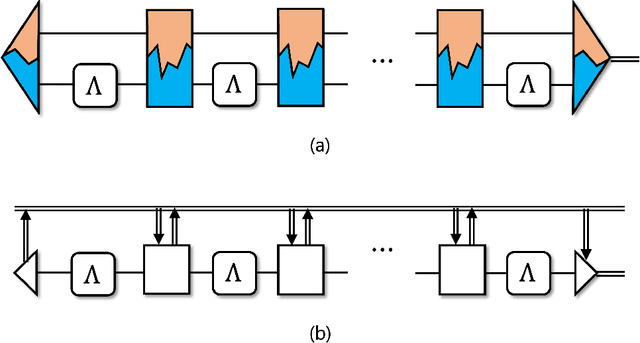
Entanglement is a useful resource for learning, but a precise characterization of its advantage can be challenging. In this work, we consider learning algorithms without entanglement to be those that only utilize separable states, measurements, and operations between the main system of interest and an ancillary system. These algorithms are equivalent to those that apply quantum circuits on the main system interleaved with mid-circuit measurements and classical feedforward. We prove a tight lower bound for learning Pauli channels without entanglement that closes a cubic gap between the best-known upper and lower bound. In particular, we show that $\Theta(2^n\varepsilon^{-2})$ rounds of measurements are required to estimate each eigenvalue of an $n$-qubit Pauli channel to $\varepsilon$ error with high probability when learning without entanglement. In contrast, a learning algorithm with entanglement only needs $\Theta(\varepsilon^{-2})$ rounds of measurements. The tight lower bound strengthens the foundation for an experimental demonstration of entanglement-enhanced advantages for characterizing Pauli noise.