 Add to Chrome
 Add to Firefox
 Add to Edge
A Neurosymbolic Approach for Explainable Early Diagnosis of Alzheimer's Disease
Jul 31, 2026
Identifying reliable Alzheimer's disease (AD) markers typically requires manual, labor-intensive transcription and expert analysis, limiting its scale. We introduce an automated pipeline that extracts qualitative knowledge about potential AD progression indicators directly from audio recordings of verbal fluency tests. Our method uses pretrained foundation models to process raw audio and extract clinically relevant variables to construct a Bayesian Network (BN); this BN is used to reason about the AD progression markers and infer their qualitative relationships. Our system successfully recovers known clinical knowledge and identifies novel relationships between linguistic markers.

Context-specific Credibility-aware Multimodal Fusion with Conditional Probabilistic Circuits
Mar 27, 2026Multimodal fusion requires integrating information from multiple sources that may conflict depending on context. Existing fusion approaches typically rely on static assumptions about source reliability, limiting their ability to resolve conflicts when a modality becomes unreliable due to situational factors such as sensor degradation or class-specific corruption. We introduce C$^2$MF, a context-specfic credibility-aware multimodal fusion framework that models per-instance source reliability using a Conditional Probabilistic Circuit (CPC). We formalize instance-level reliability through Context-Specific Information Credibility (CSIC), a KL-divergence-based measure computed exactly from the CPC. CSIC generalizes conventional static credibility estimates as a special case, enabling principled and adaptive reliability assessment. To evaluate robustness under cross-modal conflicts, we propose the Conflict benchmark, in which class-specific corruptions deliberately induce discrepancies between different modalities. Experimental results show that C$^2$MF improves predictive accuracy by up to 29% over static-reliability baselines in high-noise settings, while preserving the interpretability advantages of probabilistic circuit-based fusion.
Recursive Inference Machines for Neural Reasoning
Mar 05, 2026Neural reasoners such as Tiny Recursive Models (TRMs) solve complex problems by combining neural backbones with specialized inference schemes. Such inference schemes have been a central component of stochastic reasoning systems, where inference rules are applied to a stochastic model to derive answers to complex queries. In this work, we bridge these two paradigms by introducing Recursive Inference Machines (RIMs), a neural reasoning framework that explicitly incorporates recursive inference mechanisms inspired by classical inference engines. We show that TRMs can be expressed as an instance of RIMs, allowing us to extend them through a reweighting component, yielding better performance on challenging reasoning benchmarks, including ARC-AGI-1, ARC-AGI-2, and Sudoku Extreme. Furthermore, we show that RIMs can be used to improve reasoning on other tasks, such as the classification of tabular data, outperforming TabPFNs.
A Unified Framework for Human-Allied Learning of Probabilistic Circuits
May 03, 2024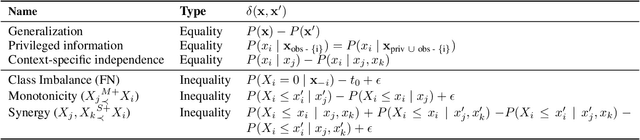
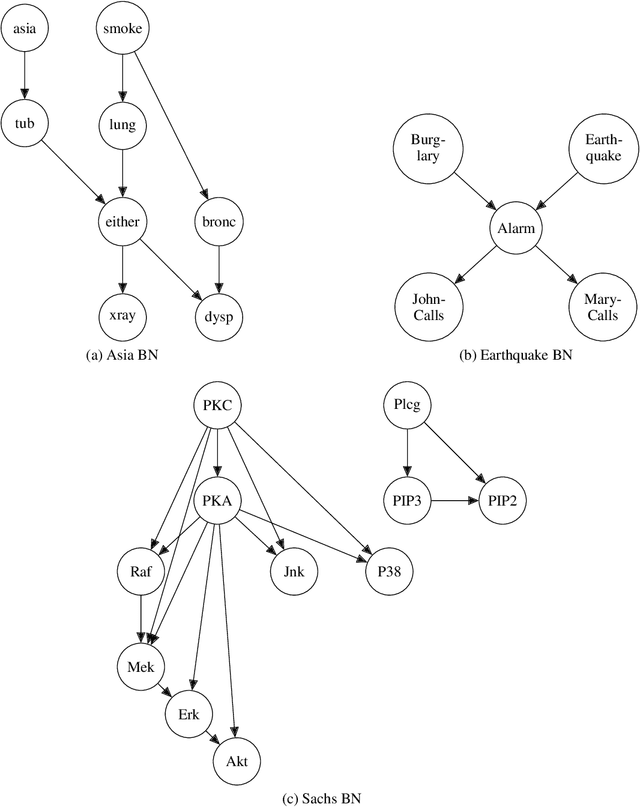
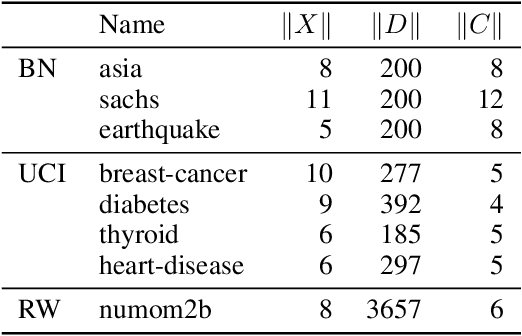
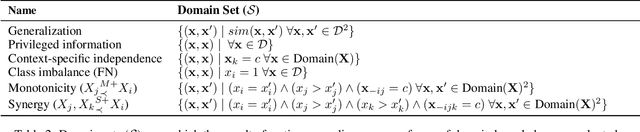
Probabilistic Circuits (PCs) have emerged as an efficient framework for representing and learning complex probability distributions. Nevertheless, the existing body of research on PCs predominantly concentrates on data-driven parameter learning, often neglecting the potential of knowledge-intensive learning, a particular issue in data-scarce/knowledge-rich domains such as healthcare. To bridge this gap, we propose a novel unified framework that can systematically integrate diverse domain knowledge into the parameter learning process of PCs. Experiments on several benchmarks as well as real world datasets show that our proposed framework can both effectively and efficiently leverage domain knowledge to achieve superior performance compared to purely data-driven learning approaches.
Credibility-Aware Multi-Modal Fusion Using Probabilistic Circuits
Mar 05, 2024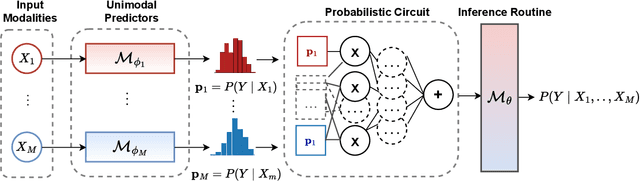

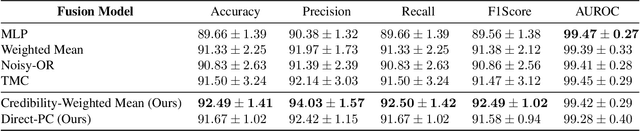
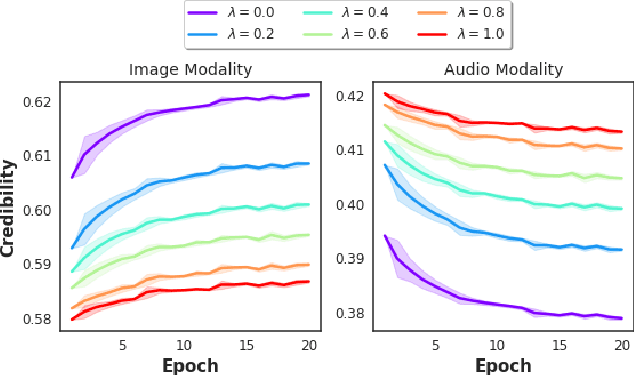
We consider the problem of late multi-modal fusion for discriminative learning. Motivated by noisy, multi-source domains that require understanding the reliability of each data source, we explore the notion of credibility in the context of multi-modal fusion. We propose a combination function that uses probabilistic circuits (PCs) to combine predictive distributions over individual modalities. We also define a probabilistic measure to evaluate the credibility of each modality via inference queries over the PC. Our experimental evaluation demonstrates that our fusion method can reliably infer credibility while maintaining competitive performance with the state-of-the-art.
Explaining Deep Tractable Probabilistic Models: The sum-product network case
Oct 19, 2021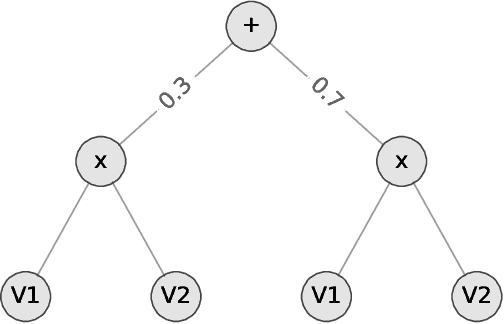
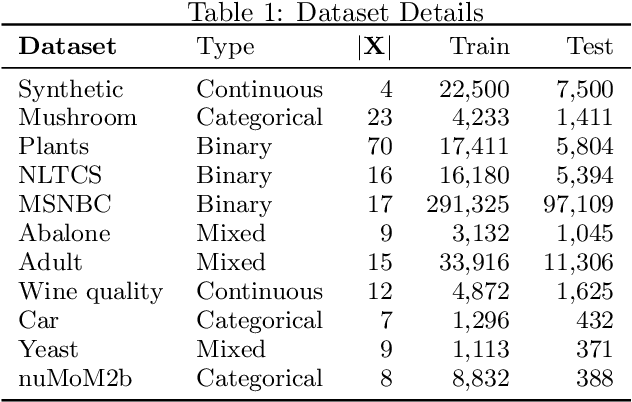
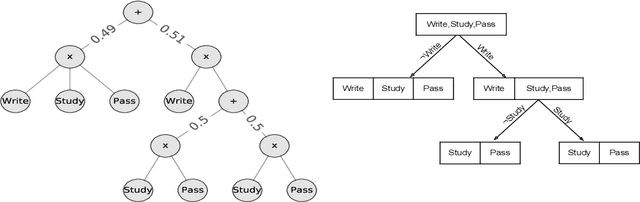
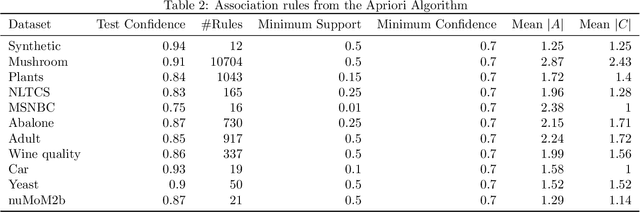
We consider the problem of explaining a tractable deep probabilistic model, the Sum-Product Networks (SPNs).To this effect, we define the notion of a context-specific independence tree and present an iterative algorithm that converts an SPN to a CSI-tree. The resulting CSI-tree is both interpretable and explainable to the domain expert. To further compress the tree, we approximate the CSIs by fitting a supervised classifier. Our extensive empirical evaluations on synthetic, standard, and real-world clinical data sets demonstrate that the resulting models exhibit superior explainability without loss in performance.