 Add to Chrome
 Add to Firefox
 Add to Edge
Disparities In Negation Understanding Across Languages In Vision-Language Models
Apr 21, 2026
Vision-language models (VLMs) exhibit affirmation bias: a systematic tendency to select positive captions ("X is present") even when the correct description contains negation ("no X"). While prior work has documented this failure mode in English and proposed solutions, negation manifests differently across languages through varying morphology, word order, and cliticization patterns, raising the question of whether these solutions serve all linguistic communities equitably. We introduce the first human-verified multilingual negation benchmark, spanning seven typologically diverse languages: English, Mandarin Chinese, Arabic, Greek, Russian, Tagalog, and Spanish. Evaluating three VLMs - CLIP, SigLIP, and MultiCLIP - we find that standard CLIP performs at or below chance on non-Latin-script languages, while MultiCLIP achieves the highest and most uniform accuracy. We also evaluate SpaceVLM, a proposed negation correction, and find that it produces substantial improvements for several languages - particularly English, Greek, Spanish, and Tagalog - while showing varied effectiveness across typologically different languages. This variation reveals that linguistic properties like morphology, script, and negation structure interact with model improvements in fairness-relevant ways. As VLMs are deployed globally, multilingual benchmarks are essential for understanding not just whether solutions work, but for whom.

Let's Reinforce Step by Step
Nov 10, 2023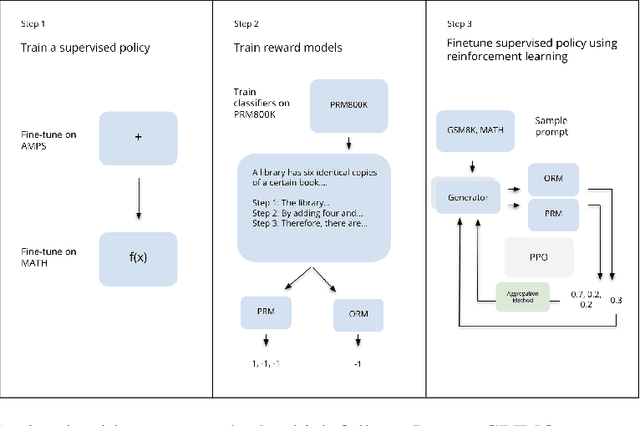
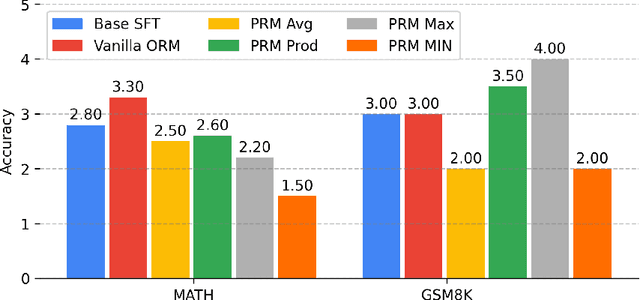
While recent advances have boosted LM proficiency in linguistic benchmarks, LMs consistently struggle to reason correctly on complex tasks like mathematics. We turn to Reinforcement Learning from Human Feedback (RLHF) as a method with which to shape model reasoning processes. In particular, we explore two reward schemes, outcome-supervised reward models (ORMs) and process-supervised reward models (PRMs), to optimize for logical reasoning. Our results show that the fine-grained reward provided by PRM-based methods enhances accuracy on simple mathematical reasoning (GSM8K) while, unexpectedly, reducing performance in complex tasks (MATH). Furthermore, we show the critical role reward aggregation functions play in model performance. Providing promising avenues for future research, our study underscores the need for further exploration into fine-grained reward modeling for more reliable language models.