 Add to Chrome
 Add to Firefox
 Add to Edge
Evaluating Agentic Configuration Repair for Computer Networks
Jun 04, 2026
Misconfigurations in computer networks remain a major source of critical Internet outages. Research is turning to Large Language Models (LLMs) to automate the complex, error-prone task of network configuration. However, even state-of-the-art models fail to resolve misconfigurations in large-scale, complex scenarios and often introduce new errors. In this work, we benchmark open- and closed-source LLMs augmented with formal network verification and context retrieval tools. We demonstrate that agentic architectures outperform base LLMs in repair efficacy (by 12% on average) and safety (by 17% on average), enabled by the ability to dynamically manage context and iteratively validate configuration repairs.

Towards Developmentally Plausible Rewards: Communicative Success as a Learning Signal for Interactive Language Models
May 09, 2025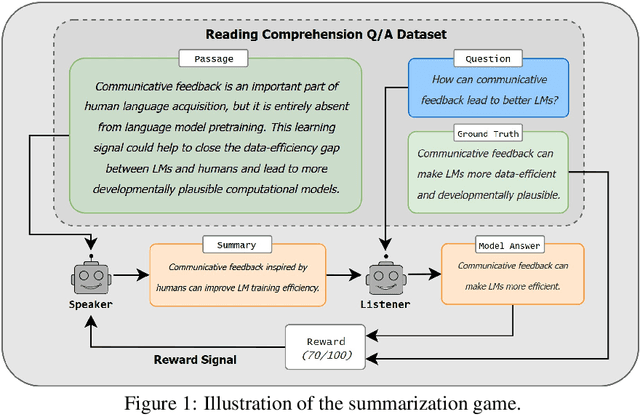
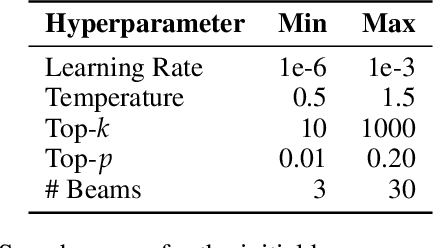
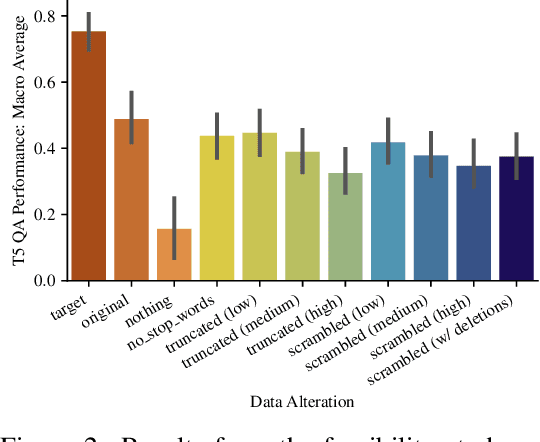
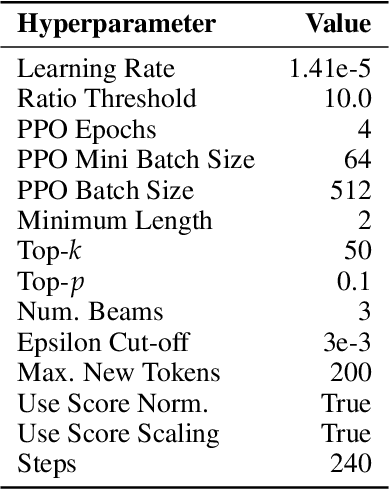
We propose a method for training language models in an interactive setting inspired by child language acquisition. In our setting, a speaker attempts to communicate some information to a listener in a single-turn dialogue and receives a reward if communicative success is achieved. Unlike earlier related work using image--caption data for interactive reference games, we operationalize communicative success in a more abstract language-only question--answering setting. First, we present a feasibility study demonstrating that our reward provides an indirect signal about grammaticality. Second, we conduct experiments using reinforcement learning to fine-tune language models. We observe that cognitively plausible constraints on the communication channel lead to interpretable changes in speaker behavior. However, we do not yet see improvements on linguistic evaluations from our training regime. We outline potential modifications to the task design and training configuration that could better position future work to use our methodology to observe the benefits of interaction on language learning in computational cognitive models.