 Add to Chrome
 Add to Firefox
 Add to Edge
Beyond a Bag of Features: Set-Level Instability in Sparse Autoencoders
Aug 11, 2026
Shani et al. (2026) show that LLM representations broadly recover human category boundaries, while failing to reflect fine-grained typicality structure. Their analysis uses cosine similarity over dense model representations. We revisit their approach using overlap over active sparse autoencoder (SAE) latent sets as a more interpretable similarity measure. We first verify that this set-level measure is meaningful: SAE latent sets can recover union-like compositional structure in controlled toy models and induce semantically coherent neighborhoods in natural text. Extending the human-concepts analysis to SAE set similarities, we find that SAE activation sets do not recover human category boundaries or within-category typicality more faithfully than dense embeddings or residual-stream states, but instead track model-internal similarity structure. To probe this gap further, we study active latent sets under well-controlled semantic modifications, revealing a substantial mismatch between human judgements of conceptual change and change in the SAE active set. We interpret this as evidence that, outside idealised settings, SAE features do not compose via simple bag-of-features semantics.

KnowledgeDebugger -- an Exploration Tool for Knowledge Localization and Editing in Transformers
Jul 01, 2026Recent research has increasingly focused on understanding how Transformers store and process knowledge, as well as how this knowledge can be edited. Research work in this area is often conducted in two phases: first, phenomena are explored on individual samples. Then, when results appear promising, more statistically robust experiments follow. To support the first phase, we propose KnowledgeDebugger, a GUI-based exploration tool for knowledge localization and editing in Transformers. Our tool - inspired by LM-Debugger - offers no-code access to the methods in EasyEdit, a widely used library of state-of-the-art Knowledge Editing approaches. We demonstrate the tool's effectiveness through case studies of recent findings in this field.
Towards Developmentally Plausible Rewards: Communicative Success as a Learning Signal for Interactive Language Models
May 09, 2025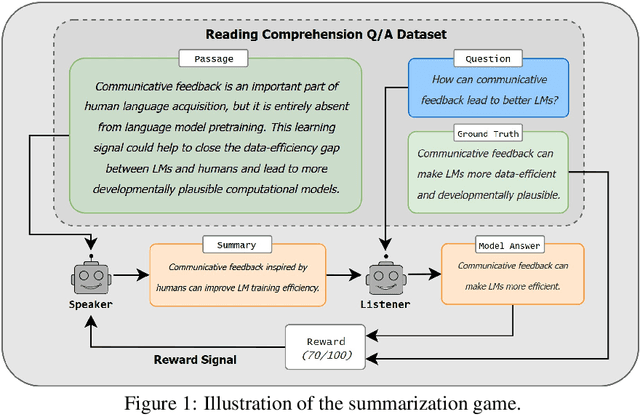
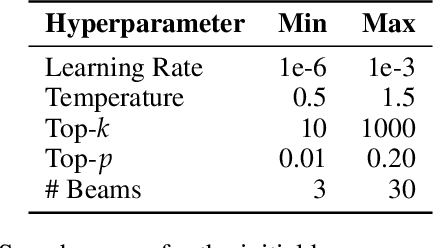
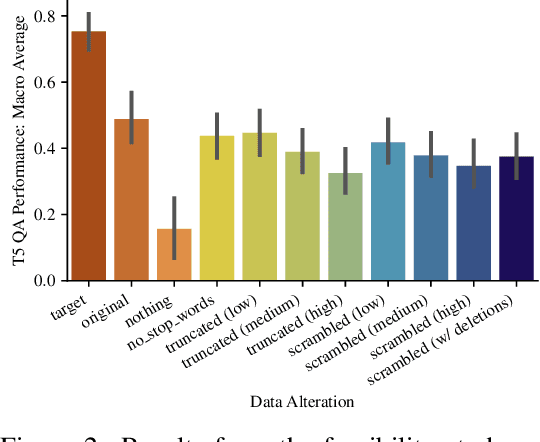
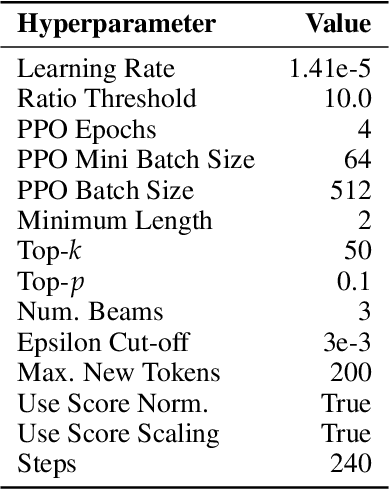
We propose a method for training language models in an interactive setting inspired by child language acquisition. In our setting, a speaker attempts to communicate some information to a listener in a single-turn dialogue and receives a reward if communicative success is achieved. Unlike earlier related work using image--caption data for interactive reference games, we operationalize communicative success in a more abstract language-only question--answering setting. First, we present a feasibility study demonstrating that our reward provides an indirect signal about grammaticality. Second, we conduct experiments using reinforcement learning to fine-tune language models. We observe that cognitively plausible constraints on the communication channel lead to interpretable changes in speaker behavior. However, we do not yet see improvements on linguistic evaluations from our training regime. We outline potential modifications to the task design and training configuration that could better position future work to use our methodology to observe the benefits of interaction on language learning in computational cognitive models.