 Add to Chrome
 Add to Firefox
 Add to Edge
ComponentBench: Diagnosing Component-Level Failures in Computer-Use Agents
Aug 18, 2026
Current evaluation of computer-use agents is split between long-horizon workflow benchmarks and atomic GUI-grounding tests. This leaves an under-instrumented middle layer: realistic component-centered interactions (e.g., toggle a button set) that are short enough to diagnose and rich enough to capture the burdens of modern interfaces. We present ComponentBench, a benchmark and diagnostic pipeline for component-level evaluation of computer-use agents on modern web UIs. ComponentBench is organized around a library-agnostic ontology of 97 canonical UI components instantiated as 2,910 programmatically verified tasks across widely used component libraries, paired with cleaned human reference trajectories that enable evaluation of both task success and interaction efficiency. Beyond task collection, we introduce a scalable pipeline for auditing realized structural difficulty after implementation and synthesizing structured failure analyses across tasks and component families. Evaluating seven models -- GPT-5.4, Gemini 3 Flash, GPT-5.4 mini, GPT-5 mini, Gemini 3.1 Flash-Lite, Qwen3-VL-235B, and UI-TARS-1.5-7B -- across four observation and action spaces, we show that these design choices critically impact performance. Within a single shared harness, changing only the observation and action space shifts task success by more than 30% for the same model: GPT-5 mini falls from 83.1% with accessibility-tree observations to 48.9% with coordinate-only Pixel control. Moreover, even the fastest configuration takes 3.7x as long as the matched human reference, and spatial manipulations that are trivial for humans continue to challenge current agents.

Driverseat: Crowdstrapping Learning Tasks for Autonomous Driving
Dec 07, 2015
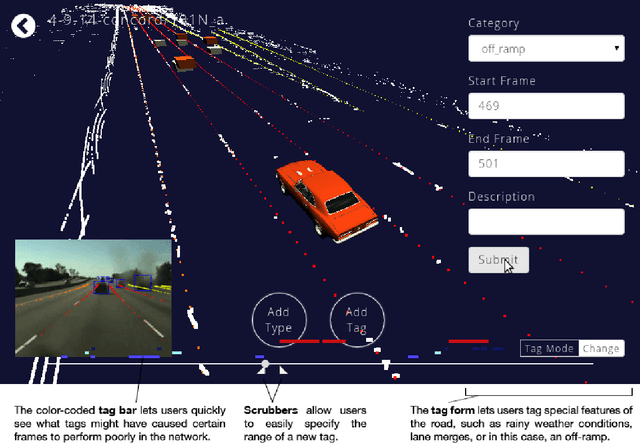

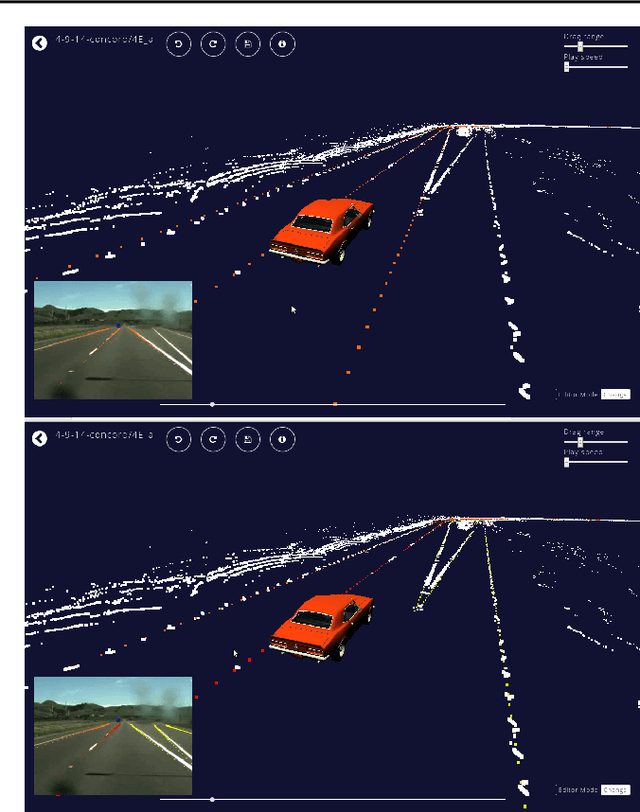
While emerging deep-learning systems have outclassed knowledge-based approaches in many tasks, their application to detection tasks for autonomous technologies remains an open field for scientific exploration. Broadly, there are two major developmental bottlenecks: the unavailability of comprehensively labeled datasets and of expressive evaluation strategies. Approaches for labeling datasets have relied on intensive hand-engineering, and strategies for evaluating learning systems have been unable to identify failure-case scenarios. Human intelligence offers an untapped approach for breaking through these bottlenecks. This paper introduces Driverseat, a technology for embedding crowds around learning systems for autonomous driving. Driverseat utilizes crowd contributions for (a) collecting complex 3D labels and (b) tagging diverse scenarios for ready evaluation of learning systems. We demonstrate how Driverseat can crowdstrap a convolutional neural network on the lane-detection task. More generally, crowdstrapping introduces a valuable paradigm for any technology that can benefit from leveraging the powerful combination of human and computer intelligence.
An Empirical Evaluation of Deep Learning on Highway Driving
Apr 17, 2015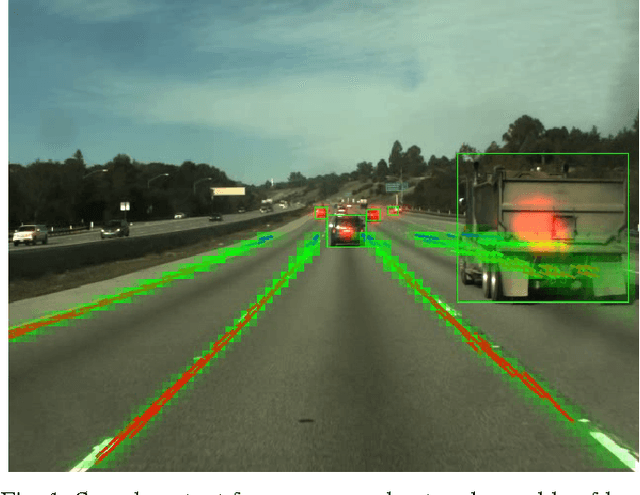
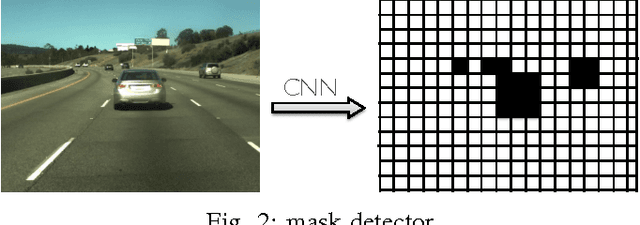
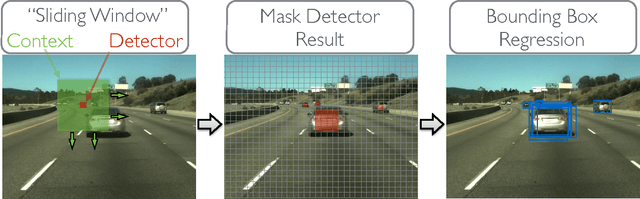
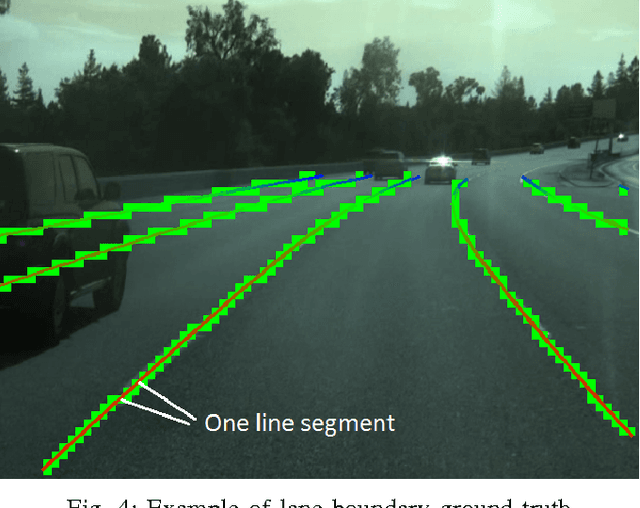
Numerous groups have applied a variety of deep learning techniques to computer vision problems in highway perception scenarios. In this paper, we presented a number of empirical evaluations of recent deep learning advances. Computer vision, combined with deep learning, has the potential to bring about a relatively inexpensive, robust solution to autonomous driving. To prepare deep learning for industry uptake and practical applications, neural networks will require large data sets that represent all possible driving environments and scenarios. We collect a large data set of highway data and apply deep learning and computer vision algorithms to problems such as car and lane detection. We show how existing convolutional neural networks (CNNs) can be used to perform lane and vehicle detection while running at frame rates required for a real-time system. Our results lend credence to the hypothesis that deep learning holds promise for autonomous driving.