 Add to Chrome
 Add to Firefox
 Add to Edge
Advances, challenges, and opportunities for legged robots
Jul 31, 2026
Humanoid and quadrupedal robots have the potential to revolutionize the way we work, interact, and coexist with intelligent machines. To understand their effects on society and how they can enable scientific discovery, we assess the current capabilities of these systems along hardware, locomotion, autonomy, data, and applications. We identify recent advances and key open challenges that must be overcome to enable widespread adoption and new use cases for legged robots. Last, we provide an outlook on the future of legged robots, exploring their ethical considerations, economic potential, policy implications, and broader societal effects.
* Accepted for publication in Science Robotics. This is the author's version of the work. It is posted here by permission of the AAAS for personal use, not for redistribution. The definitive version was published in Science Robotics on July 29, 2026, DOI: 10.1126/scirobotics.aee0787

Diachronic and synchronic variation in the performance of adaptive machine learning systems: The ethical challenges
Apr 11, 2025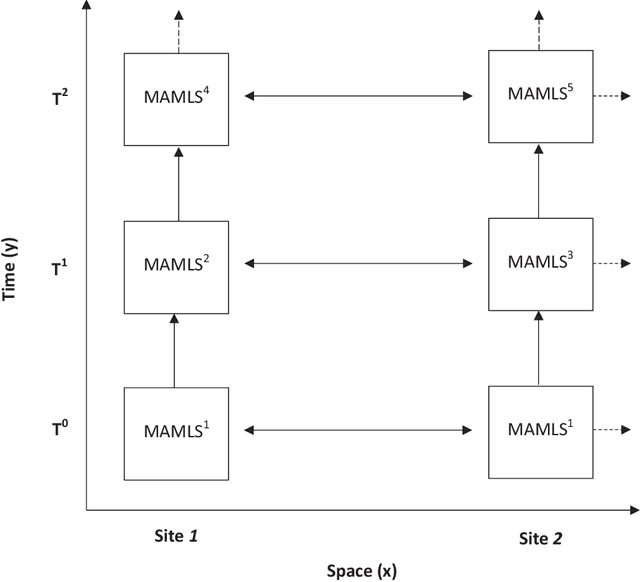
Objectives: Machine learning (ML) has the potential to facilitate "continual learning" in medicine, in which an ML system continues to evolve in response to exposure to new data over time, even after being deployed in a clinical setting. In this paper, we provide a tutorial on the range of ethical issues raised by the use of such "adaptive" ML systems in medicine that have, thus far, been neglected in the literature. Target audience: The target audiences for this tutorial are the developers of machine learning AI systems, healthcare regulators, the broader medical informatics community, and practicing clinicians. Scope: Discussions of adaptive ML systems to date have overlooked the distinction between two sorts of variance that such systems may exhibit -- diachronic evolution (change over time) and synchronic variation (difference between cotemporaneous instantiations of the algorithm at different sites) -- and under-estimated the significance of the latter. We highlight the challenges that diachronic evolution and synchronic variation present for the quality of patient care, informed consent, and equity, and discuss the complex ethical trade-offs involved in the design of such systems.