 Add to Chrome
 Add to Firefox
 Add to Edge
On Locality and Length Generalization in Visual Reasoning
Jul 10, 2026
A striking feature of the human visual system is that it ingests visual information through a series of local foveated glimpses, rather than a single global computation. This makes human vision distinctly different from most popular computer vision models in use today, which input images globally and in a single shot. A natural question therefore is whether local, sequential vision models may provide any fundamental computational benefits in addition to being biologically more plausible than global models. In this work, we investigate this question from the perspective of visual state tracking and length generalization. Inspired by recent studies of length generalization in language models, we study the behavior of vision models trained on simple vision tasks that require the aggregation of local information across an image. Our experiments reveal that, similar to language models, vision models can learn to exploit global shortcuts and thereby fail to generalize over task length or complexity. We also show that recurrent vision policies based on strictly local perception can mitigate these failures, thereby allowing models to generalize on these tasks. Our results show that local attention may be an essential overlooked requirement for robust compositional generalization.

AICompanionBench: Benchmarking LLMs-as-Judges for AI Companion Safety
Jun 03, 2026As AI companion platforms such as Replika and Character.AI rapidly grow, concerns about unsafe human-AI interactions have intensified. This study introduces AICompanionBench, to our knowledge the first publicly available benchmark dataset of human-AI companion conversations annotated with fine-grained safety risk categories. The dataset contains 2,123 real-world Replika conversations collected from Reddit and annotated through human-AI collaboration across nine categories: sexual behavior, antisocial behavior, physical aggression, verbal aggression, substance abuse, self-harm and suicide, control, manipulation, and no-harm. Using this benchmark, we evaluate 20 state-of-the-art open-source and closed-source LLMs under an LLM-as-judge framework for detecting unsafe interactions. Results show substantial variation in model performance, with stronger models achieving high overall accuracy but still struggling with nuanced categories such as manipulation, as well as benign conversations that are incorrectly identified as harmful. Our findings suggest that while current LLMs can effectively detect explicit harmful content, they remain limited in identifying implicit unsafe interactions. Overall, our work contributes a new benchmark dataset for AI companionship safety research and offers insights into monitoring AI companion systems using LLMs. The dataset is publicly available at: https://github.com/anonymousresearcher2026/AICompanionBench/blob/main/AICompanionBench.xlsx
An Interactive Framework for Implementing Privacy-Preserving Federated Learning: Experiments on Large Language Models
Feb 11, 2025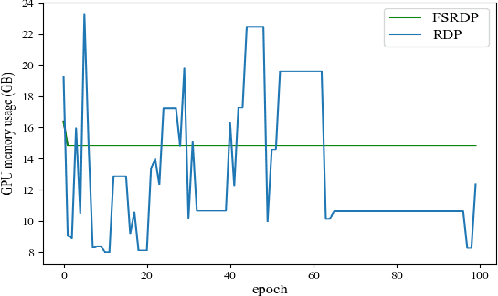
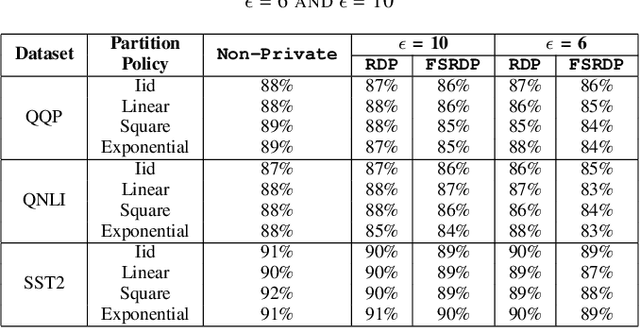
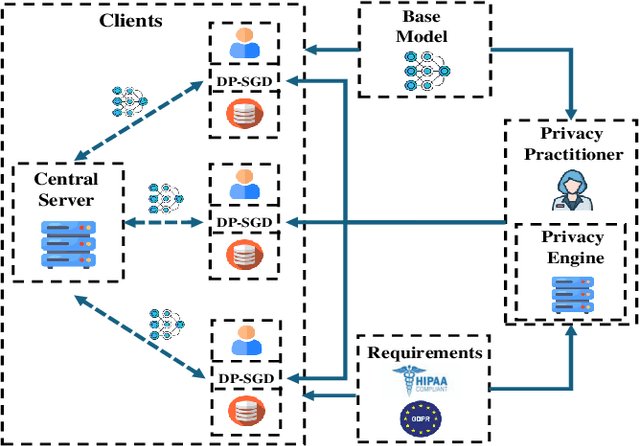

Federated learning (FL) enhances privacy by keeping user data on local devices. However, emerging attacks have demonstrated that the updates shared by users during training can reveal significant information about their data. This has greatly thwart the adoption of FL methods for training robust AI models in sensitive applications. Differential Privacy (DP) is considered the gold standard for safeguarding user data. However, DP guarantees are highly conservative, providing worst-case privacy guarantees. This can result in overestimating privacy needs, which may compromise the model's accuracy. Additionally, interpretations of these privacy guarantees have proven to be challenging in different contexts. This is further exacerbated when other factors, such as the number of training iterations, data distribution, and specific application requirements, can add further complexity to this problem. In this work, we proposed a framework that integrates a human entity as a privacy practitioner to determine an optimal trade-off between the model's privacy and utility. Our framework is the first to address the variable memory requirement of existing DP methods in FL settings, where resource-limited devices (e.g., cell phones) can participate. To support such settings, we adopt a recent DP method with fixed memory usage to ensure scalable private FL. We evaluated our proposed framework by fine-tuning a BERT-based LLM model using the GLUE dataset (a common approach in literature), leveraging the new accountant, and employing diverse data partitioning strategies to mimic real-world conditions. As a result, we achieved stable memory usage, with an average accuracy reduction of 1.33% for $\epsilon = 10$ and 1.9% for $\epsilon = 6$, when compared to the state-of-the-art DP accountant which does not support fixed memory usage.
From Machine Learning to Machine Unlearning: Complying with GDPR's Right to be Forgotten while Maintaining Business Value of Predictive Models
Nov 26, 2024Recent privacy regulations (e.g., GDPR) grant data subjects the `Right to Be Forgotten' (RTBF) and mandate companies to fulfill data erasure requests from data subjects. However, companies encounter great challenges in complying with the RTBF regulations, particularly when asked to erase specific training data from their well-trained predictive models. While researchers have introduced machine unlearning methods aimed at fast data erasure, these approaches often overlook maintaining model performance (e.g., accuracy), which can lead to financial losses and non-compliance with RTBF obligations. This work develops a holistic machine learning-to-unlearning framework, called Ensemble-based iTerative Information Distillation (ETID), to achieve efficient data erasure while preserving the business value of predictive models. ETID incorporates a new ensemble learning method to build an accurate predictive model that can facilitate handling data erasure requests. ETID also introduces an innovative distillation-based unlearning method tailored to the constructed ensemble model to enable efficient and effective data erasure. Extensive experiments demonstrate that ETID outperforms various state-of-the-art methods and can deliver high-quality unlearned models with efficiency. We also highlight ETID's potential as a crucial tool for fostering a legitimate and thriving market for data and predictive services.
Uncovering Attacks and Defenses in Secure Aggregation for Federated Deep Learning
Oct 13, 2024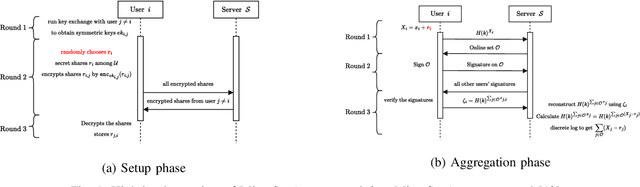
Federated learning enables the collaborative learning of a global model on diverse data, preserving data locality and eliminating the need to transfer user data to a central server. However, data privacy remains vulnerable, as attacks can target user training data by exploiting the updates sent by users during each learning iteration. Secure aggregation protocols are designed to mask/encrypt user updates and enable a central server to aggregate the masked information. MicroSecAgg (PoPETS 2024) proposes a single server secure aggregation protocol that aims to mitigate the high communication complexity of the existing approaches by enabling a one-time setup of the secret to be re-used in multiple training iterations. In this paper, we identify a security flaw in the MicroSecAgg that undermines its privacy guarantees. We detail the security flaw and our attack, demonstrating how an adversary can exploit predictable masking values to compromise user privacy. Our findings highlight the critical need for enhanced security measures in secure aggregation protocols, particularly the implementation of dynamic and unpredictable masking strategies. We propose potential countermeasures to mitigate these vulnerabilities and ensure robust privacy protection in the secure aggregation frameworks.