 Add to Chrome
 Add to Firefox
 Add to Edge
MAED: Mathematical Activation Error Detection for Mitigating Physical Fault Attacks in DNN Inference
Mar 18, 2026
The inference phase of deep neural networks (DNNs) in embedded systems is increasingly vulnerable to fault attacks and failures, which can result in incorrect predictions. These vulnerabilities can potentially lead to catastrophic consequences, making the development of effective mitigation techniques essential. In this paper, we introduce MAED (Mathematical Activation Error Detection), an algorithm-level error detection framework that exploits mathematical identities to continuously validate the correctness of non-linear activation function computations at runtime. To the best of our knowledge, this work is the first to integrate algorithm-level error detection techniques to defend against both malicious fault injection attacks and naturally occurring faults in critical DNN components in embedded systems. The evaluation is conducted on three widely adopted activation functions, namely ReLu, sigmoid, and tanh which serve as fundamental building blocks for introducing non-linearity in DNNs and can lead to mispredictions when subjected to natural faults or fault attacks. We assessed the proposed error detection scheme via fault model simulation, achieving close to 100% error detection while mitigating existing fault attacks on DNN inference. Additionally, the overhead introduced by integrating the proposed scheme with the baseline implementation (i.e., without error detection) is validated through implementations on an AMD/Xilinx Artix-7 FPGA and an ATmega328P microcontroller, as well as through integration with TensorFlow. On the microcontroller, the proposed error detection incurs less than 1% clock cycle overhead, while on the FPGA it requires nearly zero additional area, at the cost of approximately a 20% increase in latency for sigmoid and tanh.

An Interactive Framework for Implementing Privacy-Preserving Federated Learning: Experiments on Large Language Models
Feb 11, 2025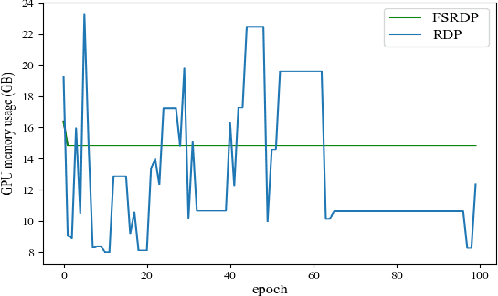
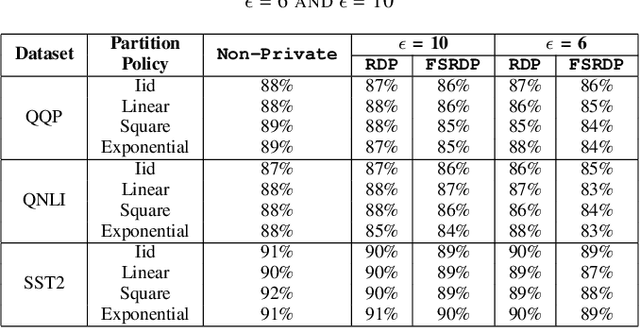
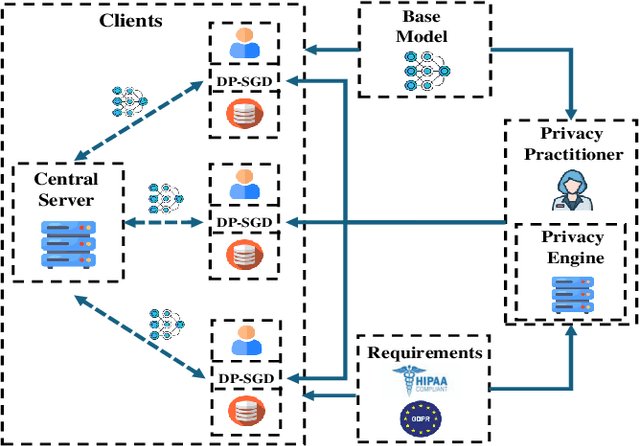

Federated learning (FL) enhances privacy by keeping user data on local devices. However, emerging attacks have demonstrated that the updates shared by users during training can reveal significant information about their data. This has greatly thwart the adoption of FL methods for training robust AI models in sensitive applications. Differential Privacy (DP) is considered the gold standard for safeguarding user data. However, DP guarantees are highly conservative, providing worst-case privacy guarantees. This can result in overestimating privacy needs, which may compromise the model's accuracy. Additionally, interpretations of these privacy guarantees have proven to be challenging in different contexts. This is further exacerbated when other factors, such as the number of training iterations, data distribution, and specific application requirements, can add further complexity to this problem. In this work, we proposed a framework that integrates a human entity as a privacy practitioner to determine an optimal trade-off between the model's privacy and utility. Our framework is the first to address the variable memory requirement of existing DP methods in FL settings, where resource-limited devices (e.g., cell phones) can participate. To support such settings, we adopt a recent DP method with fixed memory usage to ensure scalable private FL. We evaluated our proposed framework by fine-tuning a BERT-based LLM model using the GLUE dataset (a common approach in literature), leveraging the new accountant, and employing diverse data partitioning strategies to mimic real-world conditions. As a result, we achieved stable memory usage, with an average accuracy reduction of 1.33% for $\epsilon = 10$ and 1.9% for $\epsilon = 6$, when compared to the state-of-the-art DP accountant which does not support fixed memory usage.