 Add to Chrome
 Add to Firefox
 Add to Edge
STAMP: Selective Task-Aware Mechanism for Text Privacy
Mar 12, 2026
We present STAMP (Selective Task-Aware Mechanism for Text Privacy), a new framework for task-aware text privatization that achieves an improved privacy-utility trade-off. STAMP selectively allocates privacy budgets across tokens by jointly considering (i) each token's importance to the downstream task (as measured via a task- or query-specific representation), and (ii) its privacy sensitivity (e.g., names, dates, identifiers). This token-level partitioning enables fine-grained, group-wise control over the level of noise applied to different parts of the input, balancing privacy protection with task relevance. To privatize individual token embeddings, we introduce the polar mechanism, which perturbs only the direction of embeddings on the unit sphere while preserving their magnitude. Decoding is performed via cosine nearest-neighbor search, aligning the perturbation geometry with the decoding geometry. Unlike isotropic noise mechanisms, the polar mechanism maintains semantic neighborhoods in the embedding space and better preserves downstream utility. Experimental evaluations on SQuAD, Yelp, and AG News datasets demonstrate that STAMP, when combined with the normalized polar mechanism, consistently achieves superior privacy-utility trade-offs across varying per-token privacy budgets.

MARS: Margin-Aware Reward-Modeling with Self-Refinement
Feb 19, 2026Reward modeling is a core component of modern alignment pipelines including RLHF and RLAIF, underpinning policy optimization methods including PPO and TRPO. However, training reliable reward models relies heavily on human-labeled preference data, which is costly and limited, motivating the use of data augmentation. Existing augmentation approaches typically operate at the representation or semantic level and remain agnostic to the reward model's estimation difficulty. In this paper, we propose MARS, an adaptive, margin-aware augmentation and sampling strategy that explicitly targets ambiguous and failure modes of the reward model. Our proposed framework, MARS, concentrates augmentation on low-margin (ambiguous) preference pairs where the reward model is most uncertain, and iteratively refines the training distribution via hard-sample augmentation. We provide theoretical guarantees showing that this strategy increases the average curvature of the loss function hence enhance information and improves conditioning, along with empirical results demonstrating consistent gains over uniform augmentation for robust reward modeling.
Embedding Perturbation may Better Reflect the Uncertainty in LLM Reasoning
Feb 02, 2026Large language Models (LLMs) have achieved significant breakthroughs across diverse domains; however, they can still produce unreliable or misleading outputs. For responsible LLM application, Uncertainty Quantification (UQ) techniques are used to estimate a model's uncertainty about its outputs, indicating the likelihood that those outputs may be problematic. For LLM reasoning tasks, it is essential to estimate the uncertainty not only for the final answer, but also for the intermediate steps of the reasoning, as this can enable more fine-grained and targeted interventions. In this study, we explore what UQ metrics better reflect the LLM's ``intermediate uncertainty''during reasoning. Our study reveals that an LLMs' incorrect reasoning steps tend to contain tokens which are highly sensitive to the perturbations on the preceding token embeddings. In this way, incorrect (uncertain) intermediate steps can be readily identified using this sensitivity score as guidance in practice. In our experiments, we show such perturbation-based metric achieves stronger uncertainty quantification performance compared with baseline methods such as token (generation) probability and token entropy. Besides, different from approaches that rely on multiple sampling, the perturbation-based metrics offer better simplicity and efficiency.
Interpretable Probability Estimation with LLMs via Shapley Reconstruction
Jan 14, 2026Large Language Models (LLMs) demonstrate potential to estimate the probability of uncertain events, by leveraging their extensive knowledge and reasoning capabilities. This ability can be applied to support intelligent decision-making across diverse fields, such as financial forecasting and preventive healthcare. However, directly prompting LLMs for probability estimation faces significant challenges: their outputs are often noisy, and the underlying predicting process is opaque. In this paper, we propose PRISM: Probability Reconstruction via Shapley Measures, a framework that brings transparency and precision to LLM-based probability estimation. PRISM decomposes an LLM's prediction by quantifying the marginal contribution of each input factor using Shapley values. These factor-level contributions are then aggregated to reconstruct a calibrated final estimate. In our experiments, we demonstrate PRISM improves predictive accuracy over direct prompting and other baselines, across multiple domains including finance, healthcare, and agriculture. Beyond performance, PRISM provides a transparent prediction pipeline: our case studies visualize how individual factors shape the final estimate, helping build trust in LLM-based decision support systems.
Learning to Diagnose Privately: DP-Powered LLMs for Radiology Report Classification
Jun 04, 2025Purpose: This study proposes a framework for fine-tuning large language models (LLMs) with differential privacy (DP) to perform multi-abnormality classification on radiology report text. By injecting calibrated noise during fine-tuning, the framework seeks to mitigate the privacy risks associated with sensitive patient data and protect against data leakage while maintaining classification performance. Materials and Methods: We used 50,232 radiology reports from the publicly available MIMIC-CXR chest radiography and CT-RATE computed tomography datasets, collected between 2011 and 2019. Fine-tuning of LLMs was conducted to classify 14 labels from MIMIC-CXR dataset, and 18 labels from CT-RATE dataset using Differentially Private Low-Rank Adaptation (DP-LoRA) in high and moderate privacy regimes (across a range of privacy budgets = {0.01, 0.1, 1.0, 10.0}). Model performance was evaluated using weighted F1 score across three model architectures: BERT-medium, BERT-small, and ALBERT-base. Statistical analyses compared model performance across different privacy levels to quantify the privacy-utility trade-off. Results: We observe a clear privacy-utility trade-off through our experiments on 2 different datasets and 3 different models. Under moderate privacy guarantees the DP fine-tuned models achieved comparable weighted F1 scores of 0.88 on MIMIC-CXR and 0.59 on CT-RATE, compared to non-private LoRA baselines of 0.90 and 0.78, respectively. Conclusion: Differentially private fine-tuning using LoRA enables effective and privacy-preserving multi-abnormality classification from radiology reports, addressing a key challenge in fine-tuning LLMs on sensitive medical data.
Speeding up Speculative Decoding via Approximate Verification
Feb 06, 2025Speculative Decoding (SD) is a recently proposed technique for faster inference using Large Language Models (LLMs). SD operates by using a smaller draft LLM for autoregressively generating a sequence of tokens and a larger target LLM for parallel verification to ensure statistical consistency. However, periodic parallel calls to the target LLM for verification prevent SD from achieving even lower latencies. We propose SPRINTER, which utilizes a low-complexity verifier trained to predict if tokens generated from a draft LLM would be accepted by the target LLM. By performing approximate sequential verification, SPRINTER does not require verification by the target LLM and is only invoked when a token is deemed unacceptable. This leads to reducing the number of calls to the larger LLM and can achieve further speedups. We present a theoretical analysis of SPRINTER, examining the statistical properties of the generated tokens, as well as the expected reduction in latency as a function of the verifier. We evaluate SPRINTER on several datasets and model pairs, demonstrating that approximate verification can still maintain high quality generation while further reducing latency. For instance, on Wiki-Summaries dataset, SPRINTER achieves a 1.7x latency speedup and requires 8.3x fewer flops relative to SD, while still generating high-quality responses when using GPT2-Small and GPT2-XL as draft/target models.
Inference Privacy: Properties and Mechanisms
Nov 27, 2024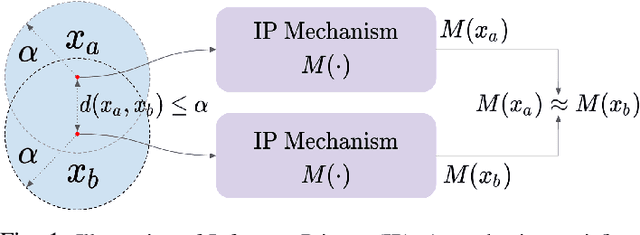
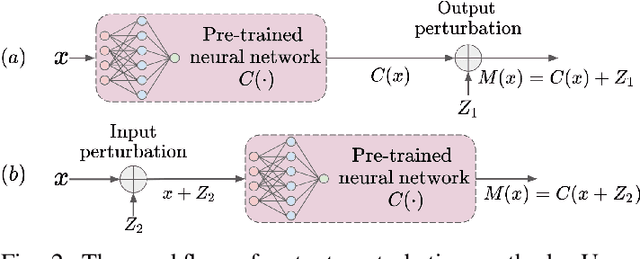
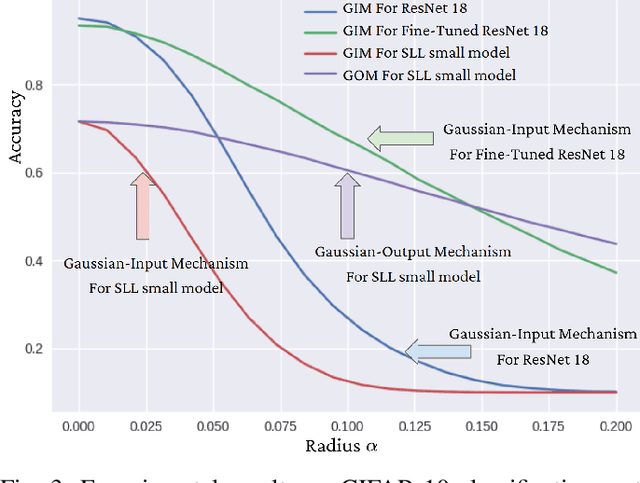
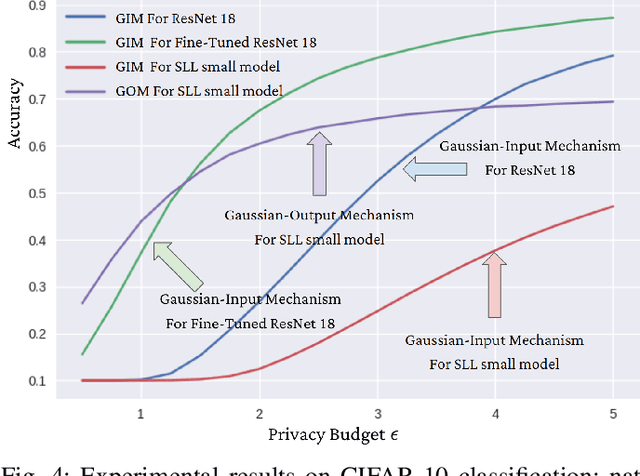
Ensuring privacy during inference stage is crucial to prevent malicious third parties from reconstructing users' private inputs from outputs of public models. Despite a large body of literature on privacy preserving learning (which ensures privacy of training data), there is no existing systematic framework to ensure the privacy of users' data during inference. Motivated by this problem, we introduce the notion of Inference Privacy (IP), which can allow a user to interact with a model (for instance, a classifier, or an AI-assisted chat-bot) while providing a rigorous privacy guarantee for the users' data at inference. We establish fundamental properties of the IP privacy notion and also contrast it with the notion of Local Differential Privacy (LDP). We then present two types of mechanisms for achieving IP: namely, input perturbations and output perturbations which are customizable by the users and can allow them to navigate the trade-off between utility and privacy. We also demonstrate the usefulness of our framework via experiments and highlight the resulting trade-offs between utility and privacy during inference.
Learning Fair Robustness via Domain Mixup
Nov 21, 2024


Adversarial training is one of the predominant techniques for training classifiers that are robust to adversarial attacks. Recent work, however has found that adversarial training, which makes the overall classifier robust, it does not necessarily provide equal amount of robustness for all classes. In this paper, we propose the use of mixup for the problem of learning fair robust classifiers, which can provide similar robustness across all classes. Specifically, the idea is to mix inputs from the same classes and perform adversarial training on mixed up inputs. We present a theoretical analysis of this idea for the case of linear classifiers and show that mixup combined with adversarial training can provably reduce the class-wise robustness disparity. This method not only contributes to reducing the disparity in class-wise adversarial risk, but also the class-wise natural risk. Complementing our theoretical analysis, we also provide experimental results on both synthetic data and the real world dataset (CIFAR-10), which shows improvement in class wise disparities for both natural and adversarial risks.
Fine-Grained Uncertainty Quantification via Collisions
Nov 18, 2024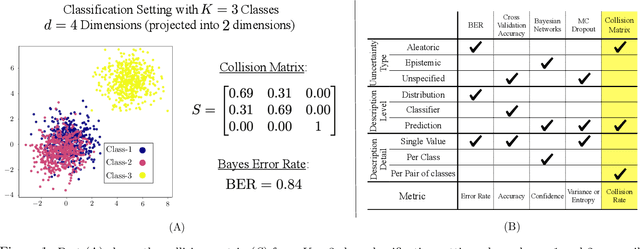
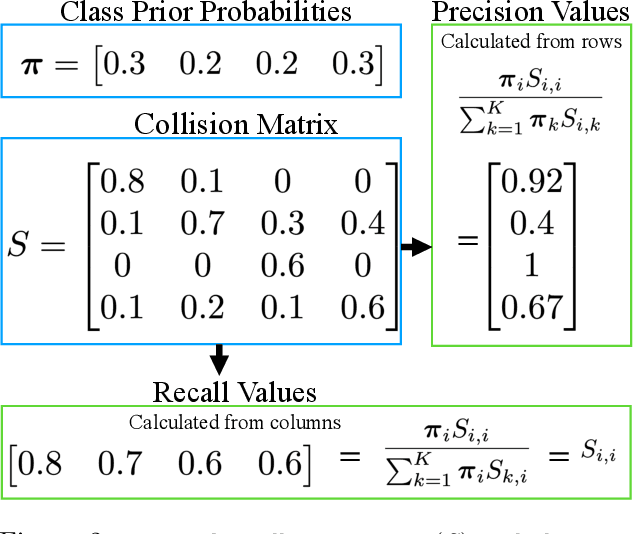
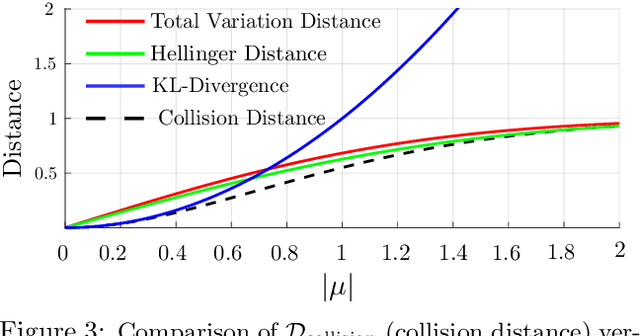
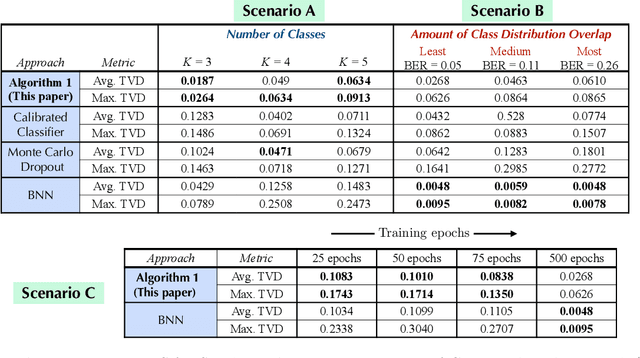
We propose a new approach for fine-grained uncertainty quantification (UQ) using a collision matrix. For a classification problem involving $K$ classes, the $K\times K$ collision matrix $S$ measures the inherent (aleatoric) difficulty in distinguishing between each pair of classes. In contrast to existing UQ methods, the collision matrix gives a much more detailed picture of the difficulty of classification. We discuss several possible downstream applications of the collision matrix, establish its fundamental mathematical properties, as well as show its relationship with existing UQ methods, including the Bayes error rate. We also address the new problem of estimating the collision matrix using one-hot labeled data. We propose a series of innovative techniques to estimate $S$. First, we learn a contrastive binary classifier which takes two inputs and determines if they belong to the same class. We then show that this contrastive classifier (which is PAC learnable) can be used to reliably estimate the Gramian matrix of $S$, defined as $G=S^TS$. Finally, we show that under very mild assumptions, $G$ can be used to uniquely recover $S$, a new result on stochastic matrices which could be of independent interest. Experimental results are also presented to validate our methods on several datasets.
Filtered Randomized Smoothing: A New Defense for Robust Modulation Classification
Oct 08, 2024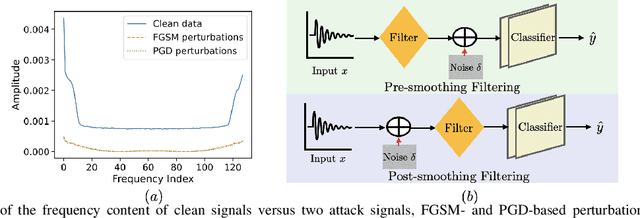
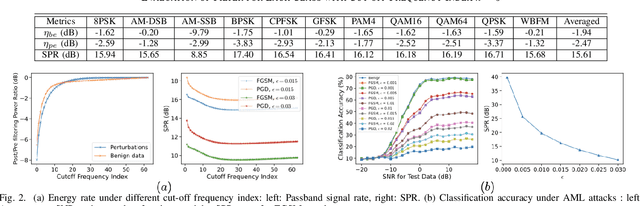

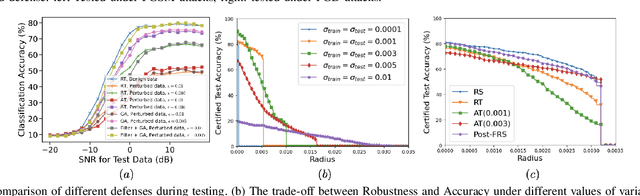
Deep Neural Network (DNN) based classifiers have recently been used for the modulation classification of RF signals. These classifiers have shown impressive performance gains relative to conventional methods, however, they are vulnerable to imperceptible (low-power) adversarial attacks. Some of the prominent defense approaches include adversarial training (AT) and randomized smoothing (RS). While AT increases robustness in general, it fails to provide resilience against previously unseen adaptive attacks. Other approaches, such as Randomized Smoothing (RS), which injects noise into the input, address this shortcoming by providing provable certified guarantees against arbitrary attacks, however, they tend to sacrifice accuracy. In this paper, we study the problem of designing robust DNN-based modulation classifiers that can provide provable defense against arbitrary attacks without significantly sacrificing accuracy. To this end, we first analyze the spectral content of commonly studied attacks on modulation classifiers for the benchmark RadioML dataset. We observe that spectral signatures of un-perturbed RF signals are highly localized, whereas attack signals tend to be spread out in frequency. To exploit this spectral heterogeneity, we propose Filtered Randomized Smoothing (FRS), a novel defense which combines spectral filtering together with randomized smoothing. FRS can be viewed as a strengthening of RS by leveraging the specificity (spectral Heterogeneity) inherent to the modulation classification problem. In addition to providing an approach to compute the certified accuracy of FRS, we also provide a comprehensive set of simulations on the RadioML dataset to show the effectiveness of FRS and show that it significantly outperforms existing defenses including AT and RS in terms of accuracy on both attacked and benign signals.