 Add to Chrome
 Add to Firefox
 Add to Edge
PPT-Eval: A Benchmark for Computer-Use Agents on PowerPoint Tasks
Jun 30, 2026
Creating and editing slides is a rich, multimodal activity that is ubiquitous in professional and educational settings, making it an ideal testbed for real-world computer-use agents. Microsoft PowerPoint is among the most widely adopted and feature-rich environments for presentation creation. We introduce PPT-Eval, a benchmark of 120 PowerPoint tasks across 12 files that cover both content creation and presentation editing scenarios, organized by difficulty. A central challenge in this domain is evaluation: tasks are complex, multimodal, and often admit many valid solutions. Moreover, today's agents frequently make only partial progress, which binary success metrics fail to capture. To address this, we design a robust evaluation framework to help create task-specific rubrics for PowerPoint tasks, taking inspiration from and building on past works for rubric-based evaluation. These rubrics award partial credit for intermediate steps, penalize unnecessary changes and poor aesthetics, and provide natural language feedback. This nuanced approach proves highly effective, achieving a Kendall's τ-b correlation of 0.77 with human judgments. We find that existing frontier agents still struggle with solving PowerPoint tasks, with strong models like Claude-4.5-Opus achieving only a 45% success rate and an average partial score of 57%. The benchmark is located at: https://microsoft.github.io/ppteval.

Characterizing Encrypted Application Traffic through Cellular Radio Interface Protocol
Jul 10, 2024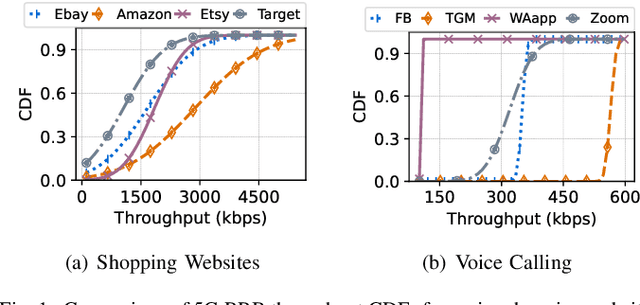
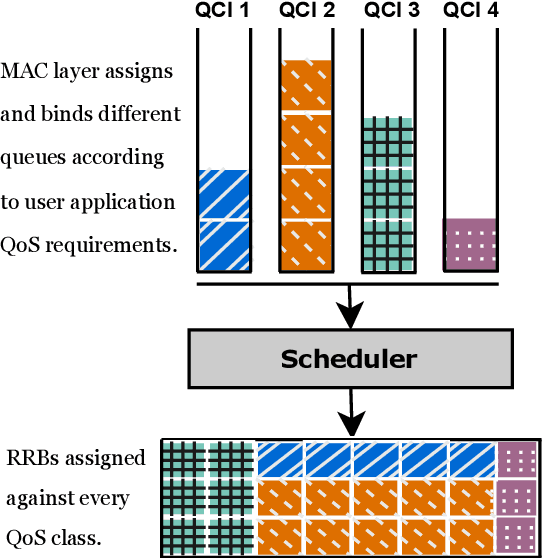
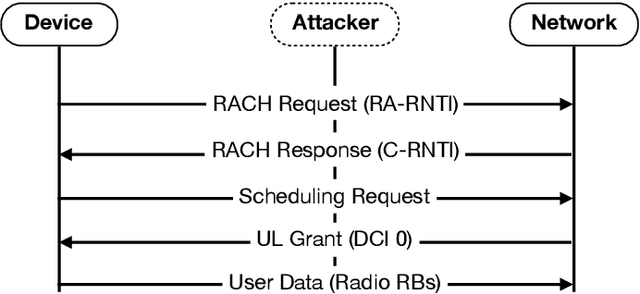
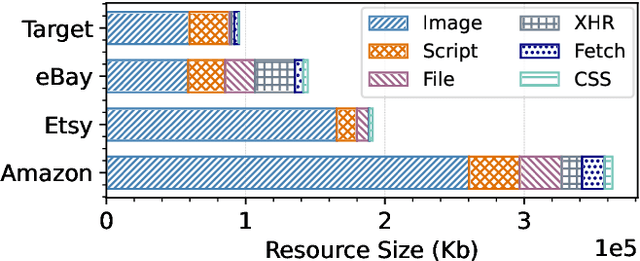
Modern applications are end-to-end encrypted to prevent data from being read or secretly modified. 5G tech nology provides ubiquitous access to these applications without compromising the application-specific performance and latency goals. In this paper, we empirically demonstrate that 5G radio communication becomes the side channel to precisely infer the user's applications in real-time. The key idea lies in observing the 5G physical and MAC layer interactions over time that reveal the application's behavior. The MAC layer receives the data from the application and requests the network to assign the radio resource blocks. The network assigns the radio resources as per application requirements, such as priority, Quality of Service (QoS) needs, amount of data to be transmitted, and buffer size. The adversary can passively observe the radio resources to fingerprint the applications. We empirically demonstrate this attack by considering four different categories of applications: online shopping, voice/video conferencing, video streaming, and Over-The-Top (OTT) media platforms. Finally, we have also demonstrated that an attacker can differentiate various types of applications in real-time within each category.