 Add to Chrome
 Add to Firefox
 Add to Edge
Breast Cancer Neoadjuvant Chemotherapy Treatment Response Prediction Using Aligned Longitudinal MRI and Clinical Data
Dec 19, 2025
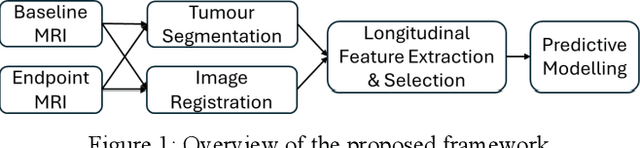
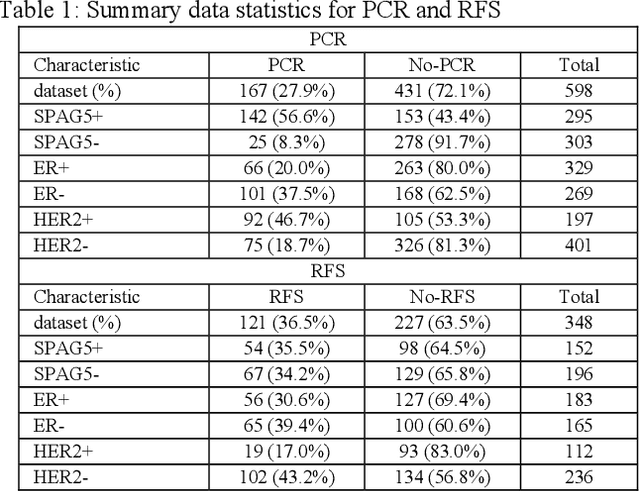
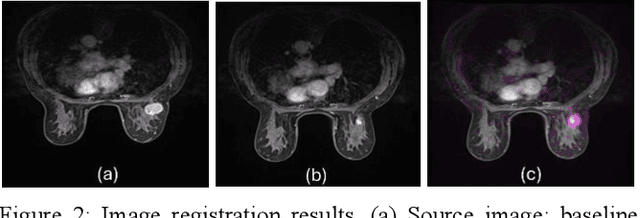
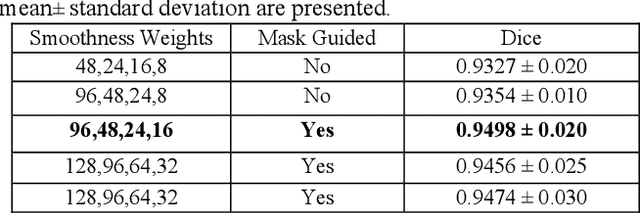
Aim: This study investigates treatment response prediction to neoadjuvant chemotherapy (NACT) in breast cancer patients, using longitudinal contrast-enhanced magnetic resonance images (CE-MRI) and clinical data. The goal is to develop machine learning (ML) models to predict pathologic complete response (PCR binary classification) and 5-year relapse-free survival status (RFS binary classification). Method: The proposed framework includes tumour segmentation, image registration, feature extraction, and predictive modelling. Using the image registration method, MRI image features can be extracted and compared from the original tumour site at different time points, therefore monitoring the intratumor changes during NACT process. Four feature extractors, including one radiomics and three deep learning-based (MedicalNet, Segformer3D, SAM-Med3D) were implemented and compared. In combination with three feature selection methods and four ML models, predictive models are built and compared. Results: The proposed image registration-based feature extraction consistently improves the predictive models. In the PCR and RFS classification tasks logistic regression model trained on radiomic features performed the best with an AUC of 0.88 and classification accuracy of 0.85 for PCR classification, and AUC of 0.78 and classification accuracy of 0.72 for RFS classification. Conclusions: It is evidenced that the image registration method has significantly improved performance in longitudinal feature learning in predicting PCR and RFS. The radiomics feature extractor is more effective than the pre-trained deep learning feature extractors, with higher performance and better interpretability.

PRAGyan -- Connecting the Dots in Tweets
Jul 18, 2024
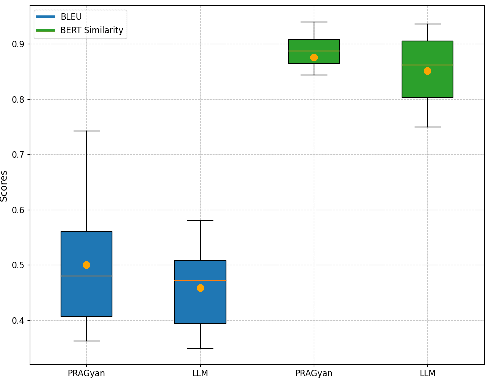

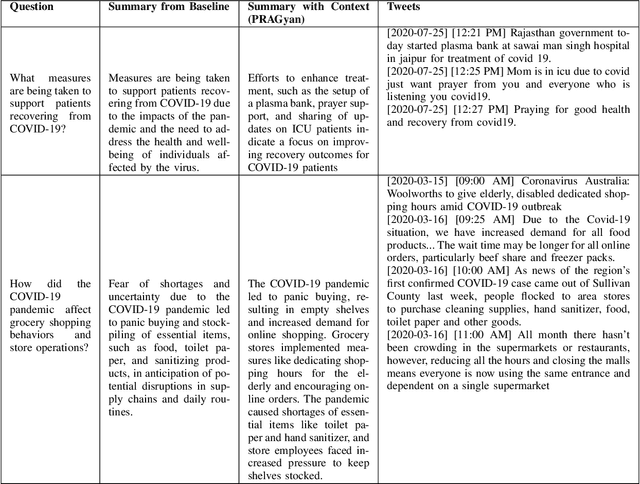
As social media platforms grow, understanding the underlying reasons behind events and statements becomes crucial for businesses, policymakers, and researchers. This research explores the integration of Knowledge Graphs (KGs) with Large Language Models (LLMs) to perform causal analysis of tweets dataset. The LLM aided analysis techniques often lack depth in uncovering the causes driving observed effects. By leveraging KGs and LLMs, which encode rich semantic relationships and temporal information, this study aims to uncover the complex interplay of factors influencing causal dynamics and compare the results obtained using GPT-3.5 Turbo. We employ a Retrieval-Augmented Generation (RAG) model, utilizing a KG stored in a Neo4j (a.k.a PRAGyan) data format, to retrieve relevant context for causal reasoning. Our approach demonstrates that the KG-enhanced LLM RAG can provide improved results when compared to the baseline LLM (GPT-3.5 Turbo) model as the source corpus increases in size. Our qualitative analysis highlights the advantages of combining KGs with LLMs for improved interpretability and actionable insights, facilitating informed decision-making across various domains. Whereas, quantitative analysis using metrics such as BLEU and cosine similarity show that our approach outperforms the baseline by 10\%.