 Add to Chrome
 Add to Firefox
 Add to Edge
PeerPrism: Peer Evaluation Expertise vs Review-writing AI
Apr 16, 2026
Large Language Models (LLMs) are increasingly used in scientific peer review, assisting with drafting, rewriting, expansion, and refinement. However, existing peer-review LLM detection methods largely treat authorship as a binary problem-human vs. AI-without accounting for the hybrid nature of modern review workflows. In practice, evaluative ideas and surface realization may originate from different sources, creating a spectrum of human-AI collaboration. In this work, we introduce PeerPrism, a large-scale benchmark of 20,690 peer reviews explicitly designed to disentangle idea provenance from text provenance. We construct controlled generation regimes spanning fully human, fully synthetic, and multiple hybrid transformations. This design enables systematic evaluation of whether detectors identify the origin of the surface text or the origin of the evaluative reasoning. We benchmark state-of-the-art LLM text detection methods on PeerPrism. While several methods achieve high accuracy on the standard binary task (human vs. fully synthetic), their predictions diverge sharply under hybrid regimes. In particular, when ideas originate from humans but the surface text is AI-generated, detectors frequently disagree and produce contradictory classifications. Accompanied by stylometric and semantic analyses, our results show that current detection methods conflate surface realization with intellectual contribution. Overall, we demonstrate that LLM detection in peer review cannot be reduced to a binary attribution problem. Instead, authorship must be modeled as a multidimensional construct spanning semantic reasoning and stylistic realization. PeerPrism is the first benchmark evaluating human-AI collaboration in these settings. We release all code, data, prompts, and evaluation scripts to facilitate reproducible research at https://github.com/Reviewerly-Inc/PeerPrism.

Epistemic Uncertainty-aware Recommendation Systems via Bayesian Deep Ensemble Learning
Apr 14, 2025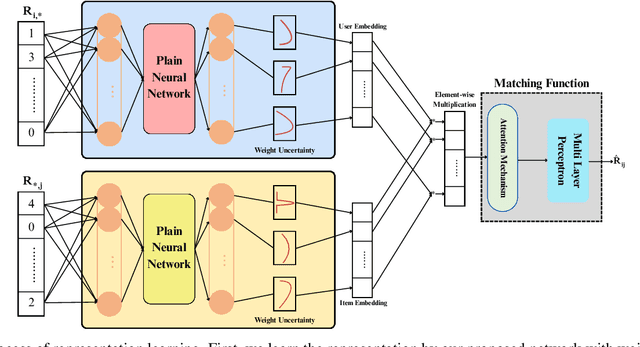
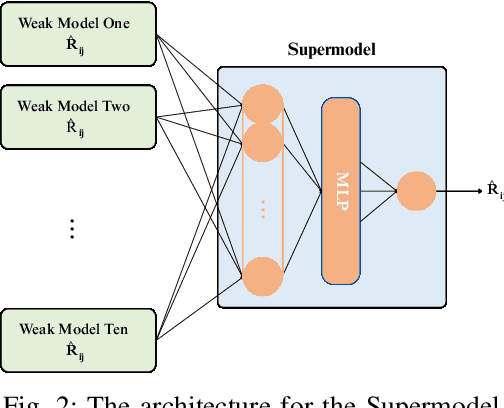
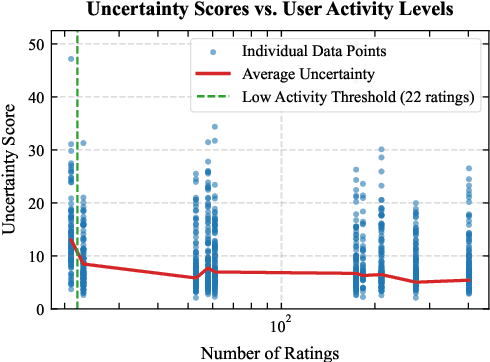
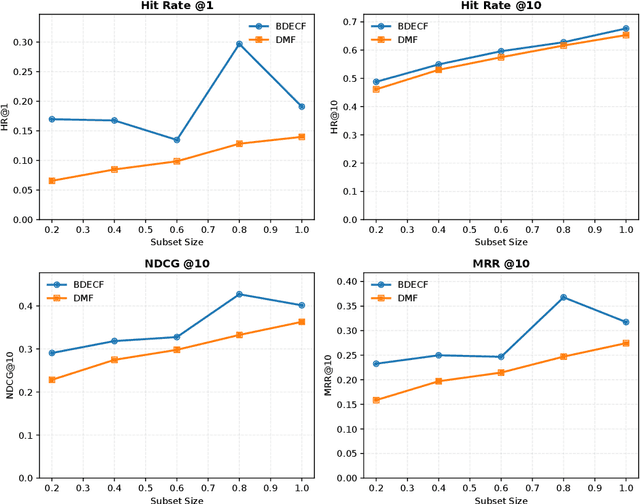
Recommending items to users has long been a fundamental task, and studies have tried to improve it ever since. Most well-known models commonly employ representation learning to map users and items into a unified embedding space for matching assessment. These approaches have primary limitations, especially when dealing with explicit feedback and sparse data contexts. Two primary limitations are their proneness to overfitting and failure to incorporate epistemic uncertainty in predictions. To address these problems, we propose a novel Bayesian Deep Ensemble Collaborative Filtering method named BDECF. To improve model generalization and quality, we utilize Bayesian Neural Networks, which incorporate uncertainty within their weight parameters. In addition, we introduce a new interpretable non-linear matching approach for the user and item embeddings, leveraging the advantages of the attention mechanism. Furthermore, we endorse the implementation of an ensemble-based supermodel to generate more robust and reliable predictions, resulting in a more complete model. Empirical evaluation through extensive experiments and ablation studies across a range of publicly accessible real-world datasets with differing sparsity characteristics confirms our proposed method's effectiveness and the importance of its components.