 Add to Chrome
 Add to Firefox
 Add to Edge
SubtleTalk: Generating Controllable Weakly-correlated Facial Dynamics for 3D Talking Heads via Residual Flow Matching
Aug 03, 2026
Audio-driven 3D facial animation aims to synthesize realistic and temporally coherent motions from speech. Despite notable progress in lip synchronization, weakly correlated dynamics, including eyebrow movements, eye blinks, and head motion, which are essential to photorealistic facial animation, remain difficult to model faithfully and often appear static or unnaturally repetitive. We attribute this limitation to three factors: (a) insufficient conditioning for weakly correlated dynamics; (b) the limited ability of deterministic regression to capture diverse motion patterns; (c) data bottlenecks from unreliable upper-face pseudo-labels and limited dataset diversity. To address these issues, we propose SubtleTalk, a framework for generating natural and controllable weakly correlated facial dynamics via multi-condition modeling and residual flow matching. First, to compensate for the limited guidance of speech alone, we introduce interpretable controls, including prosody, regional intensity, and Valence-Arousal signals, to explicitly capture the timing, magnitude, and affective variation of weakly correlated dynamics. Second, to overcome the limited expressiveness of deterministic regression, we build residual flow matching based on a stable speech-driven motion prior, allowing the model to capture stochastic deviations beyond deterministic prediction. Third, to alleviate the data bottleneck, we construct SubtleTalk-Face, a large-scale 3D facial animation dataset comprising about 3,900 identities and 74 hours of data, built via a simple and scalable pseudo-labeling pipeline and featuring improved upper-face tracking and frame-level VA annotations. Extensive experiments demonstrate that our method significantly improves the realism and diversity of weakly correlated facial dynamics while preserving accurate lip synchronization.

EmoFace: Audio-driven Emotional 3D Face Animation
Jul 17, 2024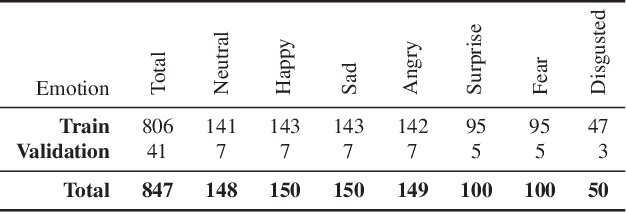
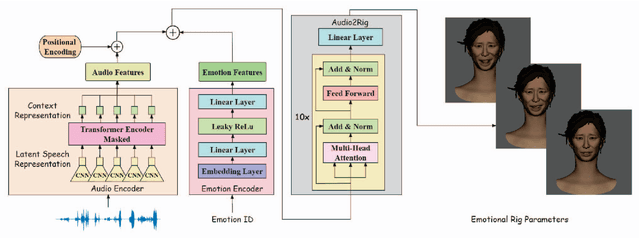
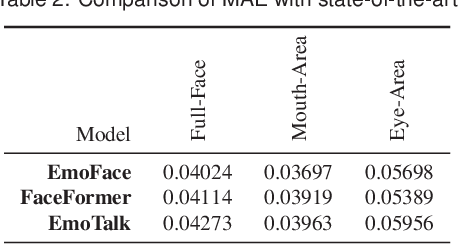
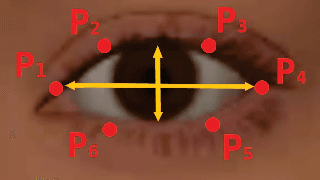
Audio-driven emotional 3D face animation aims to generate emotionally expressive talking heads with synchronized lip movements. However, previous research has often overlooked the influence of diverse emotions on facial expressions or proved unsuitable for driving MetaHuman models. In response to this deficiency, we introduce EmoFace, a novel audio-driven methodology for creating facial animations with vivid emotional dynamics. Our approach can generate facial expressions with multiple emotions, and has the ability to generate random yet natural blinks and eye movements, while maintaining accurate lip synchronization. We propose independent speech encoders and emotion encoders to learn the relationship between audio, emotion and corresponding facial controller rigs, and finally map into the sequence of controller values. Additionally, we introduce two post-processing techniques dedicated to enhancing the authenticity of the animation, particularly in blinks and eye movements. Furthermore, recognizing the scarcity of emotional audio-visual data suitable for MetaHuman model manipulation, we contribute an emotional audio-visual dataset and derive control parameters for each frames. Our proposed methodology can be applied in producing dialogues animations of non-playable characters (NPCs) in video games, and driving avatars in virtual reality environments. Our further quantitative and qualitative experiments, as well as an user study comparing with existing researches show that our approach demonstrates superior results in driving 3D facial models. The code and sample data are available at https://github.com/SJTU-Lucy/EmoFace.