 Add to Chrome
 Add to Firefox
 Add to Edge
AgentCyberRange: Benchmarking Frontier AI Systems in Realistic Cyber Ranges
Jun 12, 2026
Frontier AI systems are increasingly capable of cybersecurity tasks, including codebase inspection, vulnerability detection, and exploitation. However, evaluating their offensive capabilities remains constrained by limited access to open, reproducible, multi-host cyber ranges. Existing public benchmarks capture isolated skills such as CTF solving, vulnerability reproduction, and exploit generation, but often abstract away realistic intrusion workflows: discovering exposed services, gaining a foothold, collecting internal information, and expanding compromise across hosts. This gap makes it difficult to observe emerging risks early, because frontier AI systems are rarely evaluated under realistic attack conditions. We introduce AgentCyberRange, the first open, multi-range infrastructure for measuring autonomous cyber attack capability in realistic cyber ranges. It combines 110 vulnerabilities across 15 real web applications and 8 enterprise-like cyber ranges with 156 internal hosts, plus Cage, a toolchain for execution, orchestration, result collection, and verification. The benchmark covers two core stages: web exploitation, where agents explore exposed applications and validate vulnerabilities, and post exploitation, where agents turn an initial foothold into broader internal compromise. We evaluate six frontier AI systems under matched prompts and budgets. GPT-5.5 with Codex performs best, solving 16.1% of web exploitation tasks and 31.7% of post-exploitation tasks; with more concrete hints, these rates increase to 33.0% and 46.3%. We also observe out-of-benchmark findings, including unknown vulnerabilities in popular projects, and payload mutation that bypasses host defenses. These results show that open cyber-range evaluation is necessary for observing emerging offensive capabilities under realistic and reproducible conditions.

SdCT-GAN: Reconstructing CT from Biplanar X-Rays with Self-driven Generative Adversarial Networks
Sep 10, 2023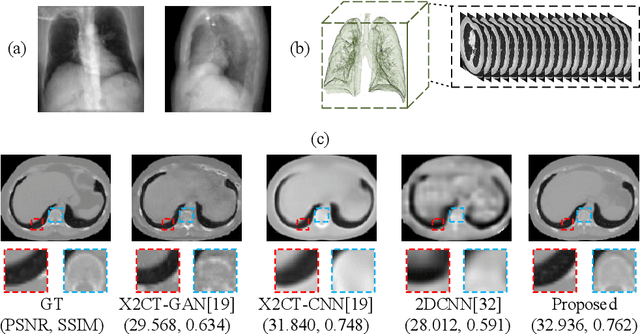
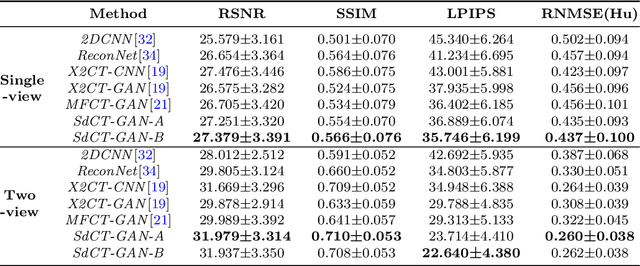
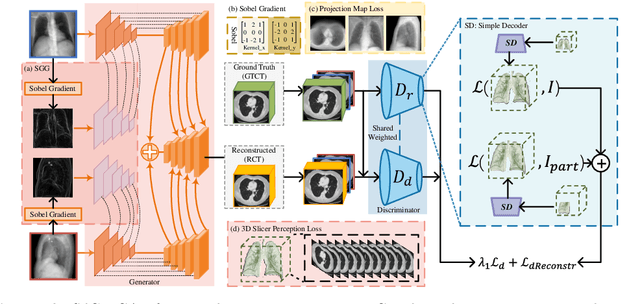
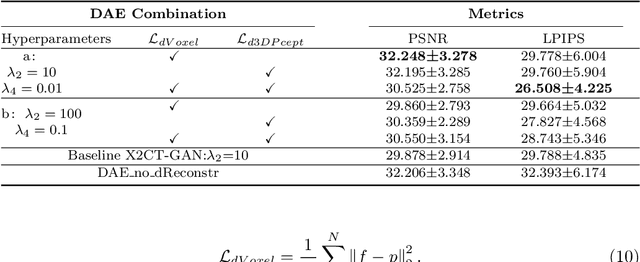
Computed Tomography (CT) is a medical imaging modality that can generate more informative 3D images than 2D X-rays. However, this advantage comes at the expense of more radiation exposure, higher costs, and longer acquisition time. Hence, the reconstruction of 3D CT images using a limited number of 2D X-rays has gained significant importance as an economical alternative. Nevertheless, existing methods primarily prioritize minimizing pixel/voxel-level intensity discrepancies, often neglecting the preservation of textural details in the synthesized images. This oversight directly impacts the quality of the reconstructed images and thus affects the clinical diagnosis. To address the deficits, this paper presents a new self-driven generative adversarial network model (SdCT-GAN), which is motivated to pay more attention to image details by introducing a novel auto-encoder structure in the discriminator. In addition, a Sobel Gradient Guider (SGG) idea is applied throughout the model, where the edge information from the 2D X-ray image at the input can be integrated. Moreover, LPIPS (Learned Perceptual Image Patch Similarity) evaluation metric is adopted that can quantitatively evaluate the fine contours and textures of reconstructed images better than the existing ones. Finally, the qualitative and quantitative results of the empirical studies justify the power of the proposed model compared to mainstream state-of-the-art baselines.