 Add to Chrome
 Add to Firefox
 Add to Edge
SN-WER: Script-Normalized WER for Multi-Script Indic ASR Evaluation
Jun 01, 2026
Word Error Rate (WER) is the dominant metric for automatic speech recognition (ASR), but it can overestimate errors when references and hypotheses encode the same words in different scripts. This issue is common in multilingual settings where ASR models may emit romanized text. We propose Script-Normalized WER (SN-WER), a training-free, evaluation-only scoring method that transliterates both reference and hypothesis text into a language-specific canonical script before computing WER. We evaluate SN-WER on 5 Indic languages, 2 datasets, and 3 ASR models. On curated FLEURS data, SN-WER reduces inflated model gaps by up to 12%, while on noisier Common Voice data the reductions are smaller or inconsistent, indicating genuine recognition weaknesses rather than only script mismatch. Controlled stress tests show a 67% attenuation of artificial romanization-induced WER inflation, while lexical-substitution controls show near-identical sensitivity to semantic errors, with Delta SN-WER / Delta WER approximately 1.09. SN-WER is robust to transliterator choice, normalization changes, and shows low token-collision rates below 0.1% in the evaluated Indic setting. We argue that SN-WER should be reported alongside WER and CER as a companion metric for script-insensitive ASR evaluation, especially when transcripts feed downstream search, indexing, or multilingual LLM pipelines.

Anthropogenic Regional Adaptation in Multimodal Vision-Language Model
Apr 13, 2026While the field of vision-language (VL) has achieved remarkable success in integrating visual and textual information across multiple languages and domains, there is still no dedicated framework for assessing human-centric alignment in vision-language systems. We offer two contributions to address this gap. First, we introduce Anthropogenic Regional Adaptation: a novel paradigm that aims to optimize model relevance to specific regional contexts while ensuring the retention of global generalization capabilities. Second, we present a simple, but effective adaptation method named Geographical-generalization-made-easy (GG-EZ), which utilizes regional data filtering and model merging. Through comprehensive experiments on 3 VL architectures: large vision-language models, text-to-image diffusion models, and vision-language embedding models, and a case study in Southeast Asia (SEA) regional adaptation, we demonstrate the importance of Anthropogenic Regional Adaptation and the effectiveness of GG-EZ, showing 5-15% gains in cultural relevance metrics across SEA while maintaining over 98% of global performance and even occasionally surpassing it. Our findings establish Anthropogenic Regional Alignment as a foundational paradigm towards applicability of multimodal vision-language models in diverse regions and demonstrate a simple-yet-effective baseline method that optimizes regional value alignment while preserving global generalization.
IndicSafe: A Benchmark for Evaluating Multilingual LLM Safety in South Asia
Mar 18, 2026As large language models (LLMs) are deployed in multilingual settings, their safety behavior in culturally diverse, low-resource languages remains poorly understood. We present the first systematic evaluation of LLM safety across 12 Indic languages, spoken by over 1.2 billion people but underrepresented in LLM training data. Using a dataset of 6,000 culturally grounded prompts spanning caste, religion, gender, health, and politics, we assess 10 leading LLMs on translated variants of the prompt. Our analysis reveals significant safety drift: cross-language agreement is just 12.8\%, and \texttt{SAFE} rate variance exceeds 17\% across languages. Some models over-refuse benign prompts in low-resource scripts, overflag politically sensitive topics, while others fail to flag unsafe generations. We quantify these failures using prompt-level entropy, category bias scores, and multilingual consistency indices. Our findings highlight critical safety generalization gaps in multilingual LLMs and show that safety alignment does not transfer evenly across languages. We release \textsc{IndicSafe}, the first benchmark to enable culturally informed safety evaluation for Indic deployments, and advocate for language-aware alignment strategies grounded in regional harms.
IndicJR: A Judge-Free Benchmark of Jailbreak Robustness in South Asian Languages
Feb 18, 2026Safety alignment of large language models (LLMs) is mostly evaluated in English and contract-bound, leaving multilingual vulnerabilities understudied. We introduce \textbf{Indic Jailbreak Robustness (IJR)}, a judge-free benchmark for adversarial safety across 12 Indic and South Asian languages (2.1 Billion speakers), covering 45216 prompts in JSON (contract-bound) and Free (naturalistic) tracks. IJR reveals three patterns. (1) Contracts inflate refusals but do not stop jailbreaks: in JSON, LLaMA and Sarvam exceed 0.92 JSR, and in Free all models reach 1.0 with refusals collapsing. (2) English to Indic attacks transfer strongly, with format wrappers often outperforming instruction wrappers. (3) Orthography matters: romanized or mixed inputs reduce JSR under JSON, with correlations to romanization share and tokenization (approx 0.28 to 0.32) indicating systematic effects. Human audits confirm detector reliability, and lite-to-full comparisons preserve conclusions. IJR offers a reproducible multilingual stress test revealing risks hidden by English-only, contract-focused evaluations, especially for South Asian users who frequently code-switch and romanize.
LLM-Guided Lifecycle-Aware Clustering of Multi-Turn Customer Support Conversations
Jan 07, 2026Clustering customer chat data is vital for cloud providers handling multi service queries. Traditional methods struggle with overlapping concerns and create broad, static clusters that degrade over time. Reclustering disrupts continuity, making issue tracking difficult. We propose an adaptive system that segments multi turn chats into service specific concerns and incrementally refines clusters as new issues arise. Cluster quality is tracked via DaviesBouldin Index and Silhouette Scores, with LLM based splitting applied only to degraded clusters. Our method improves Silhouette Scores by over 100\% and reduces DBI by 65.6\% compared to baselines, enabling scalable, real time analytics without full reclustering.
Hard Negative Mining for Domain-Specific Retrieval in Enterprise Systems
May 23, 2025Enterprise search systems often struggle to retrieve accurate, domain-specific information due to semantic mismatches and overlapping terminologies. These issues can degrade the performance of downstream applications such as knowledge management, customer support, and retrieval-augmented generation agents. To address this challenge, we propose a scalable hard-negative mining framework tailored specifically for domain-specific enterprise data. Our approach dynamically selects semantically challenging but contextually irrelevant documents to enhance deployed re-ranking models. Our method integrates diverse embedding models, performs dimensionality reduction, and uniquely selects hard negatives, ensuring computational efficiency and semantic precision. Evaluation on our proprietary enterprise corpus (cloud services domain) demonstrates substantial improvements of 15\% in MRR@3 and 19\% in MRR@10 compared to state-of-the-art baselines and other negative sampling techniques. Further validation on public domain-specific datasets (FiQA, Climate Fever, TechQA) confirms our method's generalizability and readiness for real-world applications.
SweEval: Do LLMs Really Swear? A Safety Benchmark for Testing Limits for Enterprise Use
May 22, 2025Enterprise customers are increasingly adopting Large Language Models (LLMs) for critical communication tasks, such as drafting emails, crafting sales pitches, and composing casual messages. Deploying such models across different regions requires them to understand diverse cultural and linguistic contexts and generate safe and respectful responses. For enterprise applications, it is crucial to mitigate reputational risks, maintain trust, and ensure compliance by effectively identifying and handling unsafe or offensive language. To address this, we introduce SweEval, a benchmark simulating real-world scenarios with variations in tone (positive or negative) and context (formal or informal). The prompts explicitly instruct the model to include specific swear words while completing the task. This benchmark evaluates whether LLMs comply with or resist such inappropriate instructions and assesses their alignment with ethical frameworks, cultural nuances, and language comprehension capabilities. In order to advance research in building ethically aligned AI systems for enterprise use and beyond, we release the dataset and code: https://github.com/amitbcp/multilingual_profanity.
Tokenization Matters: Improving Zero-Shot NER for Indic Languages
Apr 23, 2025Tokenization is a critical component of Natural Language Processing (NLP), especially for low resource languages, where subword segmentation influences vocabulary structure and downstream task accuracy. Although Byte Pair Encoding (BPE) is a standard tokenization method in multilingual language models, its suitability for Named Entity Recognition (NER) in low resource Indic languages remains underexplored due to its limitations in handling morphological complexity. In this work, we systematically compare BPE, SentencePiece, and Character Level tokenization strategies using IndicBERT for NER tasks in low resource Indic languages like Assamese, Bengali, Marathi, and Odia, as well as extremely low resource Indic languages like Santali, Manipuri, and Sindhi. We assess both intrinsic linguistic properties tokenization efficiency, out of vocabulary (OOV) rates, and morphological preservation as well as extrinsic downstream performance, including fine tuning and zero shot cross lingual transfer. Our experiments show that SentencePiece is a consistently better performing approach than BPE for NER in low resource Indic Languages, particularly in zero shot cross lingual settings, as it better preserves entity consistency. While BPE provides the most compact tokenization form, it is not capable of generalization because it misclassifies or even fails to recognize entity labels when tested on unseen languages. In contrast, SentencePiece constitutes a better linguistic structural preservation model, benefiting extremely low resource and morphologically rich Indic languages, such as Santali and Manipuri, for superior entity recognition, as well as high generalization across scripts, such as Sindhi, written in Arabic. The results point to SentencePiece as the more effective tokenization strategy for NER within multilingual and low resource Indic NLP applications.
Crowdsource, Crawl, or Generate? Creating SEA-VL, a Multicultural Vision-Language Dataset for Southeast Asia
Mar 10, 2025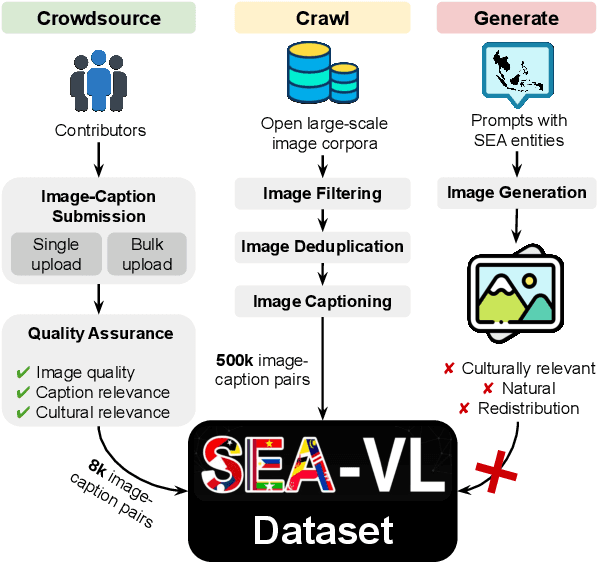
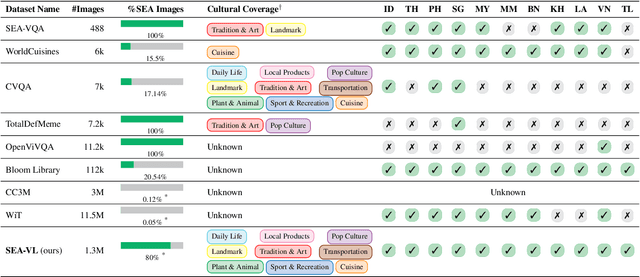
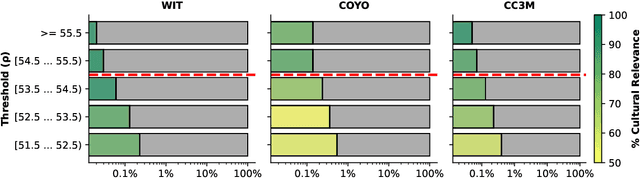
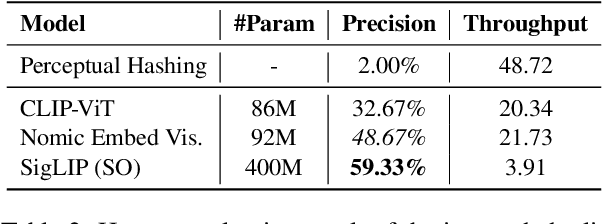
Southeast Asia (SEA) is a region of extraordinary linguistic and cultural diversity, yet it remains significantly underrepresented in vision-language (VL) research. This often results in artificial intelligence (AI) models that fail to capture SEA cultural nuances. To fill this gap, we present SEA-VL, an open-source initiative dedicated to developing high-quality, culturally relevant data for SEA languages. By involving contributors from SEA countries, SEA-VL aims to ensure better cultural relevance and diversity, fostering greater inclusivity of underrepresented languages in VL research. Beyond crowdsourcing, our initiative goes one step further in the exploration of the automatic collection of culturally relevant images through crawling and image generation. First, we find that image crawling achieves approximately ~85% cultural relevance while being more cost- and time-efficient than crowdsourcing. Second, despite the substantial progress in generative vision models, synthetic images remain unreliable in accurately reflecting SEA cultures. The generated images often fail to reflect the nuanced traditions and cultural contexts of the region. Collectively, we gather 1.28M SEA culturally-relevant images, more than 50 times larger than other existing datasets. Through SEA-VL, we aim to bridge the representation gap in SEA, fostering the development of more inclusive AI systems that authentically represent diverse cultures across SEA.
Improving Clinical Question Answering with Multi-Task Learning: A Joint Approach for Answer Extraction and Medical Categorization
Feb 18, 2025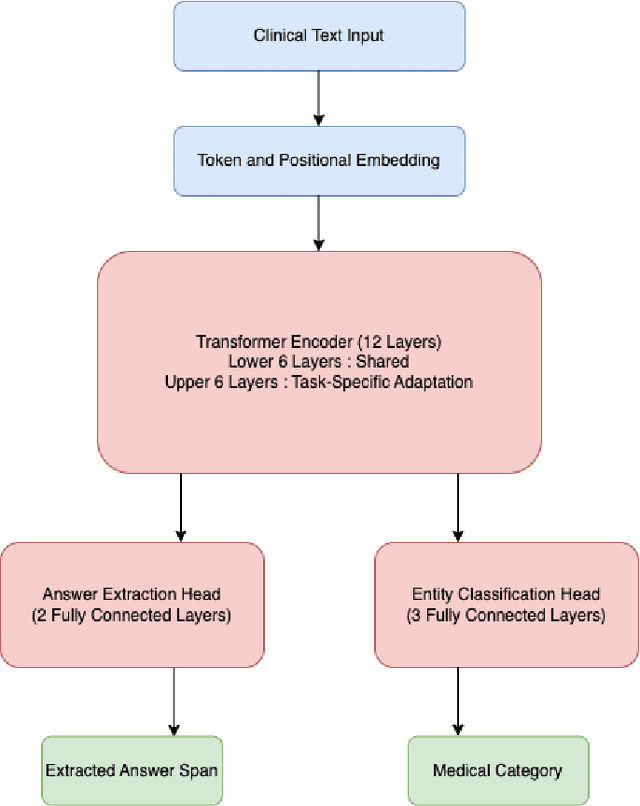
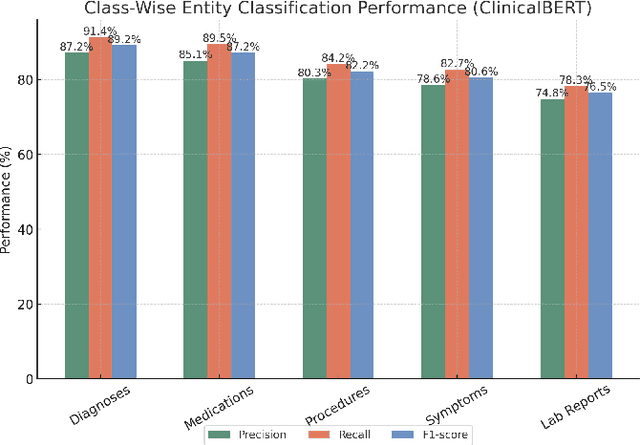
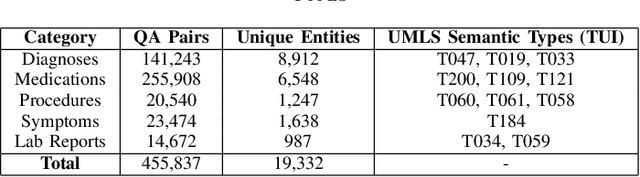
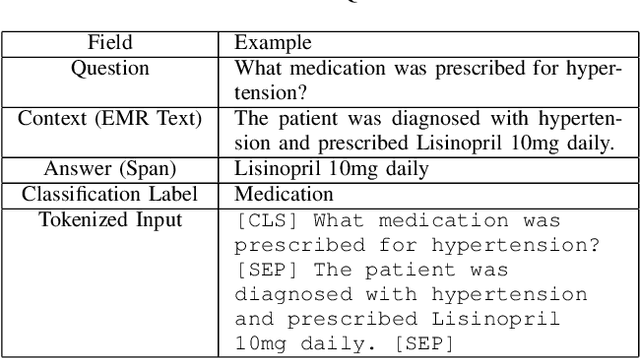
Clinical Question Answering (CQA) plays a crucial role in medical decision-making, enabling physicians to extract relevant information from Electronic Medical Records (EMRs). While transformer-based models such as BERT, BioBERT, and ClinicalBERT have demonstrated state-of-the-art performance in CQA, existing models lack the ability to categorize extracted answers, which is critical for structured retrieval, content filtering, and medical decision support. To address this limitation, we introduce a Multi-Task Learning (MTL) framework that jointly trains CQA models for both answer extraction and medical categorization. In addition to predicting answer spans, our model classifies responses into five standardized medical categories: Diagnosis, Medication, Symptoms, Procedure, and Lab Reports. This categorization enables more structured and interpretable outputs, making clinical QA models more useful in real-world healthcare settings. We evaluate our approach on emrQA, a large-scale dataset for medical question answering. Results show that MTL improves F1-score by 2.2% compared to standard fine-tuning, while achieving 90.7% accuracy in answer categorization. These findings suggest that MTL not only enhances CQA performance but also introduces an effective mechanism for categorization and structured medical information retrieval.