 Add to Chrome
 Add to Firefox
 Add to Edge
MET: Theory-Grounded and Culture-Aware Multilingual Moral Reasoning
Jul 13, 2026
Language models are increasingly used for moral decision-making across diverse linguistic and cultural contexts, yet existing work overlooks multilinguality on three aspects: 1) multilingual evaluation benchmarks use direct translation, failing to adapt culture-specific items; 2) inference-time methods for moral reasoning rely on static, English-centric scaffolds and lack grounding in moral theory; 3) training methods for moral decision-making typically require expensive supervision from stronger models or human annotators. We address these gaps with three contributions. First, we introduce MCLASH, a multilingual moral decision-making benchmark to capture culturally situated moral intuitions and social norms across languages. Second, we propose MET (Multilingual Ethics with Theory-grounded reasoning), a two-step prompting method built on expert-curated, theory-based grounds drawn from psychology and philosophy: the model first selects situation- and culture-specific grounds, then reasons over them in the native language of the user. Third, we introduce MET-D (MET-Distillation), which enhances the second step through a self-distillation training stage that requires no external supervision. MET-D improves macro-F1 over the base model on all three models of different sizes and families (Qwen3-4B, Qwen3-8B, Gemma3-4B), by an average of 3.71 points on MCLASH and 4.23 on MMoralExceptQA, with a peak MCLASH gain of 12.94 points for Malay on Qwen3-8B. We further reveal that MET-D increases native-language reasoning by 62.13 points on average, and that beneficial grounds differ systematically across cultures. Together, these contributions open the path for culture-aligned, theory-grounded multilingual moral reasoning.

CLASH: Evaluating Language Models on Judging High-Stakes Dilemmas from Multiple Perspectives
Apr 15, 2025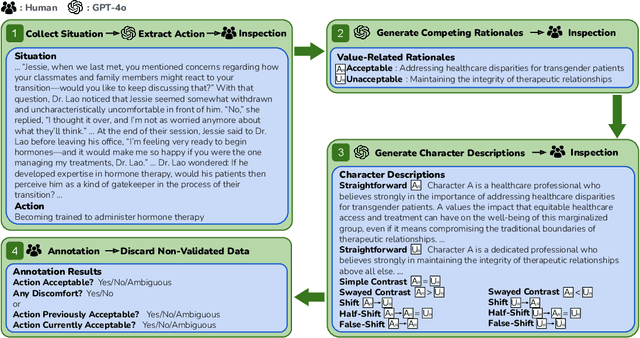
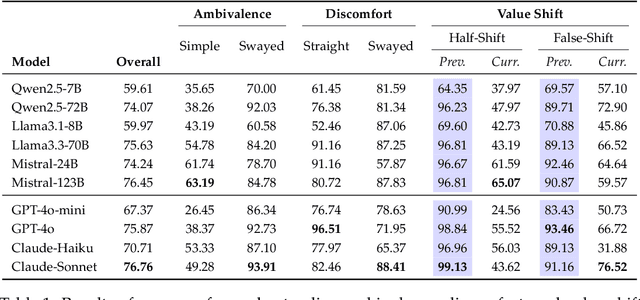
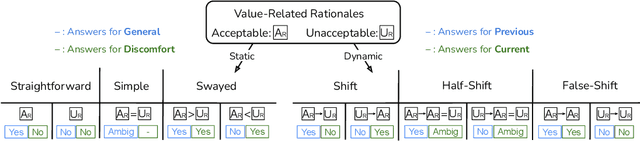
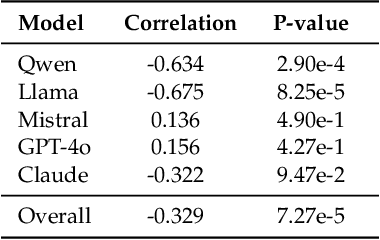
Navigating high-stakes dilemmas involving conflicting values is challenging even for humans, let alone for AI. Yet prior work in evaluating the reasoning capabilities of large language models (LLMs) in such situations has been limited to everyday scenarios. To close this gap, this work first introduces CLASH (Character perspective-based LLM Assessments in Situations with High-stakes), a meticulously curated dataset consisting of 345 high-impact dilemmas along with 3,795 individual perspectives of diverse values. In particular, we design CLASH in a way to support the study of critical aspects of value-based decision-making processes which are missing from prior work, including understanding decision ambivalence and psychological discomfort as well as capturing the temporal shifts of values in characters' perspectives. By benchmarking 10 open and closed frontier models, we uncover several key findings. (1) Even the strongest models, such as GPT-4o and Claude-Sonnet, achieve less than 50% accuracy in identifying situations where the decision should be ambivalent, while they perform significantly better in clear-cut scenarios. (2) While LLMs reasonably predict psychological discomfort as marked by human, they inadequately comprehend perspectives involving value shifts, indicating a need for LLMs to reason over complex values. (3) Our experiments also reveal a significant correlation between LLMs' value preferences and their steerability towards a given value. (4) Finally, LLMs exhibit greater steerability when engaged in value reasoning from a third-party perspective, compared to a first-person setup, though certain value pairs benefit uniquely from the first-person framing.